The Legacy of Giuseppe Piazzi: Celebrating 200 Years Since the Discovery of Ceres
As we commemorate 200 years since Giuseppe Piazzi's death, we explore his discovery of Ceres and its lasting impact on astronomy.
Reflecting on the Impact of Giuseppe Piazzi, 200 Years After His Passing
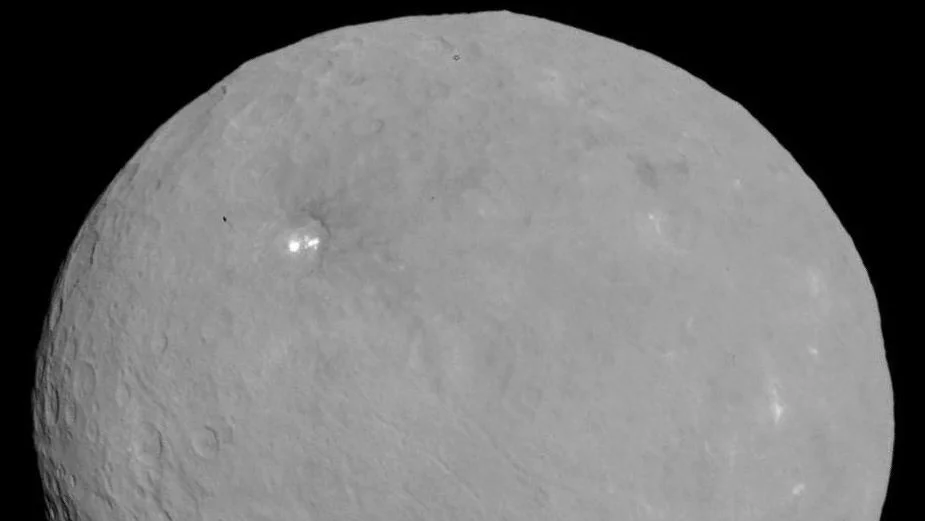
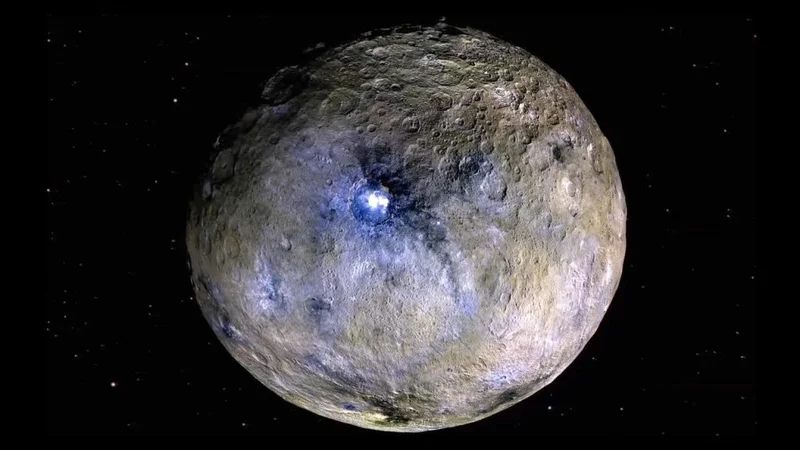
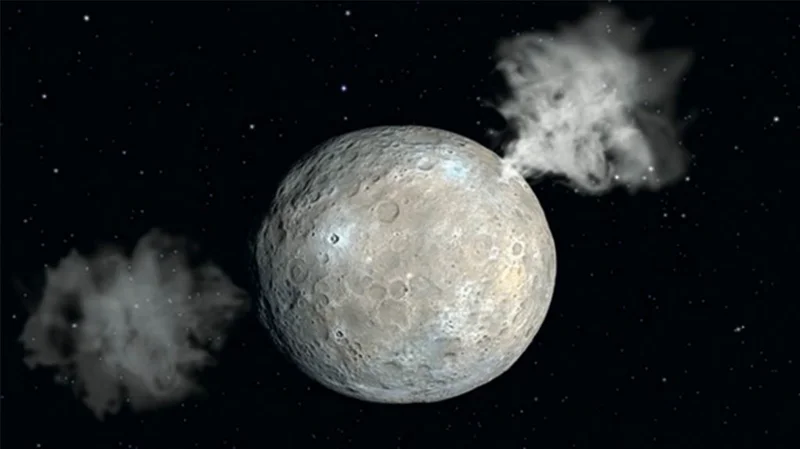
This year marks the bicentennial of the death of Giuseppe Piazzi, the astronomer renowned for discovering Ceres on January 1, 1801. Ceres was the first object identified in the main asteroid belt, and its discovery significantly altered the course of astronomy.
Born in 1746 in Ponte in Valtellina, Piazzi was initially a Teatine priest and mathematician before fully embracing astronomy. He passed away in Naples exactly two hundred years ago, leaving behind a profound scientific legacy that would shape European astronomy throughout the 19th century.
A Pivotal Night in Astronomy
Piazzi gained fame for identifying Ceres, which is now classified as a dwarf planet. However, the discovery was not straightforward; Piazzi hesitated to assert that he had found a new planet, initially suggesting it might be a comet instead. It was only through subsequent orbital calculations, aided by the young mathematician Carl Friedrich Gauss, that the planetary nature of Ceres was confirmed, allowing astronomers to locate it again after it had been obscured by the Sun's glare.
A Broader Scientific Legacy
While Ceres remains Piazzi's most famous discovery, his contributions to science extend far beyond this single object. He was instrumental in establishing the Palermo Observatory, completing the Capodimonte Observatory in Naples, and compiling a monumental stellar catalog. His astronomical observations not only confirmed existing knowledge but also introduced new concepts, such as the proper motion of stars.
Piazzi's work emerged from an Italy still fragmented into various states, lacking substantial funding for advanced research. Despite these challenges, he achieved international recognition and made significant strides in the field of astronomy.
Bicentennial Celebrations
In 2026, various institutions will commemorate this significant anniversary. In Naples, the INAF–Capodimonte Astronomical Observatory will host an iconographic exhibition titled “The Astronomer of the Two Sicilies: Giuseppe Piazzi,” curated by Mauro Gargano, from June 18 to September 18, 2026. This initiative is supported by the National Committee for the Bicentennial Celebrations of Father Giuseppe Piazzi, with backing from the International Astronomical Union.
Alongside the exhibition, there will be a series of summer conferences and outreach events, including sessions led by astronomer Ileana Chinnici from the Palermo Observatory. These activities aim to explore Piazzi's biography and scientific thought, celebrating the astronomer who symbolically unified the skies of the Kingdom of the Two Sicilies.
As we reflect on the two hundred years since his death, Giuseppe Piazzi remains a pivotal figure in the history of astronomy, not only for his groundbreaking work on asteroids but also for laying the institutional foundations of modern observational astronomy in Italy.
Sources:
- https://journals.sagepub.com/doi/10.1177/002182861104200301
- https://www.researchgate.net/publication/237423344_Giuseppe_Piazzi_and_the_Discovery_of_Ceres