The Comets of July: 10P/TEMPEL Approaches
The month preceding the perihelion of 10P/Tempel, expected on August 2. By the end of July, the brightness it reaches will likely already be at the maximum predicted.
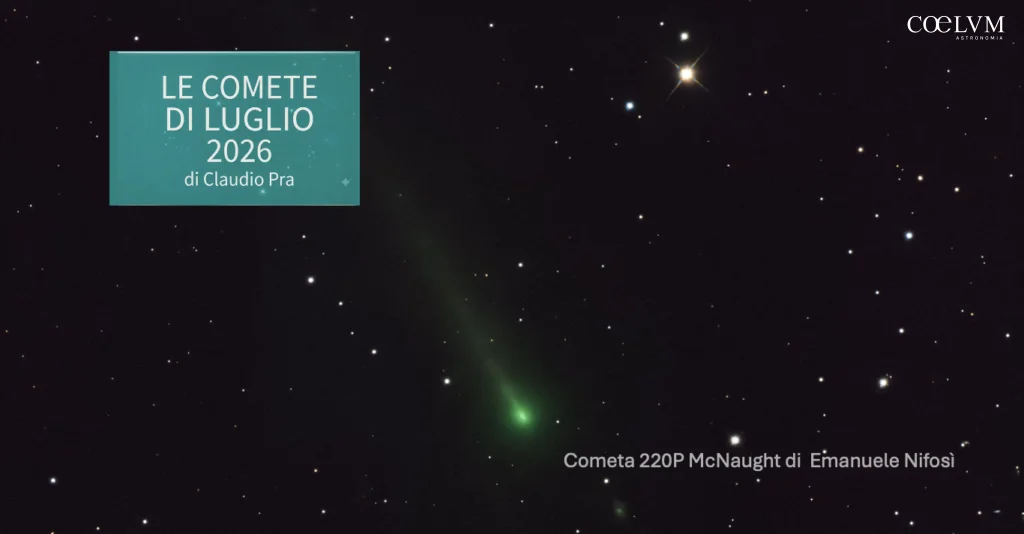
The month preceding the perihelion of 10P/Tempel, expected on August 2. By the end of July, the brightness it reaches will likely already be at the maximum predicted. But what will that be?
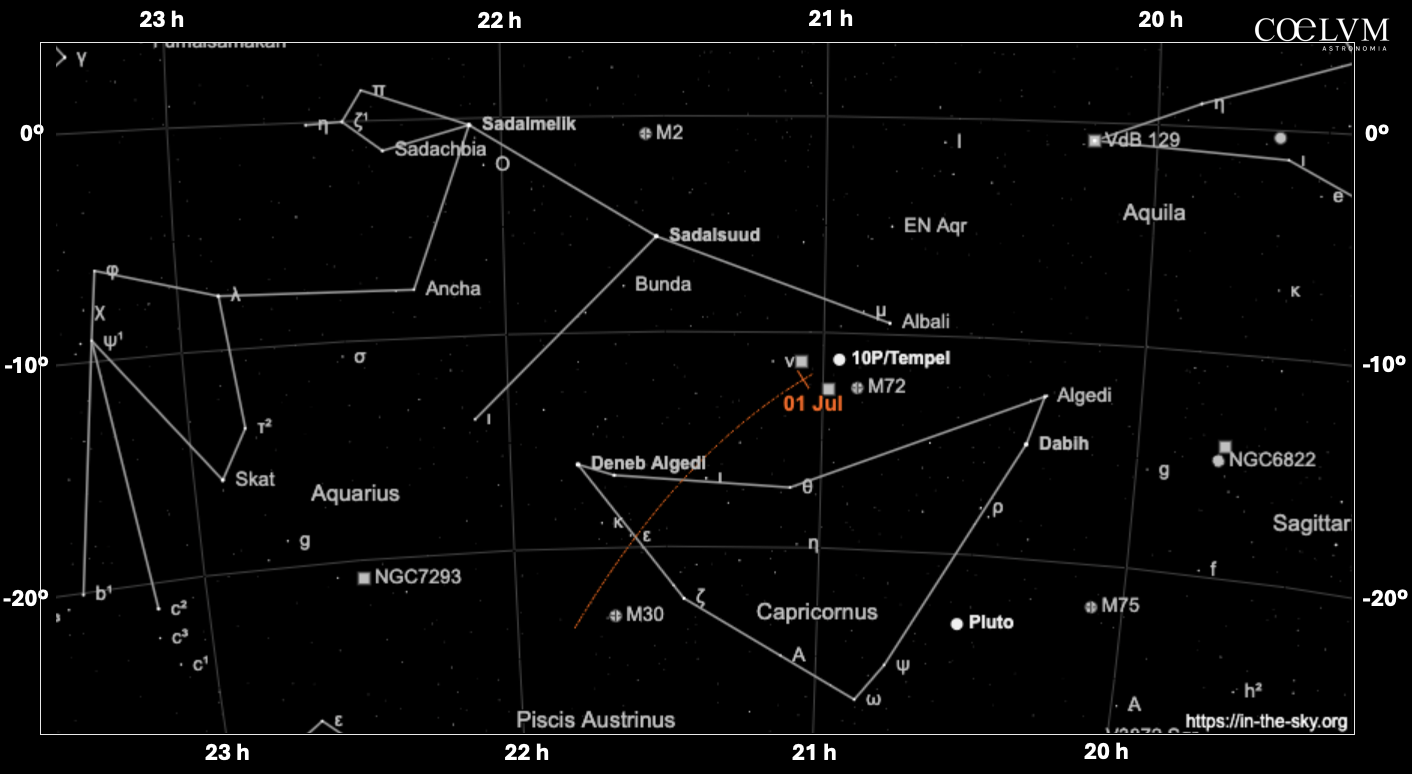
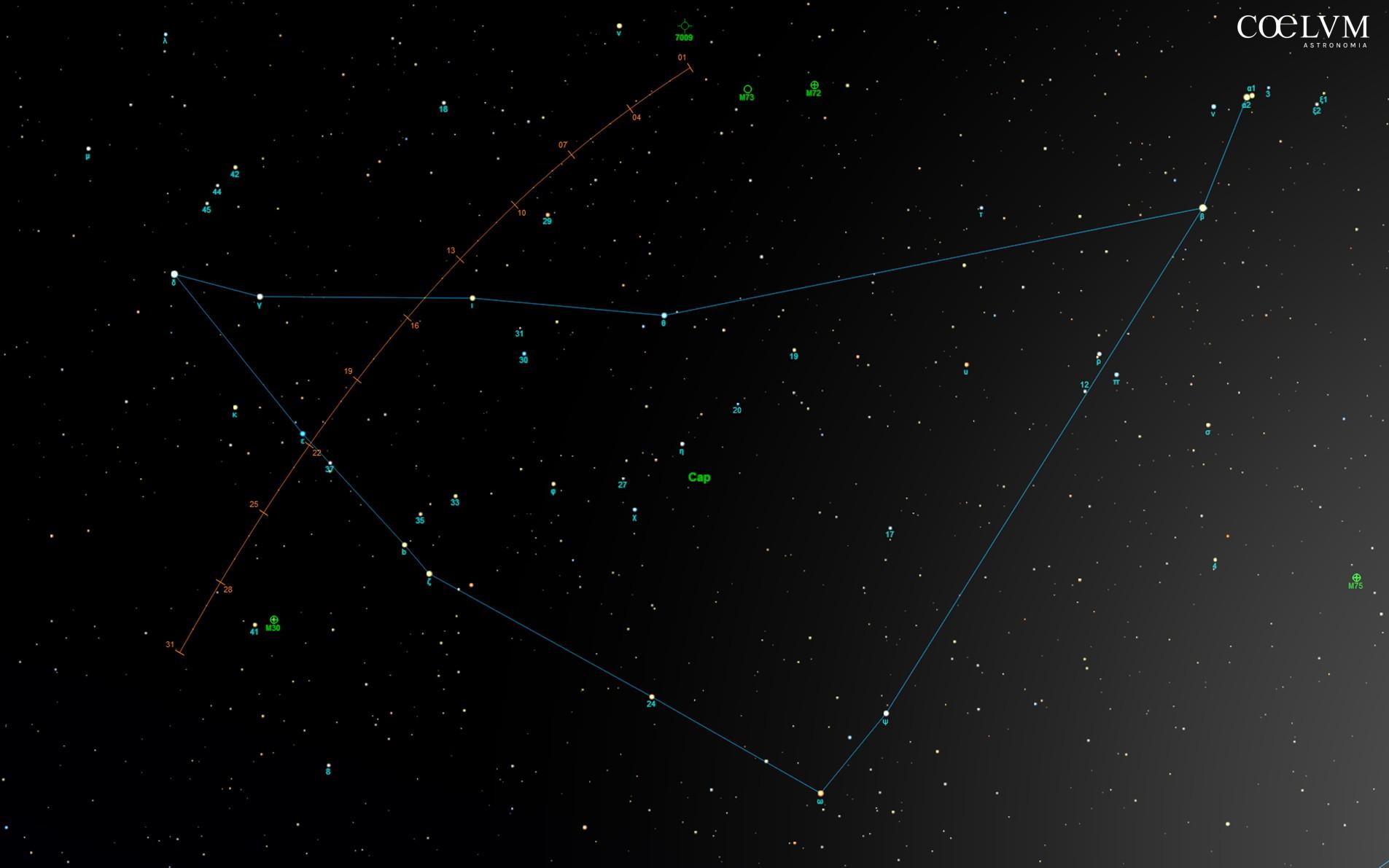
We have already discussed the growth issues of 10P/Tempel. Its actual light curve has not aligned with predictions for a long time, with the comet being much fainter than expected. Recently, however, it seems that activity has suddenly increased, although its diffuse appearance does not help observers. In July, the month that brings it closer to the perihelion on August 2, it may finally appear convincing and within reach of small-diameter instruments, especially towards the end of the period when it will be very close to the brightness peak that experts indicate as a good eighth magnitude. It will traverse from Aquarius through Capricorn, appearing reasonably high on the horizon during the last part of the astronomical night. On July 1, it will be found about fifty arcminutes from the planetary nebula “Saturn,” while at the end of the month, it will pass near the Globular Cluster M30. Unfortunately, on both occasions, the Moon will cause considerable interference.
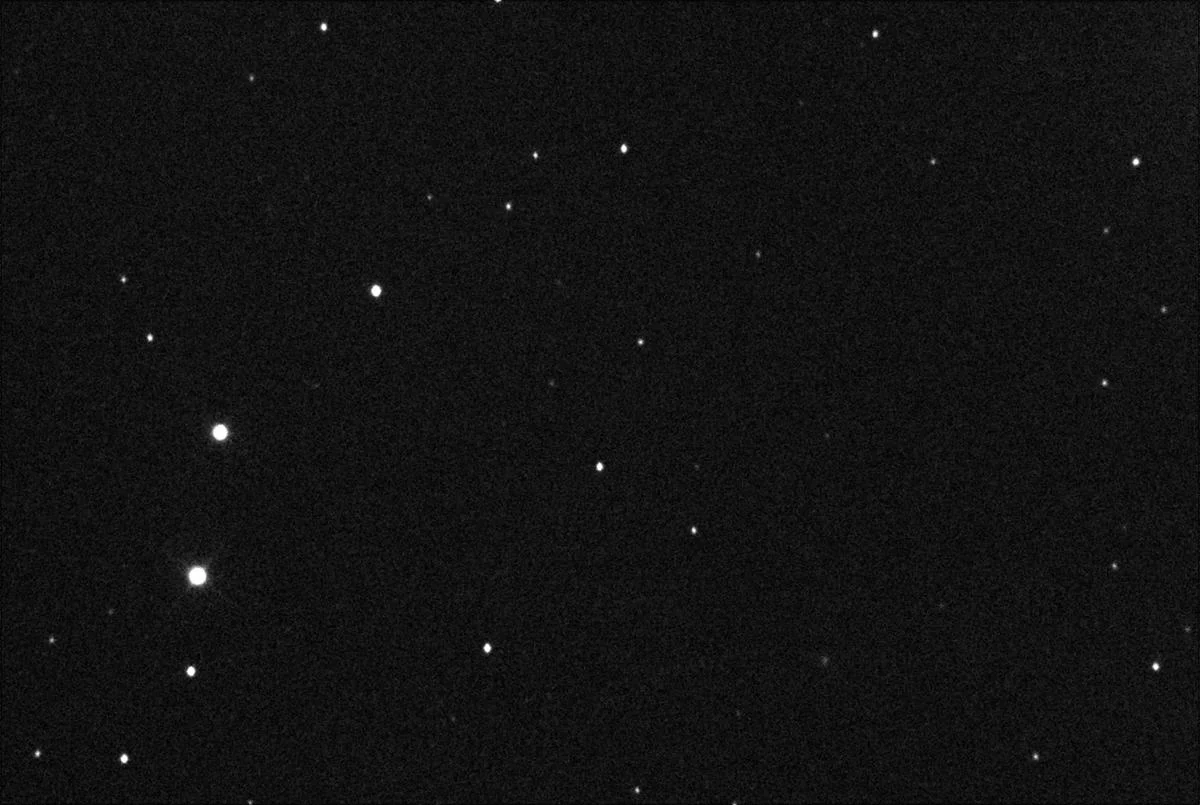
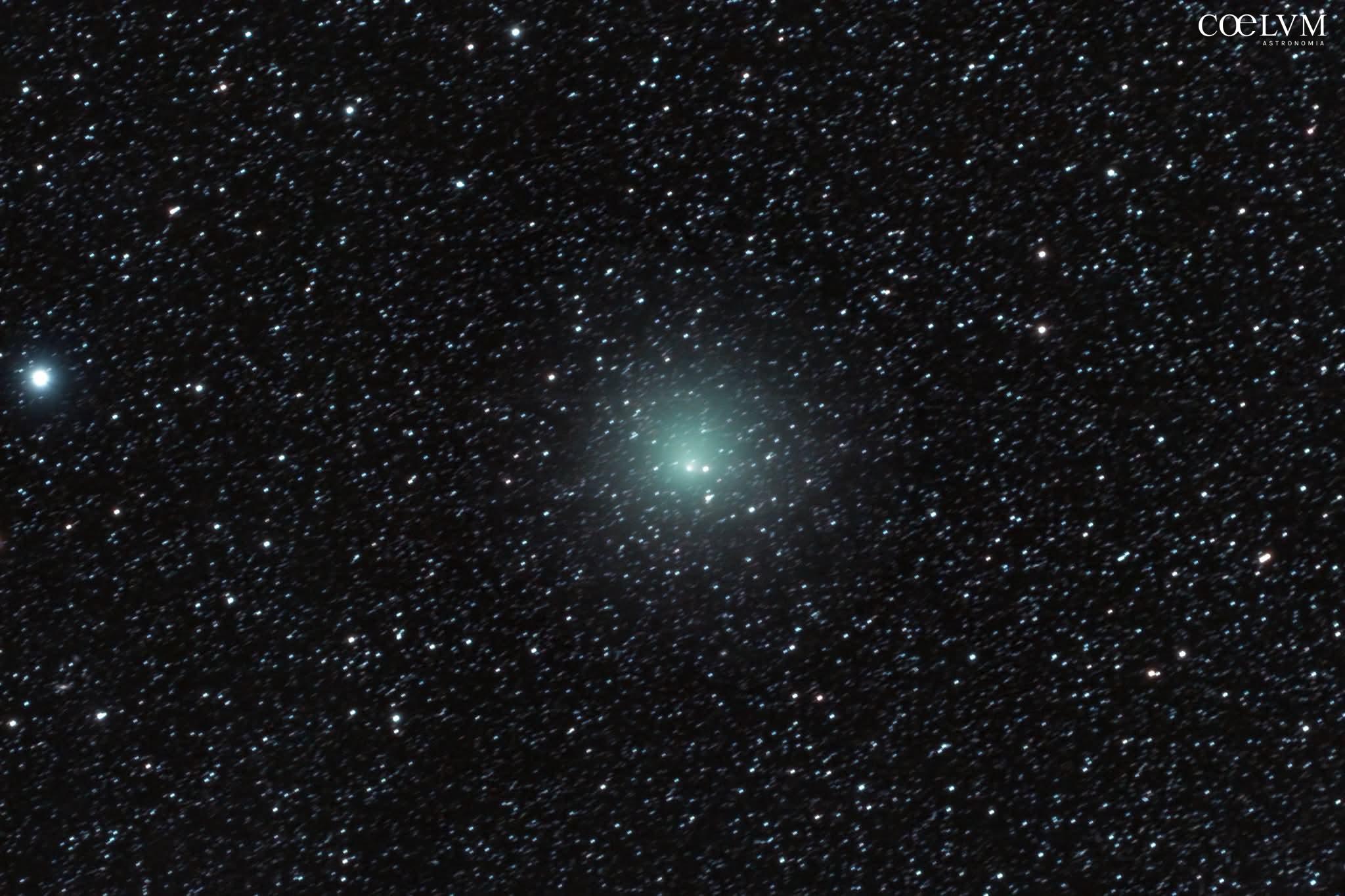
To conclude, a personal account. On the night of June 16, after having tried unsuccessfully a few days earlier, likely due to less than perfect skies, there it was, albeit with difficulty, in the eyepiece of my 30 cm diameter reflector. The nucleus appeared somewhat brighter and was surrounded by a very faint nebulosity. Overall, I struggled quite a bit to extract it from the background sky, even due to the very modest brightness I estimated to be close to twelfth magnitude.
We conclude with a couple of news items:
In the early days of June, there was a powerful outburst of 220P/McNaught, which brightened from magnitude 18 to 9 just days before its perihelion passage. We promptly informed you about this event in a news update. A truly remarkable “bang” that attracted the attention of experts and enthusiasts to the comet. Subsequently, as is natural, the brightness gradually decreased due to the expansion of the ejected material, settling around twelfth magnitude by the end of the month.
Also, in the early days of June, Alan Hale passed away, the co-discoverer in July 1995, along with Thomas Bopp (who died in 2012) of the famous comet C/1995 O1 Hale-Bopp. The two, independently, while observing near the Sagittarius globular cluster M70, noticed a fluff that should not have been there. That mysterious object, which was later determined to be at a distance of 7.2 AU, was identified as a comet shining at 10.5 magnitudes, an unusually high brightness at that depth. What followed is history, with Hale-Bopp remaining visible to the naked eye for a very long time. It was dubbed the comet of the century and became a mass phenomenon because it was easily accessible even to the general public. Its magnificent and evident tails of gas and dust are unforgettable. Thirty-one years have passed, but it feels like a century. At that time, comets were still discovered visually by amateur astronomers who, as a reward for their efforts, could name the “hairy star,” earning a small place in the history of astronomy. A touch of romance that today’s automated systems have practically erased.