Understanding the Colors of Stars: A Guide for Astronomy Enthusiasts
Explore the fascinating world of star colors and what they reveal about the nature of stars. Learn how temperature, size, and age affect stellar hues and how to observe them effectively.
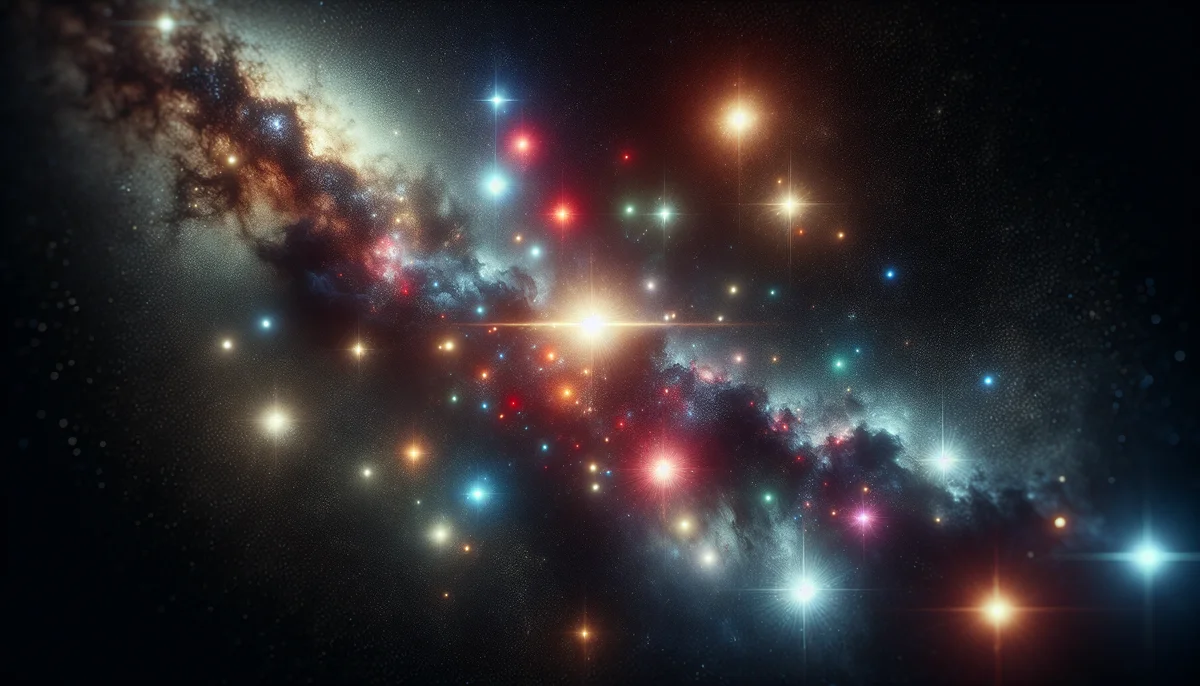
Have you ever wondered why some stars twinkle in blue while others appear red? How can astronomers glean so much information from mere colors? These color variations are not random; they unveil the intrinsic nature and secrets of each star. Let's delve into this fascinating realm to uncover what these hues truly signify.
Why Do Stars Have Different Colors?
The colors of stars reflect their intrinsic properties as well as external factors. To comprehend how these hues correspond to physical characteristics, it’s essential to grasp the reasons behind each unique coloration.
Chemical Composition and Temperature
The color of a star is closely tied to its surface temperature. The hotter a star, the more it emits light in the blue and ultraviolet spectrum, resulting in a bluish appearance. Conversely, cooler stars emit more light in the red and infrared spectrum, giving them a reddish hue. This temperature is primarily determined by the star's mass and chemical composition.
The elements present in a star's atmosphere absorb certain wavelengths of light, altering the observed spectrum. For instance, hydrogen in A-type stars causes specific absorption lines in the visible light spectrum. It is this chemical signature, combined with temperature, that defines the perceived color.
Influence of Size and Age
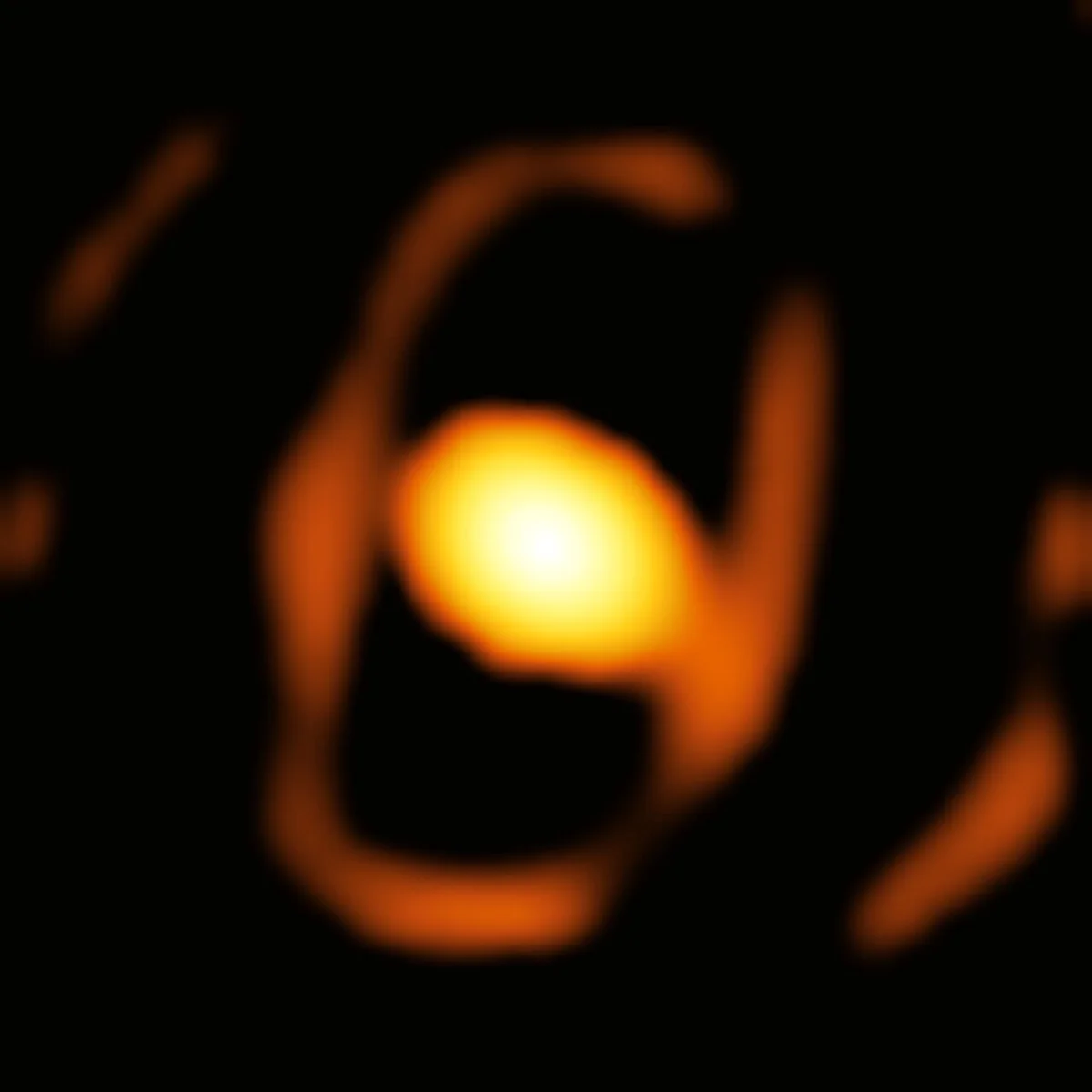
The size of a star also impacts its color. A red giant star like Betelgeuse, located in the constellation Orion, has a lower temperature than many smaller stars, resulting in its intense red color. As stars age, their outer layers often expand and cool, frequently changing their color towards the red end of the spectrum.
In contrast, young, massive stars like Rigel shine with a brilliant blue light due to their high temperatures. These color variations allow us not only to determine their temperatures but also to understand their evolutionary stages.
Effect of Earth's Atmosphere
Earth's atmosphere can alter the perception of stellar colors. Light scattering by atmospheric molecules, especially when a star is near the horizon, tends to make stars appear redder or more orange. This phenomenon is similar to the colors seen during sunsets.
Additionally, atmospheric turbulence can cause stars to twinkle and distort their apparent colors, making precise observation challenging without appropriate instruments or favorable conditions.
How Do Colors Indicate Star Temperature?
Knowing a star's color allows astronomers to deduce its temperature. This fundamental relationship is a valuable tool for both amateur and professional astronomers to better understand the physics of observed celestial bodies.
Blue Stars: The Hottest
Blue stars, such as Vega in the Lyra constellation, often exhibit temperatures exceeding 10,000 kelvins. Their intense heat generates highly energetic radiation. These massive stars have relatively short lifespans as they quickly consume their nuclear fuel.
Their high luminosity and distinctive color make them prominent markers in the night sky, favored by astrophotographers and avid observers. The O and B-type stars in the Orion cluster exemplify these blazing celestial bodies.
Yellow and White Stars: Temperate
Stars that appear white or yellow, like our Sun, have moderate temperatures ranging from about 5,000 to 7,500 kelvins. They produce a balanced light across the visible spectrum, which explains their often perceived neutral white color.
These stars are generally stable, fostering environments conducive to planetary life. Identifying these colors helps locate stars that may host solar systems similar to ours.
Red Stars: The Coolest
Red stars, such as Antares in the Scorpius constellation, represent the coolest category, with temperatures potentially dropping to around 3,000 kelvins. Their light is rich in red and infrared wavelengths.
This group includes red giants and red dwarfs, the latter being the most numerous stars in our galaxy. Observing them often requires specialized equipment, but their distinctive color aids in their recognition within star-rich constellations.
What Role Does Spectral Classification Play?
Spectral classification is a systematic method for cataloging stars based on their light spectrum, thereby indirectly classifying them by color and temperature. Understanding these categories aids in interpreting observational data and positioning a star within its life cycle.
The O, B, A, F, G, K, M Sequence
This sequence, arranged in descending order of temperature, ranges from the hottest O-type (blue) stars to the coolest M-type (red) stars. Each letter encompasses a wide range of physical characteristics, including chemical composition and size.
For instance, G-type stars, like the Sun, are often yellow and stable. Meanwhile, A and F types are whiter, while K and M types appear orange and red, respectively. This classification serves as a compass for astronomers looking to quickly identify celestial bodies.
How to Read a Hertzsprung-Russell Diagram
The famous Hertzsprung-Russell (HR) diagram combines temperature, luminosity, and color of stars. In this graphical tool, temperature decreases from left to right, while luminosity increases upwards.
Stars are positioned according to their evolutionary stage: main-sequence stars lie along the central diagonal band, while giants and supergiants appear in the upper right. This tool is essential for understanding the relationship between color, size, and brightness.
The Correlation with Color and Luminosity
There is a direct correlation between a star's color, temperature, and luminosity. A very hot blue star will also be highly luminous. Conversely, a red star, while visible in certain constellations, emits less light comparatively. This relationship also aids in identifying variable or evolving stars in the sky.
For example, Betelgeuse is a very bright red supergiant, while Rigel is an even more luminous blue supergiant. These distinctions also provide insights into the probable lifespan of these stars.
How to Observe and Identify Star Colors?
Sometimes difficult to discern with the naked eye, the colors of stars become more apparent with the right tools and techniques. Here’s how you can refine your perception and enhance your astronomical observations.
Selection of Observation Equipment
A quality telescope or binoculars with good aperture enhances color perception by providing a brighter and clearer image. Certain models with optics treated to reduce chromatic aberrations are particularly recommended.
A telescope like those discussed in this beginner’s guide can also accommodate filters that enhance specific colors, aiding in spectral identification.
Techniques for Properly Perceiving Colors
Observing from a location far from light pollution is crucial, as stray light dilutes hues. It’s also beneficial to focus on a star slightly outside of direct vision, as peripheral vision is more sensitive to color nuances.
Taking time to acclimate your eyes to the dark and using observational aids, such as personalized star maps, can greatly improve color recognition. You can deepen this practice with tips on star observation: guide.
Examples of Colorful Stars to Observe
To start, observe Sirius, the brightest star in the sky, with its characteristic white-blue hue. Aldebaran in Taurus stands out with its deep orange. Antares, mentioned earlier, is a bright red star easily spotted in the Milky Way.
Constellations like Ursa Major contain several stars of varying colors, making them an ideal field for recognizing color variations. Exploring well-known constellations will give you access to a wide array of colorful stars.
Common Mistakes to Avoid When Interpreting Colors
Despite their wonder, stellar colors can be misleading. It’s important to be aware of common pitfalls to avoid misinterpretation.
Confusing Real Color with Visual Effects
The perceived color can be influenced by twinkling caused by atmospheric turbulence. Sometimes, a star may appear red instead of blue or yellow simply due to rapid fluctuations in light. One must remember that our brain can amplify or alter these impressions based on observation conditions.
Additionally, the adaptation of our eyes in the dark plays a crucial role. A faint star may seem white, while it has a more pronounced hue when observed through a photograph or instrument.
Not Considering Light Pollution
Observing in urban areas or heavily lit zones distorts star colors, which are often muted or altered by streetlights and other artificial sources. For an accurate reading, it is advisable to favor observation sites distant from urban centers or plan outings to the countryside or mountains.
The adverse effects of light pollution are well-documented, and organizations like the International Dark-Sky Association advocate for the protection of night skies, a vital cause for astronomy enthusiasts.
Importance of Optimal Observation Conditions
Finally, humidity, atmospheric pollution, and mist can also alter color perception. A clear, dry, and stable night offers the best chances to distinguish the nuances of stars accurately.
To better understand these phenomena and choose the best timing for observations, it is crucial to be aware of the environmental factors that can influence your stargazing experience.