Exploring the Hidden Beauty of the Wolf's Cave Nebula
Discover the hidden beauty of the Wolf's Cave Nebula, a faint complex in Cepheus, captured under dark skies. Explore the astrophotography journey and techniques used.
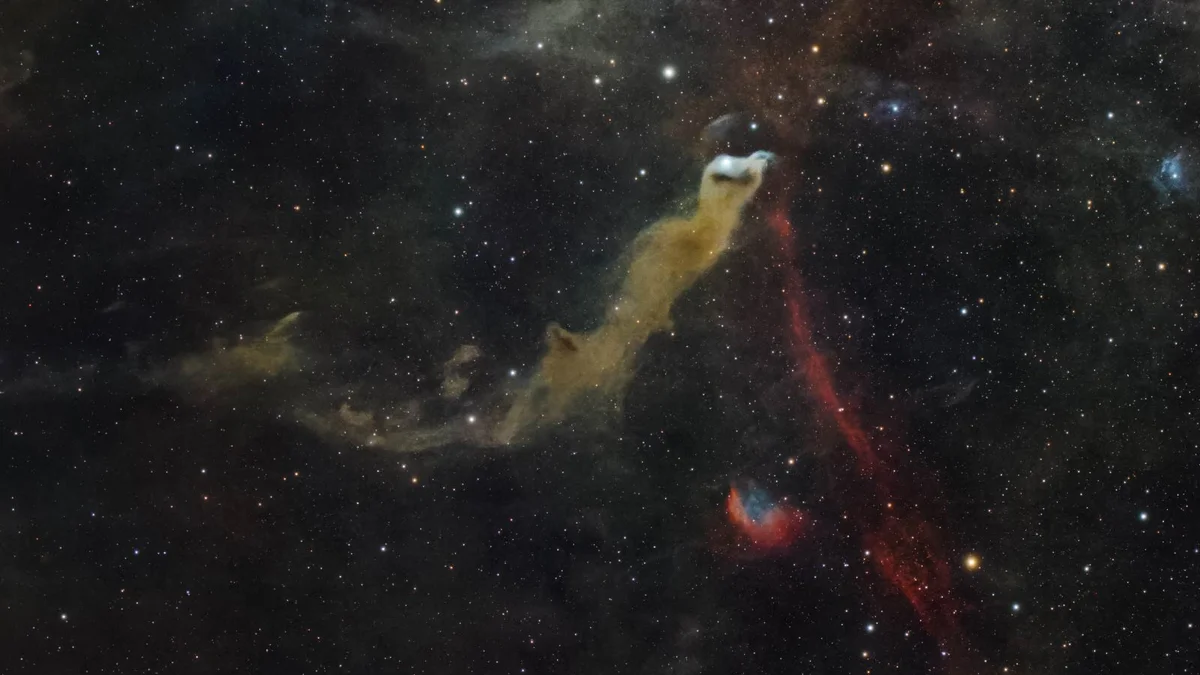
At first glance, the night sky may appear as a vast, empty expanse devoid of notable celestial features. However, tucked away in the constellation of Cepheus lies the Wolf’s Cave Nebula, an elusive formation characterized by its faint blue reflection nebulosity and dark interstellar dust.
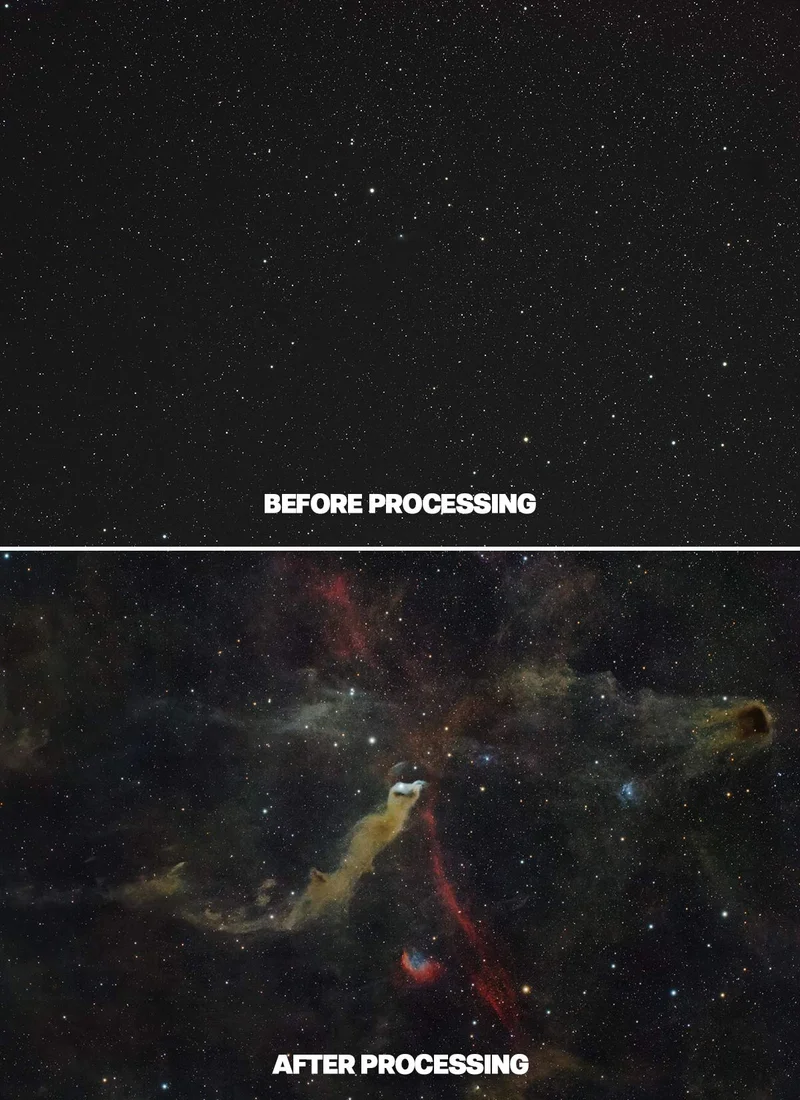
Photographing the Wolf’s Cave Nebula had long been a goal of mine, though I recognized the challenges posed by light pollution in my backyard. The opportunity arose when Ashley and I secured a campsite in southern Ontario during a new moon, providing the ideal conditions of a dark sky and a clear northern view necessary for this endeavor.
The Wolf’s Cave Nebula, located about 1,400 light-years from Earth, is a complex of dusty deep-sky features. The small blue reflection nebula, cataloged as vdB 152, is situated at the end of the dark nebula known as Barnard 175.
Understanding the Wolf’s Cave Nebula
The Wolf’s Cave Nebula is part of the northern Milky Way, a region rich in molecular clouds and deep-sky objects. The blue reflection nebula, vdB 152, is also identified as Ced 201. It is accompanied by Barnard 175, which appears as a long, comet-like trail of obscuring dust. Together, these formations create the complex known as the Wolf’s Cave.
Dark nebulae, such as Barnard 175, do not emit light on their own; instead, they obscure the light from stars situated behind them, resulting in regions that may seem empty but are actually filled with interstellar material.
The Subtlety of vdB 152
The blue hue of vdB 152 arises from its nature as a reflection nebula. Rather than generating visible light through ionized gas, it reflects light from a nearby blue-white star. The shorter blue wavelengths scatter more effectively than red, imparting the nebula's characteristic color. Interestingly, this illuminating star appears to be a transient visitor, moving through the region rather than originating from it. Its ultraviolet light may create a faint reddish glow in the surrounding dust.
For a deeper understanding of the Wolf’s Cave Nebula, NASA’s Astronomy Picture of the Day features a detailed reference image and scientific overview.
It is important to note that the Wolf’s Cave Nebula should not be confused with the Cave Nebula; the former refers specifically to vdB 152, Ced 201, and Barnard 175, while the latter, known as Sh2-155 or Caldwell 9, is also located in Cepheus.
The Astrophotography Journey
Embarking on a remote astrophotography trip requires meticulous planning. Every piece of equipment, from the telescope and mount to the camera and power supplies, must be packed efficiently. I typically organize my gear in reverse order of use to ensure quick access to the essentials.
Our TAB 400 teardrop trailer enhances the experience, providing comfort during our travels. It allows us to bring along our telescope while enjoying the conveniences of home, transforming the adventure from a mere task into an enjoyable outing.
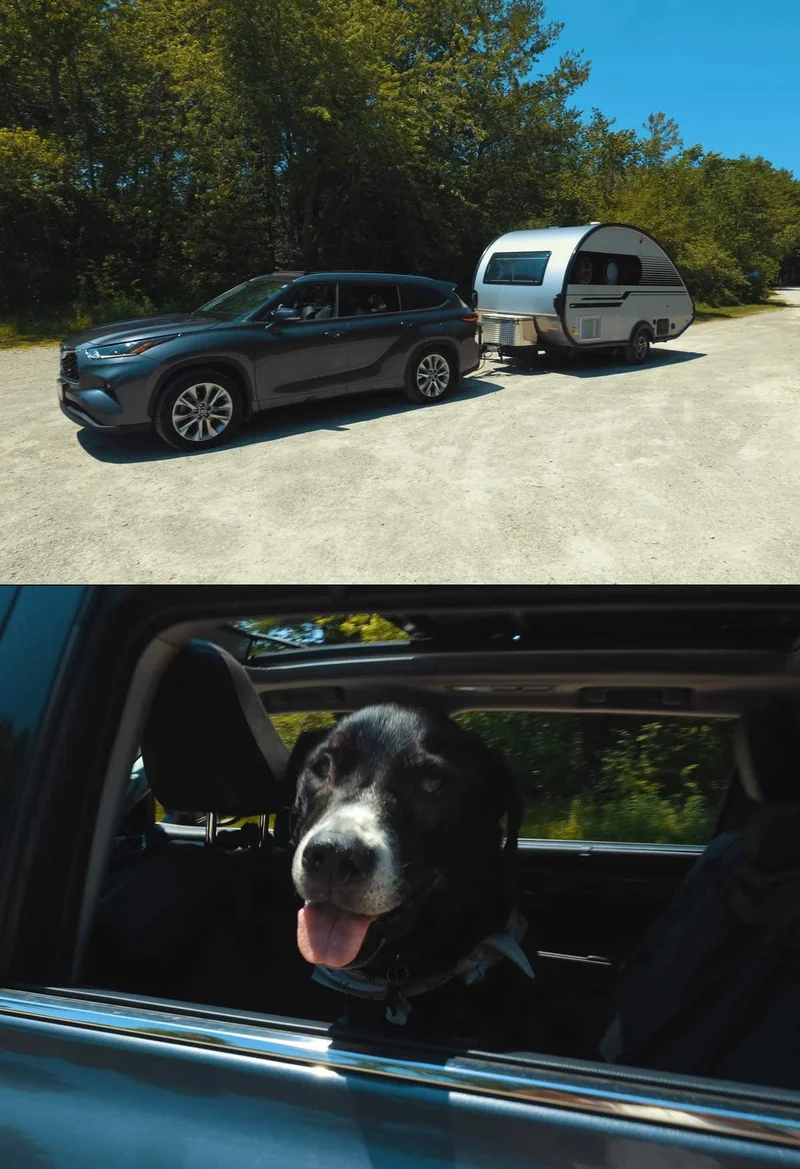
Rudy enjoying his trip to dark skies (and ready to get out of the car after a long drive).
My Astrophotography Setup
For this trip, I opted for a compact yet effective astrophotography setup:
- Telescope: Askar FRA300 Pro
- Camera: ZWO ASI2600MC Air
- Mount: ZWO AM3
- Sky conditions: Bortle 4
- Moon phase: New moon
- Filter: None
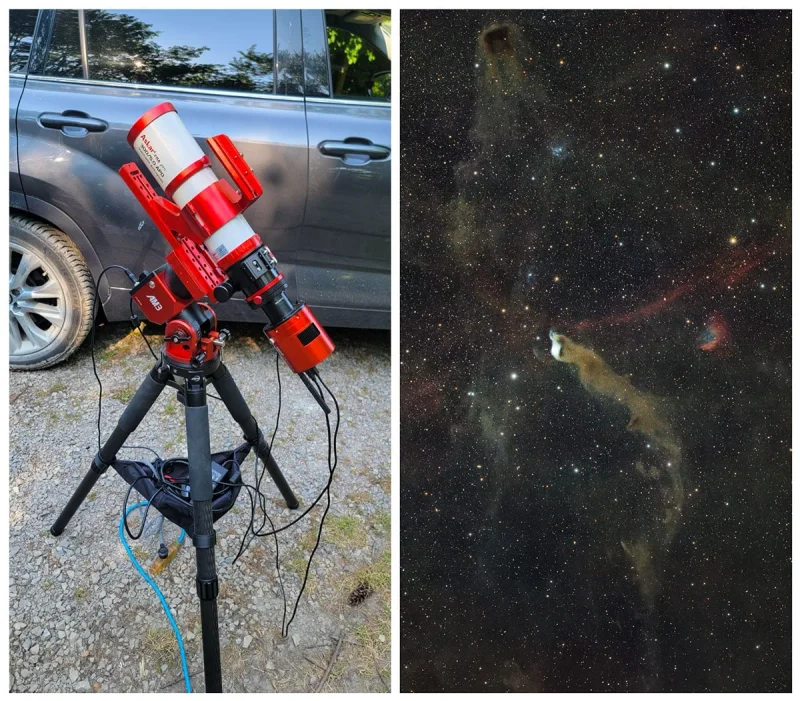
The Askar FRA300 Pro is a 60mm astrograph with a 300mm focal length, providing a fast f/5 focal ratio. This setup allowed me to capture the elongated shape of Barnard 175 along with the surrounding Cepheus dust.
I used the Askar FRA300 Pro Quintuplet APO Refractor to capture the Wolf’s Cave Nebula.
I paired the telescope with the ZWO ASI2600MC Air, a 26-megapixel color camera that integrates imaging and guiding capabilities, thus reducing the number of components I needed to transport.
The lightweight ZWO AM3 mount completed my portable system, allowing me to gather exposures while enjoying the campsite atmosphere.
The Importance of Broadband Imaging
For this project, I chose not to use a narrowband filter, as the Wolf’s Cave Nebula relies heavily on broadband light. The blue starlight scattered by vdB 152, combined with the natural colors of the star field and the subtle brown dust of Barnard 175, were crucial for capturing the true essence of the nebula.
While narrowband filters are effective for certain nebulae that emit strongly in hydrogen-alpha and oxygen III, they would not have suited this reflection nebula. A mild broadband filter could assist in suburban environments, but for this particular target, capturing the purest natural colors was paramount.
The Final Image
After processing the collected data, the structure of the Wolf’s Cave Nebula began to emerge. The small blue reflection nebula is positioned at one end of Barnard 175, with the dusty cloud extending across a densely packed star field. The image reveals a hidden beauty within what initially appeared to be an empty patch of sky.
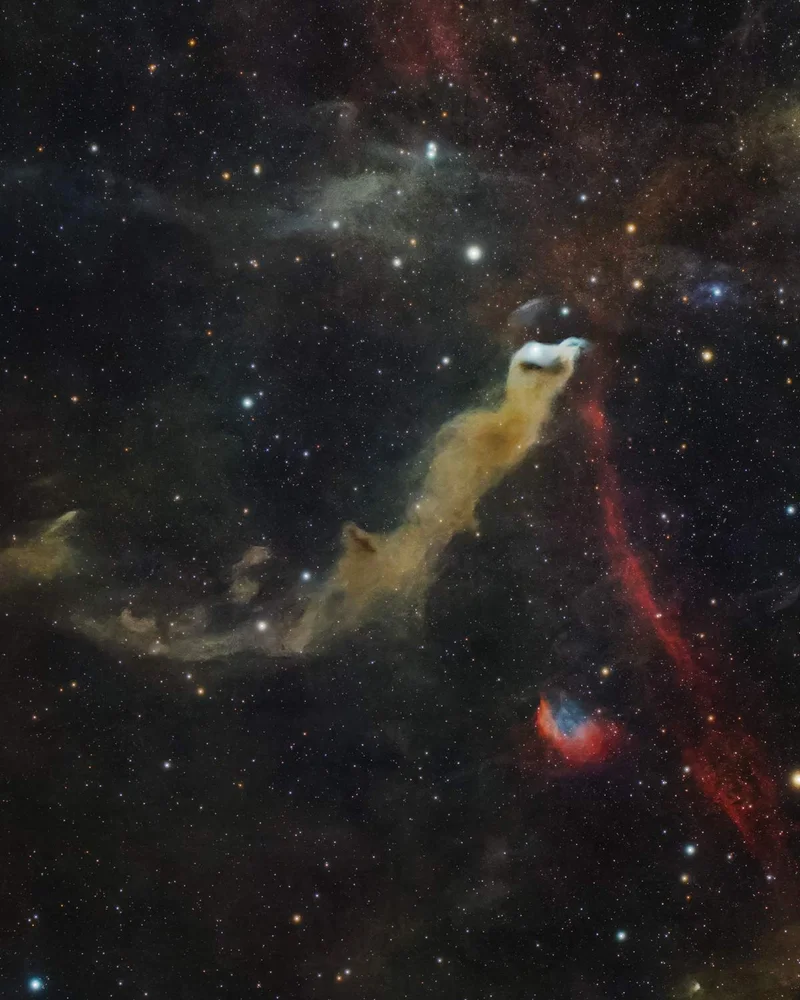
My final image of the Wolf’s Cave Nebula. 160 x 3 minutes using Gain 100 (8 hours total exposure).
While I am pleased with this outcome, I recognize that further data collection could enhance the image significantly. Many astrophotographers invest numerous nights across a season to capture the depth of such targets, gradually adding exposures to build a more comprehensive image.
For now, this representation of the Wolf’s Cave Nebula was achieved with a portable telescope and a commitment to patience, revealing the wonders hidden in the cosmos.