What Are Black Holes and How Do They Form?
Explore the fascinating reality of black holes, their formation, types, and the methods astronomers use to detect them, revealing the mysteries of these cosmic giants.
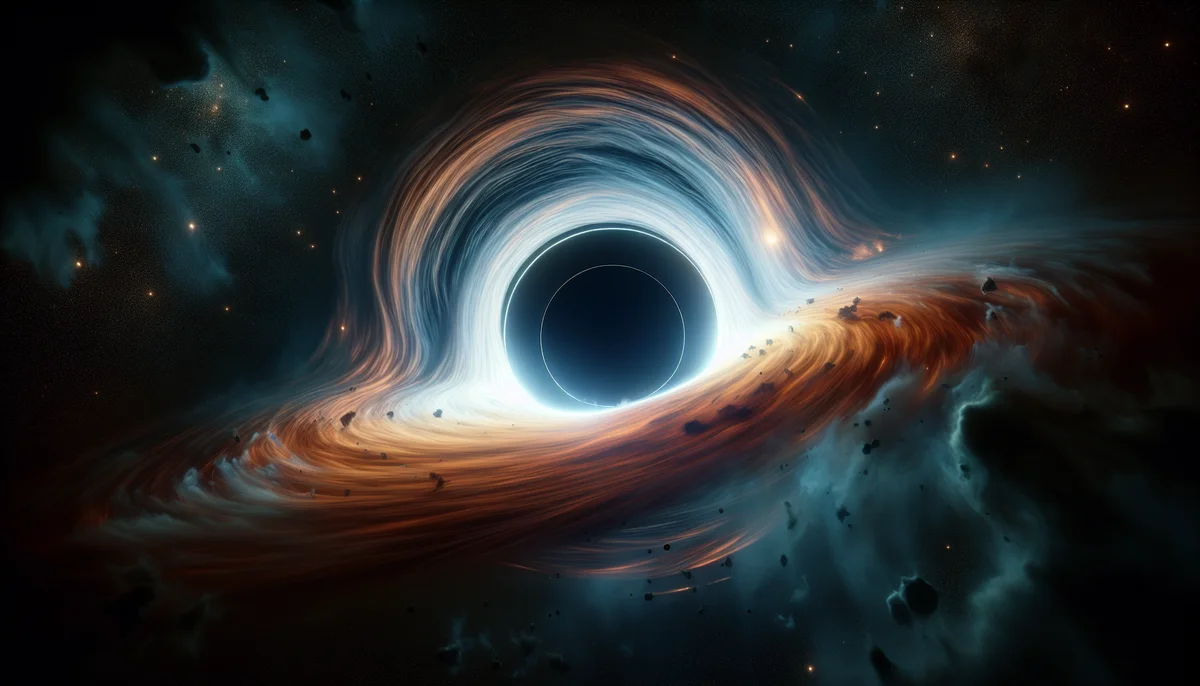
Black holes have captivated and intrigued scientists and enthusiasts alike, primarily due to their ability to absorb light and challenge classical physics. But what exactly lies behind this enigmatic term? How do these cosmic giants come into existence and evolve within the vast expanse of space? Here, we delve into the fascinating reality of black holes, moving beyond myths and misconceptions.
Table of Contents
- What is a Black Hole?
- The Concept of Singularity
- Event Horizon
- Types of Black Holes
- How Does a Black Hole Form?
- Gravitational Collapse of a Star
- The Role of Stellar Mass
- Formation of Supermassive Black Holes
- What Are the Different Types of Black Holes?
- Stellar Black Holes
- Intermediate Black Holes
- Supermassive Black Holes
- How to Detect a Black Hole in the Sky?
- Observing Gravitational Effects
- Emission of X-rays
- Influence on Neighboring Stars
- Why Are Black Holes Fascinating to Amateur Astronomers?
- Mystery and Space Exploration
- Importance in Astrophysics
- Impact on Understanding the Universe
What is a Black Hole?
Before exploring their formation, it is crucial to comprehend the very nature of black holes. These celestial objects are not mere mysterious entities; they arise from specific physical phenomena involving gravity and the structure of spacetime around an extreme singularity.
The Concept of Singularity
At the center of a black hole lies what scientists refer to as a singularity: a point where density becomes infinite, and the usual laws of physics cease to apply. This singularity results from a maximum gravitational collapse, concentrating an enormous mass into an incredibly small volume. All gravitational forces converge at this point, creating an extreme distortion of spacetime.
In some theoretical models, the singularity can be described as a region where the curvature of spacetime reaches infinite values, which is impossible to observe directly but strongly influences everything around it. Understanding this singularity remains a significant challenge in physics and involves advanced theories such as quantum gravity.
Event Horizon
Surrounding the singularity is the event horizon, an imaginary boundary marking the point of no return. Any matter or light crossing this threshold is irretrievably drawn toward the central singularity. For an outside observer, nothing can escape beyond this barrier.
The size of the event horizon is related to the black hole's mass and is referred to as the Schwarzschild radius. For instance, the supermassive black hole at the center of our galaxy, Sagittarius A*, has an event horizon so vast that it encompasses several times the size of the Sun. This region makes black holes challenging to detect directly, as they do not emit light on their own.
Types of Black Holes
Black holes can be categorized into several types based on their mass and origin. Stellar black holes result from the collapse of massive stars at the end of their life cycle, while supermassive black holes, which are significantly heavier, reside at the centers of galaxies. There are also intermediate black holes, whose mass falls between the two previous categories, although their existence is more challenging to confirm.
These categories illustrate the diversity of these objects, both in size and behavior, enriching our understanding of the cosmos. Some black holes, such as those detected through gravitational waves, even reveal binary systems where two black holes orbit each other before merging.
How Does a Black Hole Form?
The process of forming a black hole is a spectacular natural phenomenon tied to the life cycle of stars. However, it also depends on specific conditions, particularly the mass of the star, which influences the nature of the final remnant.
Gravitational Collapse of a Star
When a massive star has exhausted its nuclear fuel, it can no longer resist its own gravity. Its core then undergoes a rapid collapse, resulting in a supernova explosion and leaving behind an extremely dense core. If this core exceeds a certain critical mass, no known force can counteract its collapse, which continues until a black hole is formed.
This mechanism is observed in very large stars, often more than 20 times the mass of the Sun. Gravitational collapse is thus the key to the birth of stellar black holes, such as the one detected in the binary system Cygnus X-1, famous for its X-ray emissions.
The Role of Stellar Mass
The initial mass of the star determines its ultimate fate. For example, stars with masses between approximately 8 and 20 solar masses will evolve into neutron stars after a supernova, while those exceeding this mass will form black holes. This threshold is not rigid but conditions the observed phenomena, including the size and type of the resulting compact object.
Recent studies indicate that mass loss due to stellar winds or interactions in binary systems can alter this threshold, thus affecting the likelihood of black hole formation. These observations enrich astrophysical models and aid in interpreting phenomena such as gamma-ray bursts associated with certain collapses.
Formation of Supermassive Black Holes
Supermassive black holes, which can be millions or even billions of times more massive than the Sun, do not originate from a single star. Their formation remains an active research area, with several hypotheses proposed. One suggests the direct collapse of gigantic primordial gas clouds in the early universe, bypassing the stellar phase.
Another avenue posits that these black holes grow through the accretion of matter and successive mergers with smaller black holes, culminating in giants like the one in the galaxy M87, whose first image was recently unveiled by the Event Horizon Telescope. These black holes play a fundamental role in galactic evolution.
What Are the Different Types of Black Holes?
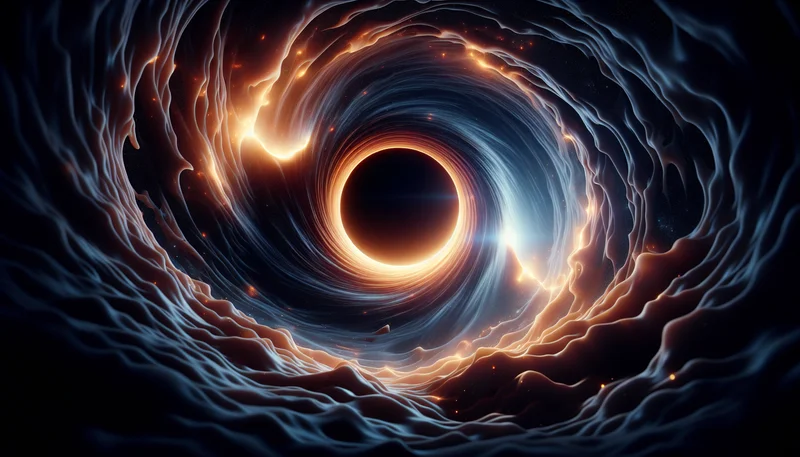
Based on their mass and origin, black holes can be divided into several distinct categories. Each type exhibits unique characteristics, providing a fascinating array of cosmic objects to observe and study.
Stellar Black Holes
Stellar black holes primarily result from the deaths of massive stars and typically have masses ranging from 5 to 30 times that of the Sun. Their detection is often indirect, such as through X-ray emissions in binary systems like V404 Cygni, where the black hole siphons material from its companion.
These black holes are abundant in our galaxy, but most remain invisible without luminous objects nearby, as their event horizons do not emit any light. Stellar black holes testify to the stellar life cycle and play a key role in the dynamics of multiple systems.
Intermediate Black Holes
Intermediate black holes possess masses between stellar and supermassive black holes, ranging from a few hundred to a few thousand solar masses. Their origin is more mysterious, but they may represent transitional stages in the growth of supermassive black holes or remnants of dense star clusters.
Recent observations, particularly through gravitational wave detection or X-ray emissions in small clusters, tend to confirm their existence. For instance, candidates located in globular clusters have been identified, paving the way for a better understanding of their role in the galaxy.
Supermassive Black Holes
Often found at the centers of galaxies, these giants can be millions or billions of times the mass of the Sun. Their gravitational effects significantly influence galactic dynamics and contribute to regulating star formation through powerful energetic mechanisms.
The Sun is located far from any supermassive black hole, but by observing galaxies like Andromeda, their presence can be clearly detected. These black holes are also prime targets for space telescopes like Chandra, which study their X-ray emissions.
How to Detect a Black Hole in the Sky?
Given their elusive nature, how do astronomers identify black holes? Several indirect methods allow for the detection of their presence through interactions with the surrounding environment.
Observing Gravitational Effects
A black hole significantly influences the movement of nearby objects due to its intense gravity. By studying the velocities and orbits of surrounding stars or gas, it is possible to infer the presence of an invisible but massive object. For example, the trajectory of stars near the center of the Milky Way has confirmed the existence of Sagittarius A*.
Additionally, gravitational wave detectors like LIGO have recorded the vibrations of spacetime generated by merging black holes, opening a revolutionary new observational window.
Emission of X-rays
A black hole itself is invisible, but when it accretes matter, that matter heats up intensely as it approaches the event horizon, emitting detectable X-rays. Sources like Cygnus X-1 serve as major examples of this phenomenon, providing crucial evidence for the existence of black holes in our galaxy.
These observations also offer insights into the dynamics of the accretion disk, the rotation speed, and the characteristics of the environment surrounding the black hole.
Influence on Neighboring Stars
In certain binary systems, a black hole exerts such a strong pull that it affects the behavior of its companion star, causing variations in brightness or distortions. By monitoring these interactions, the presence of a black hole can be deduced, as seen in the case of V616 Monocerotis with a visible star.
These systems serve as ideal study grounds for understanding accretion mechanisms and gravitational effects up close, while being accessible to amateur astronomers equipped with suitable telescopes and observation techniques.
Why Are Black Holes Fascinating to Amateur Astronomers?
Beyond professional astrophysicists, black holes also captivate amateur astronomy enthusiasts, who see them as mysteries to unravel and gateways to the infinitely vast.
Mystery and Space Exploration
The black hole fascinates with its enigmatic and almost futuristic aspect. It raises questions about the limits of physics and the very nature of time and space. For amateurs, following discoveries related to black holes, such as the first image of the event horizon captured by the Event Horizon Telescope, is a constant source of wonder.
Moreover, they enjoy indirectly observing the influence of black holes on their surroundings, using accessible equipment like binoculars or beginner telescopes, strengthening their connection to the universe and extreme phenomena.
Importance in Astrophysics
Black holes play a crucial role in numerous astrophysical processes, such as the formation and evolution of galaxies, the dynamics of star clusters, and even the propagation of heavy elements through supernovae linked to certain collapses. Their study continues to provide insights into the fundamental workings of the universe.