The VIS Instrument of Euclid Captures Millions of Stars in the Galactic Center
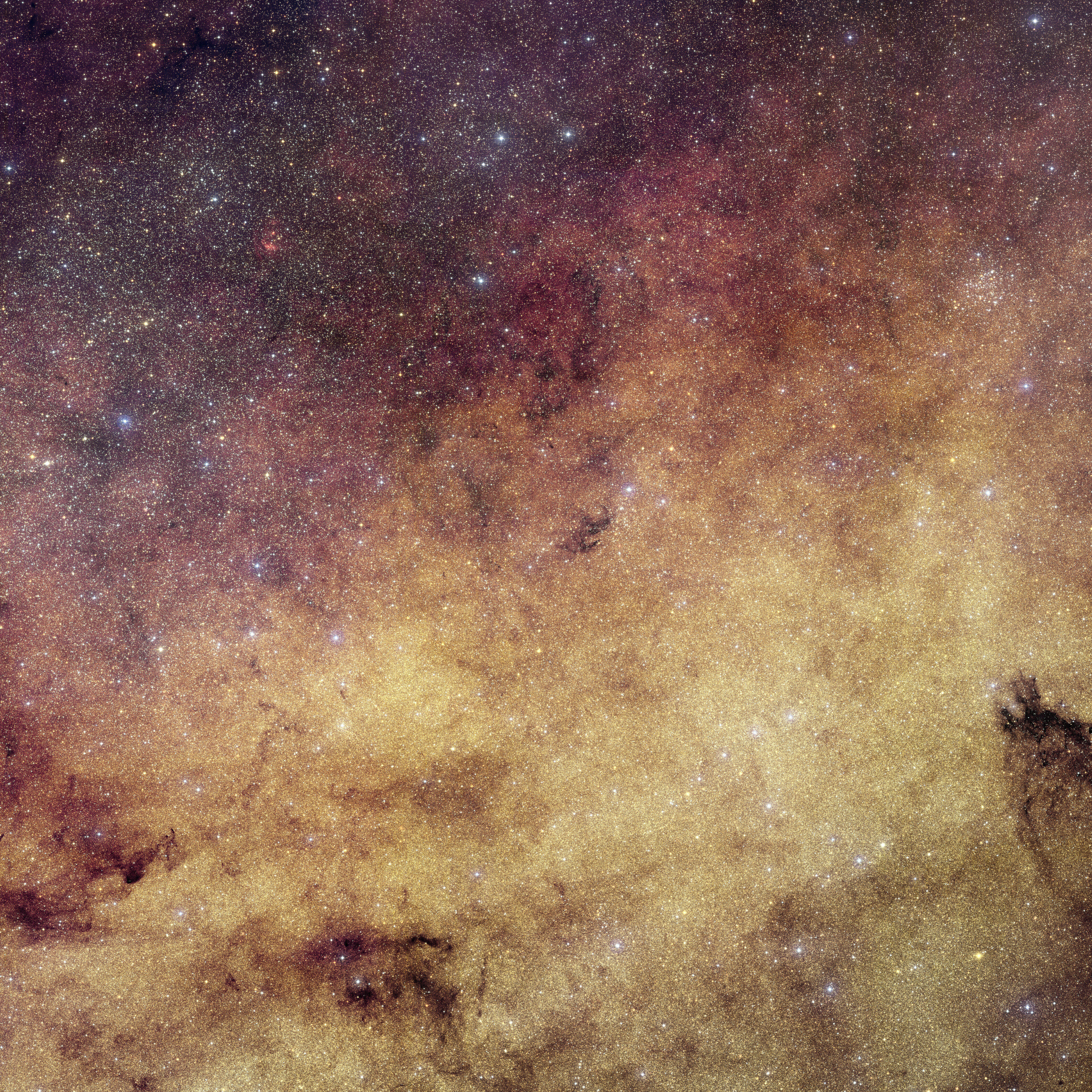
On June 24, the European Space Agency (ESA) released the largest and most detailed image of the center of the Milky Way in visible light, created with VIS (Visible Camera), one of the two instruments aboard the Euclid space telescope.
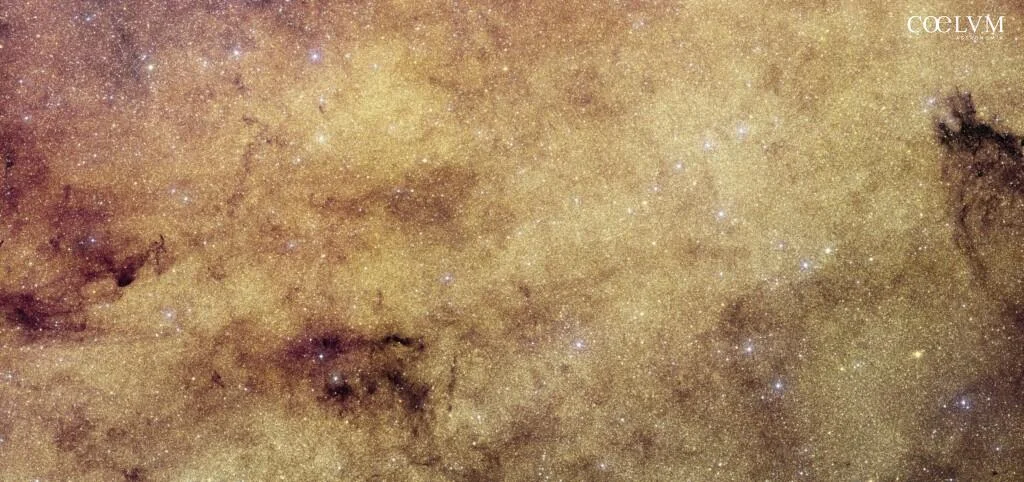
On June 24, the European Space Agency (ESA) released the largest and most detailed image of the center of the Milky Way in visible light, created with VIS (Visible Camera), one of the two instruments aboard the Euclid space telescope. The image captures the central region of the galaxy, the bulge, which is extremely bright and dense with stars, capturing over 60 million of them.
The primary scientific objective of the VIS instrument is to map the distribution of luminous and dark matter in the universe. To achieve this, scientists utilize the technique of gravitational lensing, studying how light from distant galaxies is bent by gravity as it passes through extremely dense regions of the universe, such as a galaxy cluster. These distortions act like a lens, magnifying the image of the distant galaxy, allowing researchers to quantify the mass present in the cluster and assess its dark matter content.
This physical phenomenon can also be observed on smaller scales thanks to the high-resolution images from VIS, through the so-called microlensing. This technique allows for the investigation of small distortions in the light from galaxies caused by the presence of dark matter.
Microlensing and Exoplanets
On March 23 of last year, scientists used the keen eyes of Euclid to study the center of our Galaxy, capturing a mosaic made with 9 pointings for a total of 26 hours of observation.
Microlensing can indeed also be used to detect exoplanets. The effect in this case is due to the random alignment of two stars along the observer's line of sight. If a planet orbits around the closer star, its gravity also bends the light from that star, introducing a small irregularity. This variation in brightness reveals the presence of the planet.
However, to detect such anomalies, the telescope would need to observe the same star for weeks or months to capture any variations caused by the planet during its orbit. This image does not aim to identify new events; rather, by utilizing the 51 known planetary systems within the observed field, it seeks to remove the degeneracy in the star-planet mass ratio and separation for already known planetary systems or those that will be discovered by future missions.
This operation will greatly aid in improving the analysis of data collected with the Roman space telescope (NASA), whose launch is imminent and which we discussed in a previous article.
The motivations were thus strong enough for the scientific community to divert Euclid from its routine mapping of the universe to capture this striking and valuable image for research.
Roman promises to identify over 1,200 planets using microlensing, quadrupling the 300 discovered so far with this method, primarily using ground-based telescopes with a reduced field of view. In contrast, with its large field, Roman will thoroughly scan much of the sky, especially the galactic center, where, due to the high concentration of stars, events of this type are more likely.
Now let's delve into the more technical aspects by discussing the instrument that allowed Euclid to acquire these images.
Onboard Instruments: VIS and NISP
The Euclid space telescope is a three-mirror-anastigmatic (TMA) in off-axis Korsch configuration, ideal for minimizing optical aberrations over its wide field of view of 0.55 square degrees – an area about two hundred times larger than that covered by the Hubble Space Telescope – while maintaining the same resolution.
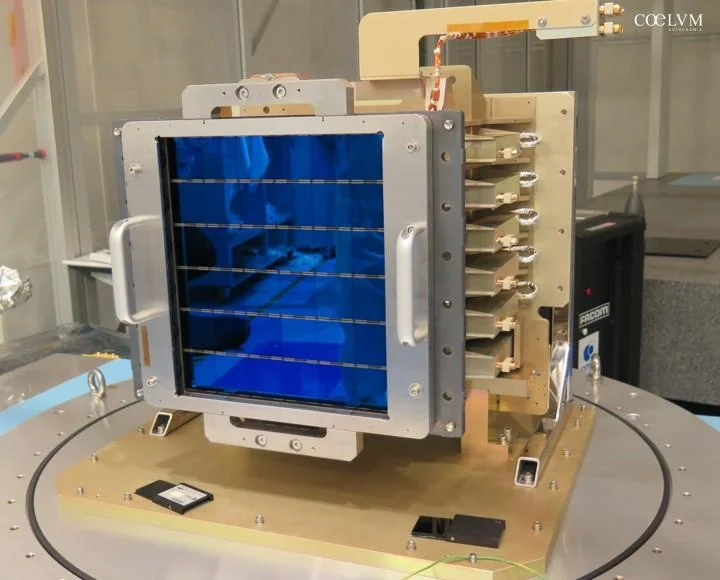
With a primary mirror of 1.2 m in diameter, it has an effective area of over one square meter thanks to its optimized design. The light collected by the telescope passes through a dichroic, an optical element capable of separating a light beam based on wavelength. It sends visible light to VIS, ranging from 530 nm to 920 nm, while the wavelengths of the near-infrared go to the second instrument, NISP (Near Infrared Spectrometer and Photometer).
To measure the tiny distortions in the light from galaxies, or in this case stars, caused by weak gravitational lensing, VIS must be extremely precise. To avoid unwanted reflections or alignment issues, the instrument does not have a filter wheel but instead features a single broadband filter between 550 nm and 900 nm. The heart of the instrument is its focal plane, covered by a 6×6 mosaic of 36 CCDs. Each sensor has over 4,000 pixels per side read through four reading nodes arranged one at each corner, to reduce read noise. These features make it the ideal instrument for scanning large portions of the sky with a high level of detail.
The two instruments of Euclid work in synergy: images from VIS are indeed combined with information obtained through NISP, which determines the distance of the observed objects through photometric redshift. This way, a three-dimensional mapping in space, and thus in time, of the distribution of ordinary and dark matter in the universe can be performed, also imposing limits on the nature of dark energy.
An image like this is thus yet another demonstration that instruments designed with a specific scientific purpose can often provide significant contributions in different fields, thanks to the ingenuity of scientists who manage to utilize them to the fullest. Euclid is now back to scanning the extragalactic sky, and the next major data release will be available this autumn.
.
Sources:
- Euclid Mission | ESA Science Missions
- Euclid: An ESA Mission With NASA Participation | ENSCI
- Euclid’s view of our galaxy’s bulge | ESA images
- Euclid data release Q2: the Euclid Galactic Bulge Survey | Euclid Consortium
- J.-P. Beaulieu et al., Euclid Quick Data Release (Q2). The Euclid Galactic Bulge Survey, A&A (2026)