The Magnetar Connection: Insights into Superluminous Supernovae
Joseph Farah and his team explore the connection between magnetars and superluminous supernovae, shedding light on the mechanisms behind their extraordinary brightness.
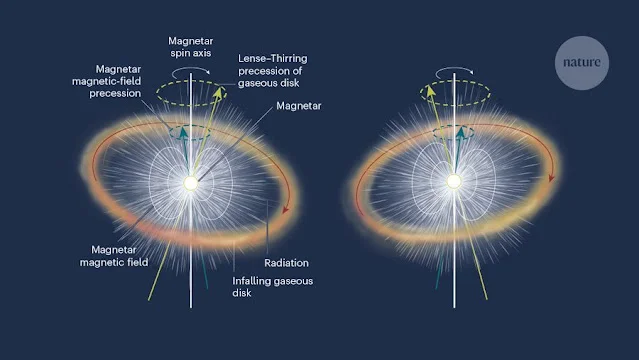
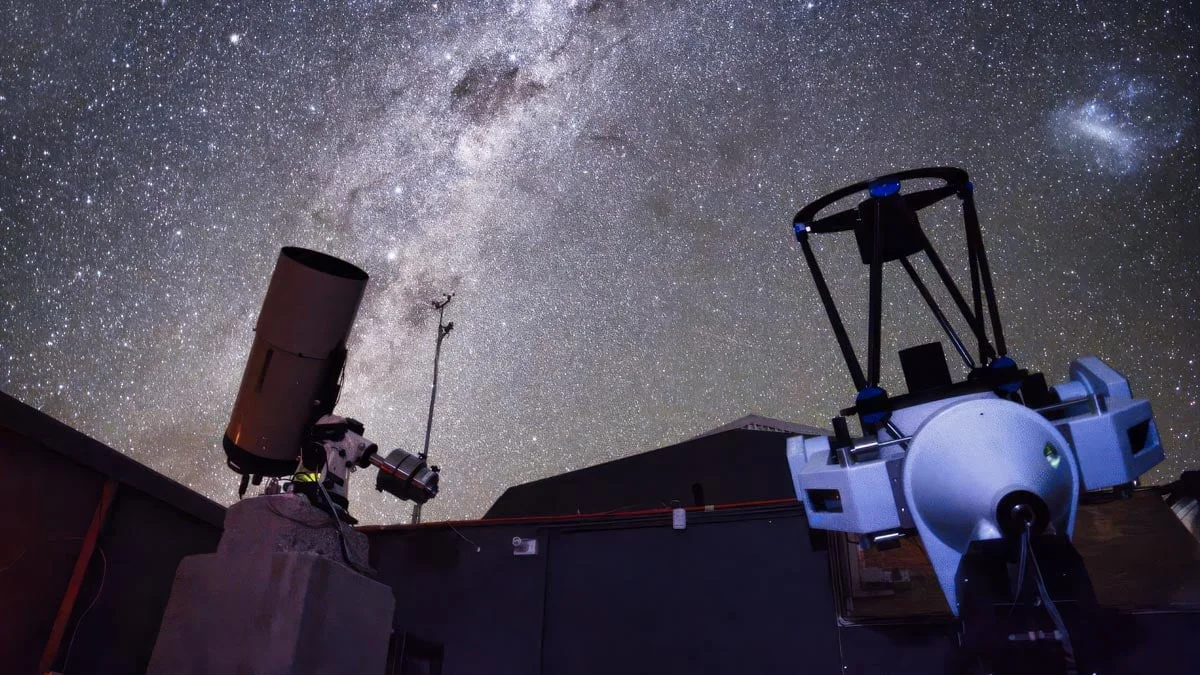
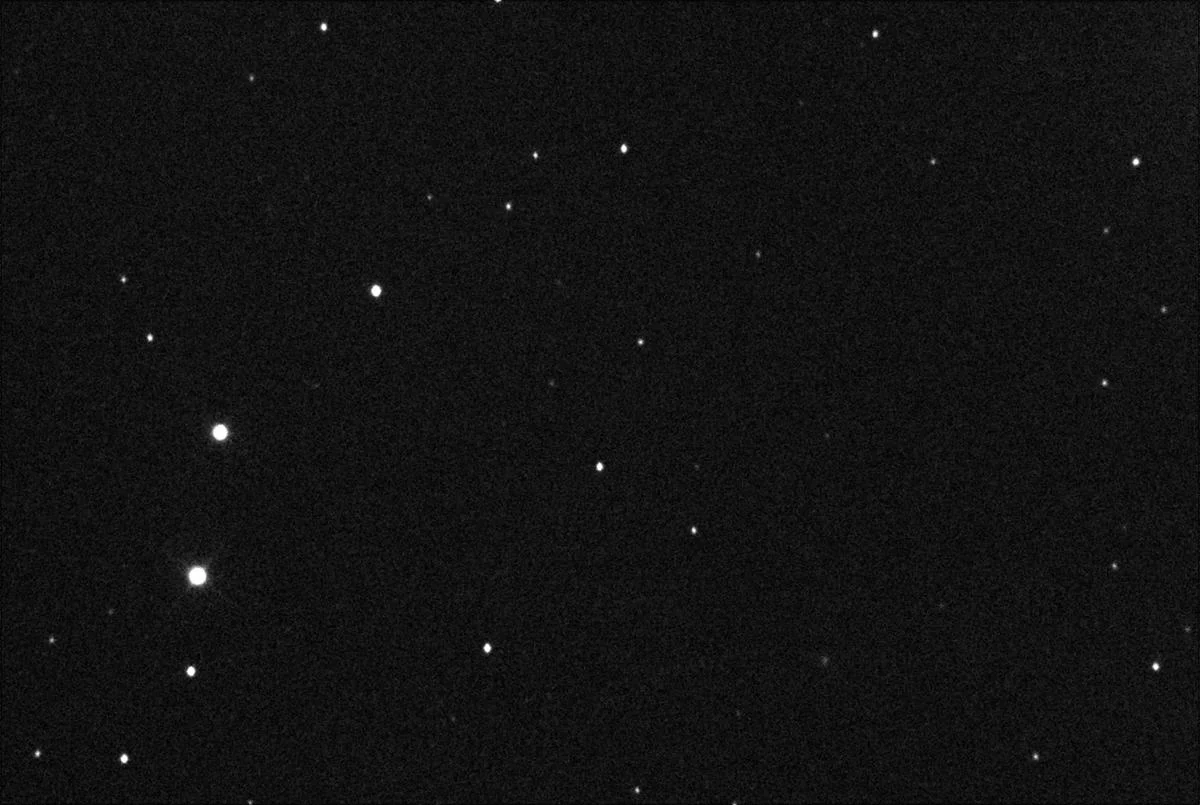
In a recent study published in Nature, Joseph Farah from the University of California and his team have unveiled findings regarding a superluminous supernova designated 2024afav. This extraordinary event was monitored almost continuously for six months with the help of telescopes across the globe. The researchers noted fluctuations in brightness, suggesting that this supernova is powered by a rapidly rotating, highly magnetized neutron star known as a magnetar.

Over the past two decades, astronomers have cataloged a unique group of exceptionally bright supernovae known as superluminous supernovae. These cosmic explosions can be more than 100 times brighter than typical supernovae, yet their rarity and unpredictable nature make them challenging to observe. The source of the extra energy that fuels this remarkable brightness has remained a mystery until now.
Neutron stars, which are born from supernova explosions, typically rotate at incredibly high speeds, completing a rotation in mere milliseconds, and possess strong magnetic fields. Previous theories had proposed that superluminous supernovae might be associated with magnetars—neutron stars with magnetic fields over a million times stronger than that of Earth. When the magnetic axis of a magnetar is misaligned with its rotation axis, it can generate massive amounts of radiation, heating the ejected layers of the star and enhancing their brightness.
This magnetar model offers an explanation for the overall behavior of superluminous supernovae, including their peak brightness and the duration of their rise and fall. However, it does not account for the smaller bursts frequently observed during the gradual decline of a supernova's brightness. In their study, Farah and his colleagues observed unprecedented luminosity oscillations in supernova 2024afav, confirming four bursts—previous observations of superluminous supernovae had detected no more than two. They found that the intervals between these bursts decreased over time, starting at about 50 days and shortening to approximately 20 days between the last two confirmed bursts.
During the formation of a magnetar, some ejected layers of the star may fall back towards the center, creating a spiraling disk of material. The authors propose that this phenomenon could explain the observed luminosity oscillations. If the falling disk is also misaligned with the magnetar's rotation axis, it may oscillate like a spinning top. This precession movement is akin to the oscillation of the magnetar's magnetic field, but in the case of the disk, it results from the general theory of relativity, specifically the Lense-Thirring effect, where a massive rotating body drags the structure of spacetime with it.

The Lense-Thirring precession has been observed in the orbits of Earth satellites, but in the context of a magnetar, it would be magnified by hundreds of millions of times due to the extreme gravitational field in its vicinity. Farah and his team suggest that this precessing disk is responsible for the observed luminosity oscillations.
As the mass in the disk gets closer to the rotating magnetar, the Lense-Thirring precession accelerates. The distance between the innermost layer of the falling disk and the magnetar's center is determined by the point at which the magnetar's radiation pressure becomes strong enough to halt the inward fall of the disk's material. As the supernova weakens, this radiation pressure diminishes, allowing the disk to approach the magnetar and precess more rapidly. Farah and colleagues quantitatively tested their model, demonstrating that it could simultaneously account for the luminosity oscillations and the general properties of the supernova, including rise time, peak brightness, and decay rate. They also found that it could explain previous observations of other superluminous supernovae with less well-sampled oscillations.
The successful application of their model provides compelling evidence that superluminous supernovae may indeed be powered by magnetars. However, the mystery is not fully resolved. While the study shows that the disk can precess at the same rate as the observed luminosity oscillations, it does not clarify how this precession influences the supernova's brightness. For now, the model has only been applied to a limited number of observations. Confidence in this interpretation will grow if the model continues to successfully explain future observations of superluminous supernovae. Fortunately, the Vera Rubin Observatory is expected to detect many more supernovae soon. Its Legacy Survey of Space and Time (LSST) will likely uncover thousands, if not tens of thousands, of superluminous supernovae, which can then be studied with instruments like the Las Cumbres telescope used in this research to gather extensive observations necessary to detect the weaker modulations predicted by the magnetar model.

This sample would serve as a robust testing ground for the model and allow for the deduction of magnetar properties on a population scale. Detailed follow-up campaigns will also strongly constrain the characteristics of magnetars, and combined with spectral diagnostics of accretion and ejecta, they could even test general relativity using young magnetars.
Beyond potentially solving the enigma of superluminous supernovae, this study suggests that supernovae are often asymmetric, leading to misaligned astronomical systems. This has implications for other systems containing compact objects, including X-ray binaries, where material falling onto a compact object generates intense X-ray signals, and for the merger events of compact objects (neutron stars or black holes) that create gravitational waves and/or kilonovae.