Polar Auroras: A Rare Sight Beyond the Arctic
Discover the recent polar auroras observed at low latitudes, their causes, impacts, and the science behind these captivating phenomena.
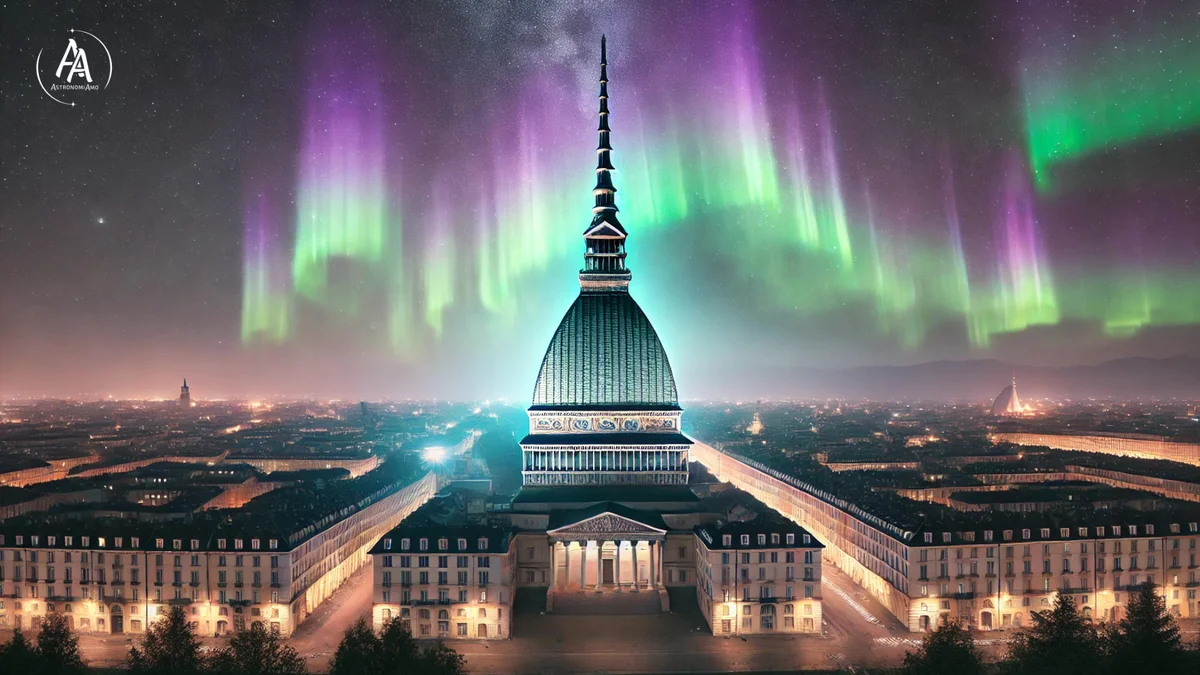
As 2024 draws to a close, an extraordinary phenomenon has captivated observers in regions typically unaccustomed to such celestial displays: polar auroras have been spotted at much lower latitudes than usual.
The night between May 10 and 11, 2024, stands out in many memories as people witnessed a truly rare spectacle. No need to travel to Iceland; the northern lights were visible right above rooftops in the United States, the Yucatán Peninsula in Mexico, the Bahamas, Jamaica, and even the Hawaiian Islands. The phenomenon extended its reach to Portugal, Spain, and Italy, stretching all the way to the skies over Algeria and the Canary Islands.
In Asia, the display was noted as well, with observers in Japan, Northern India, South Korea, and Northern China, including Beijing, also enjoying the view. In the Southern Hemisphere, the auroras were visible in regions as far as Australia (including Queensland), New Zealand, Chile, Argentina, South Africa, Uruguay, Southern Brazil, and Namibia.
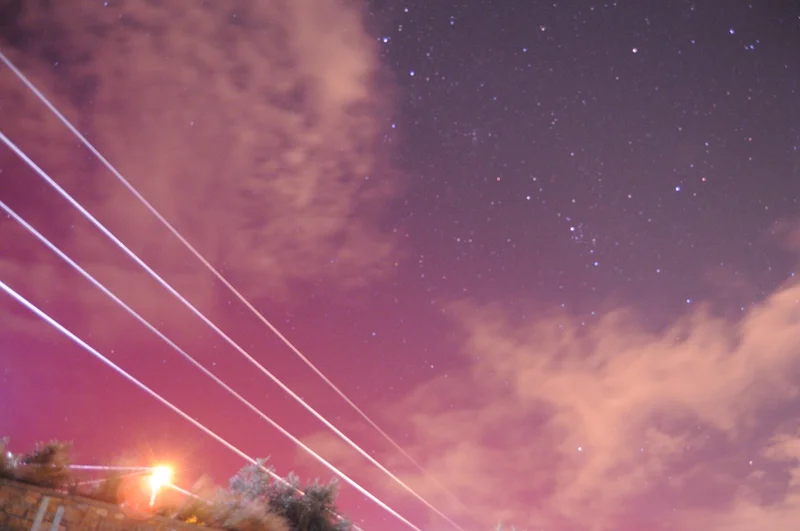
The auroral phenomenon captured from Liguria, Italy. Credits: Elisa Cavalli
While the displays were not as vibrant as those seen closer to the poles, they were enough to delight many. The last occurrence of such visibility was back in 2003, and advancements in photography technology, even on smartphones, have allowed people to capture these moments more effectively, leading to a surge of images shared across social media platforms.
Negative Impacts
However, the event was not without its challenges. It caused disruptions in radio communications, particularly in the HF band (3-30 MHz), while effects in VHF (30-300 MHz) and UHF (300 MHz - 3GHz) bands were less pronounced. These disturbances arose because the phenomenon increased the density of the ionospheric layer, which in turn affected radio wave propagation.
Electric utilities have evolved since the infamous 1989 solar storm that caused a nine-hour blackout in Québec. Today’s infrastructure is better equipped to handle such events, and there were no major outages reported. Nevertheless, AT&T and NOAA noted irregularities in the electric grid and degradation in GPS and high-frequency radio communications. In some areas, such as New Zealand, precautionary power interruptions were implemented. Additionally, magnetic activity was observed to activate compasses in underwater observatories up to 2.7 kilometers deep.
Compared to past events in 1989 and 2003, technological advancements have also impacted drones, which experienced navigation issues due to GPS degradation, and in some instances, crashes. Satellites faced challenges as well; the GOES-16 weather satellite temporarily halted data downloads for about two hours, while Starlink services experienced degradation but remained operational. The Gaia probe from ESA also reported electrical issues.
What Causes Auroras?
Understanding the mechanisms behind auroras involves tracing their origins from solar activity to the Earth’s magnetic field. Recently, we have become familiar with the term polar aurora, but it’s essential to note another phenomenon known as the Stable Auroral Red arc (SAR).
Both auroras and SARs are optical phenomena related to the interaction between solar particles and the Earth’s magnetosphere, but they differ significantly in their causes and visibility.
The Polar Aurora and Its Origin
Polar auroras (boreal in the northern hemisphere and australis in the southern hemisphere) occur due to the interaction of charged particles from the solar wind with gases in the Earth’s upper atmosphere, particularly in the ionosphere, which primarily contains oxygen and nitrogen.
The process that generates auroras can be summarized as follows:
- Solar Particle Emission: The Sun emits solar wind, driven by nuclear fusion that generates energy and releases charged particles (protons, electrons, and helium nuclei) at high speeds, often exceeding 400 km/h, reaching Earth within two to three days. Solar flares, which are sudden energy explosions, and coronal mass ejections (CMEs), which expel plasma and magnetic fields, also contribute to this influx of particles.
- Interaction with the Magnetosphere: Upon reaching Earth, the solar wind collides with the magnetosphere, which acts as a shield, deflecting most incoming particles. However, some can penetrate through two key processes:
- Magnetic Shock: The solar wind induces a shock that compresses and disturbs the Earth's magnetic field.
- Magnetic Reconnection: If the solar wind's magnetic field is opposite to that of Earth, a process called magnetic reconnection occurs, allowing charged particles to flow into the magnetosphere.
- Chasing Along Magnetic Lines: The charged particles that enter the magnetosphere do not head directly toward Earth but become trapped in the Van Allen belts, where they are accelerated and directed toward the poles along the Earth’s magnetic field lines.
- Collision with the Ionosphere: When high-energy particles (primarily electrons) reach the upper atmosphere (100-400 km altitude), they interact with gases in the ionosphere, particularly oxygen and nitrogen. This interaction leads to atomic excitation, where charged electrons transfer energy to atoms, exciting them.
- Light Emission: When these atoms return to their normal energy state, they release energy in the form of light. This process can occur at various altitudes, resulting in the characteristic colors of auroras:
- Green: The most common color, produced by oxygen at altitudes of about 100-250 km.
- Red: Originating from oxygen at higher altitudes above 250 km, where atmospheric density is low.
- Purple/Blue: Less common colors produced by ionized nitrogen at lower altitudes (below 100 km).
The typical global shape of an aurora is an oval, known as the auroral oval, which surrounds magnetic poles and can extend to lower latitudes depending on solar wind strength. Geomagnetic storms, triggered by CMEs or strong solar wind gusts, can amplify this process, allowing a greater influx of charged particles to strike Earth, resulting in more intense auroras visible at lower latitudes.
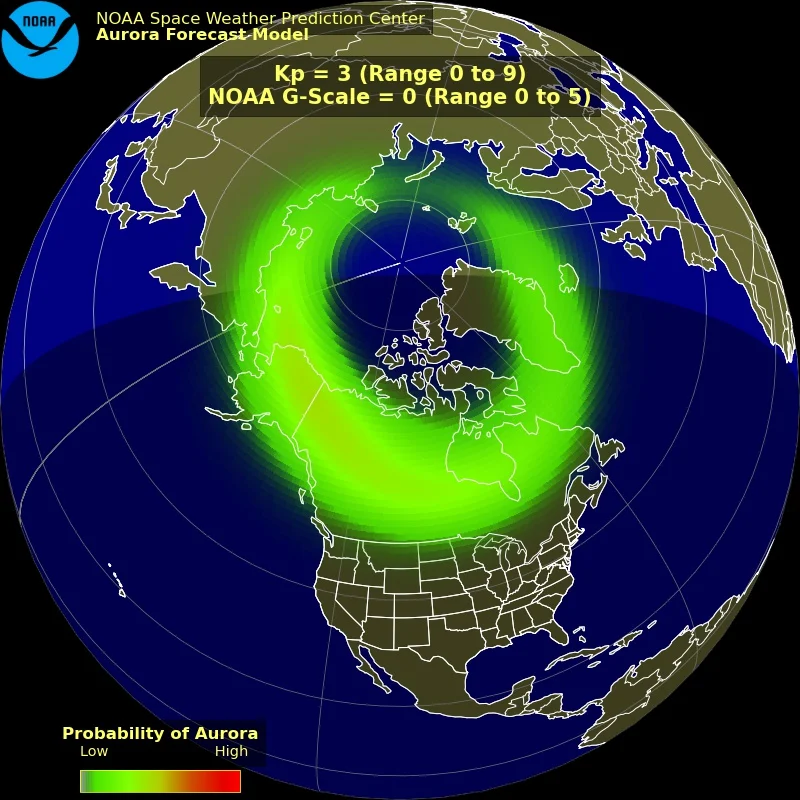
Example of auroral oval. Credits: NOAA Space Weather Prediction Center
Vertically, auroras can take on various forms such as arcs, bands, curtains, or spirals, and their rapid movement in the sky is a result of the continuous and swift interactions between solar wind and the magnetosphere.
Stable Auroral Red Arc (SAR)
If your observations did not align with the typical description of polar auroras, featuring only red hues and lacking dynamic forms, you may have witnessed a SAR. This phenomenon is characterized by a more static display (as the name suggests: Stable Auroral Red arc) and involves a different formation process. SARs are not caused by direct solar particle impacts but arise from slower energy heating in the upper ionosphere, known as the plasmasphere. This heating results from energy dissipation from geomagnetic storms, warming electrons at lower latitudes than where typical auroras occur. SARs typically manifest as stable red arcs in the sky, resulting from oxygen excitation at altitudes above 400 kilometers.
Given the typical latitudes of SARs, ranging from 45 to 60 degrees, it is evident that countries like Italy are not entirely unfamiliar with such phenomena, and the excitement surrounding them is beginning to settle into a sense of normalcy. Similar occurrences have been noted in 2003 and 1989, but the events of May 2024 included more than just SARs in the northern regions.
Solar Cycles
The activity of the Sun can be forecasted, albeit broadly, due to its adherence to specific cycles. The most significant of these cycles spans approximately eleven years.
Predicting solar activity is a focus of new branches of astrophysics, such as Solar Activity Forecast and Space Weather Forecast, akin to traditional weather forecasting. Solar cycles represent periodic variations in the Sun's activity, primarily characterized by fluctuations in sunspot numbers and changes in the magnetic field of our star. Each cycle typically lasts about 11 years, transitioning from a solar minimum—marked by few or no sunspots—to a solar maximum, characterized by numerous sunspots, before returning to a minimum. The cycle's progression influences numerous aspects of space weather, including the visibility and intensity of auroras.