LHS 1140 b: Helium Detection Reveals Atmosphere in the Habitable Zone
The detection of helium reveals an atmosphere around LHS 1140 b, a rocky exoplanet in the habitable zone, providing new insights into its potential for retaining gaseous envelopes.

A Signature in the Atmosphere
The detection of escaping helium has made it possible to measure an atmosphere that would otherwise be too faint to observe directly.
For the first time, a direct observation has unveiled an atmosphere surrounding a rocky exoplanet orbiting its host star. This planet, known as LHS 1140 b, is located approximately 48 light-years from Earth. The finding stems from the identification of helium during a transit event, where the planet passes in front of its star, allowing a fraction of the star’s light to pass through the upper layers of the atmosphere, leaving behind a spectral fingerprint.
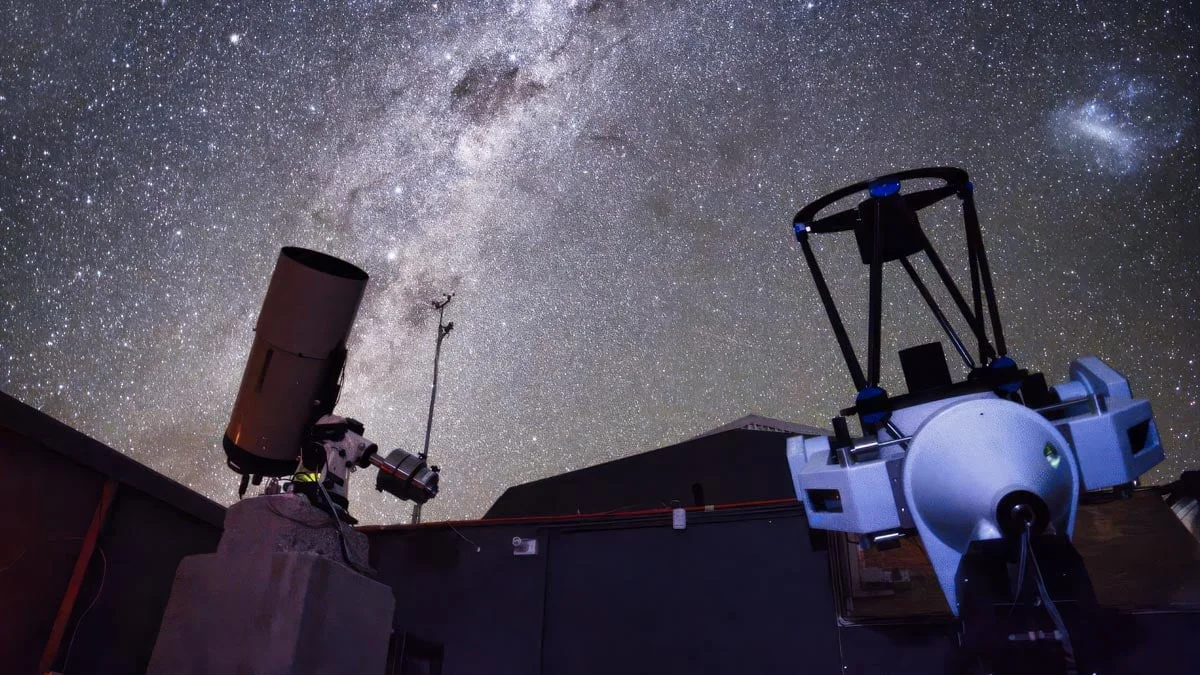
The signal was recorded in the near-infrared spectrum using the WinERED spectrograph attached to the Magellan Clay telescope in Chile. While this observation does not provide a complete picture of the atmosphere or the planet's surface, it does indicate that some helium is escaping from LHS 1140 b. This serves as physical evidence of a gaseous envelope, rather than merely an assumption based on the planet's mass and radius.
What We Know and What We Don't
The presence of an atmosphere marks an observational milestone, but it does not directly answer questions about potential life or the existence of oceans.
LHS 1140 b is a larger and more massive world compared to Earth, with an astronomical catalog listing a radius of approximately 1.73 times that of Earth, a mass of 5.6 times Earth's mass, and a density of about 5.9 grams per cubic centimeter. The planet completes an orbit in 24.7 days at a distance of roughly 0.095 astronomical units from its star. Around a red dwarf, such a close distance can still fall within the habitable zone due to the star's lower luminosity compared to the Sun.
The term “habitable zone” does not imply that the planet is inhabited or guarantees the presence of liquid water; it simply indicates a range where, under suitable atmospheric conditions, water could remain liquid on the surface. Therefore, LHS 1140 b continues to be a prime target for understanding whether rocky planets around red dwarfs can retain an atmosphere over extended periods.
A Target for Future Observations
This discovery shifts the focus from the abstract possibility of an atmosphere to its measurable evolution.
The new findings address a specific question: LHS 1140 b does possess an atmosphere, and helium makes its outermost layers observable. However, questions remain regarding the composition of the lower layers, surface pressure, and the presence of water. Additionally, the helium signal has not been consistent across observations from different years, suggesting that atmospheric loss may vary over time.
This caution is crucial for interpreting the atmospheres of exoplanets. A useful comparison can be drawn with the case of K2-18 b, which highlights the distinction between measured data and their potential interpretations. For LHS 1140 b, the revelation of its atmosphere narrows down the inquiry: not whether the planet is already a “second Earth,” but rather what gases it contains and how its atmosphere has been preserved.
Sources
The news and primary scientific study.