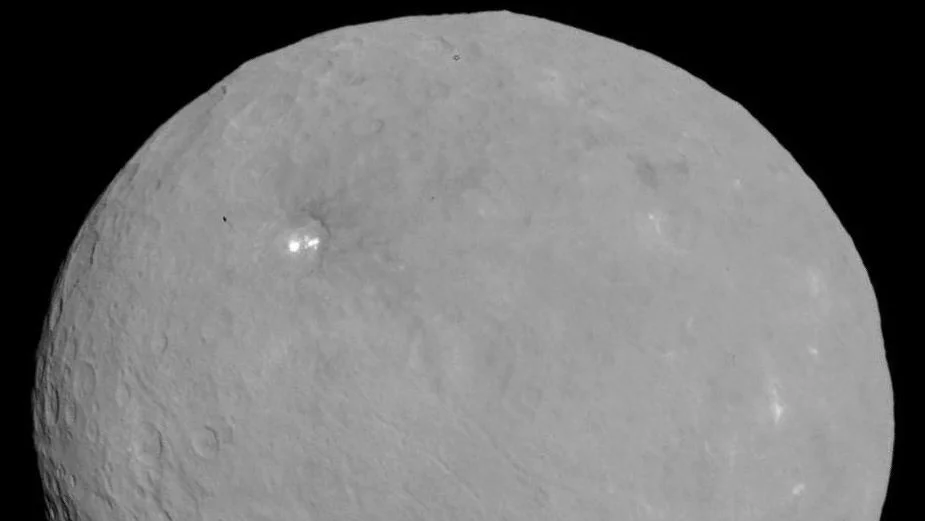
Landslides Discovered on Pluto Through New Horizons Data
NASA's New Horizons reveals landslides on Pluto, enhancing our understanding of its geological activity.


For the first time, landslides have been identified on Pluto, thanks to data collected by NASA's New Horizons spacecraft.
On July 14, 2015, a significant milestone in space exploration occurred when New Horizons flew by Pluto, coming within 12,500 kilometers of its surface. Eleven years later, geologist Marco Discenza, along with his team from Geoservizi S.r.l in Ripalimosani, Italy, continues to analyze the spacecraft's data, revealing these intriguing geological features. While the presence of landslides might seem ordinary—having been documented across the solar system, particularly on Mars and Venus—the discovery on Pluto adds a new dimension to our understanding of this distant dwarf planet.
The findings underscore the dynamic processes that may be at play on Pluto, challenging previous assumptions about its geological history and activity. As researchers delve deeper into the data, they aim to uncover more about the conditions that led to these landslides and what they reveal about the planet's surface and internal structure.
This research not only enhances our knowledge of Pluto but also contributes to the broader field of planetary geology, offering insights into the similarities and differences between various celestial bodies within our solar system.
The ongoing analysis of New Horizons data continues to yield exciting revelations, proving that even years after a mission has concluded, the universe still has secrets to share.