Impact Craters as a Dating Method
Impact craters are the most common geological process among celestial bodies in our Solar System. They are used in planetary geology as a dating method to establish the relative age of structures.
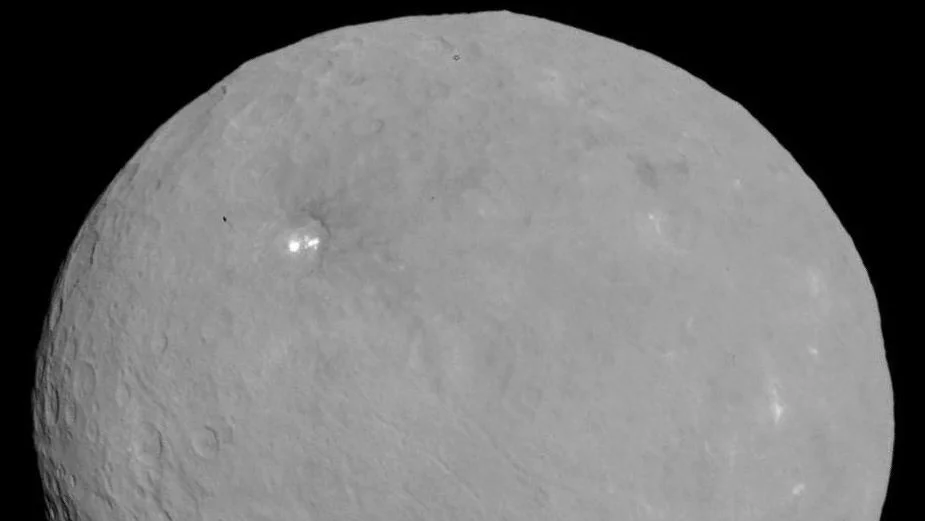
Impact craters are the most common geological process among celestial bodies in our Solar System. They are abundantly found on the Moon, on planets like Mercury and Mars, and even on some asteroids (such as Ceres and Vesta). For this reason, in planetary geology these craters are used as a dating method to establish the relative age between morphological and/or geological structures.
The technique is known as "crater counting" and is based on the impact frequency (how many craters are present in a given area) and the size of the craters themselves. By counting the number of impact craters present on a surface and reporting their sizes in terms of diameter, one can construct what is colloquially referred to as a “Crater-Size Frequency-Distribution” (CSFD), a curve that allows for estimating a relative age using calibrated chronological models specific to that particular planet. Among the various hypotheses and assumptions underlying this methodology, the flow of asteroids from the early days of our Solar System to the present must be taken into account.
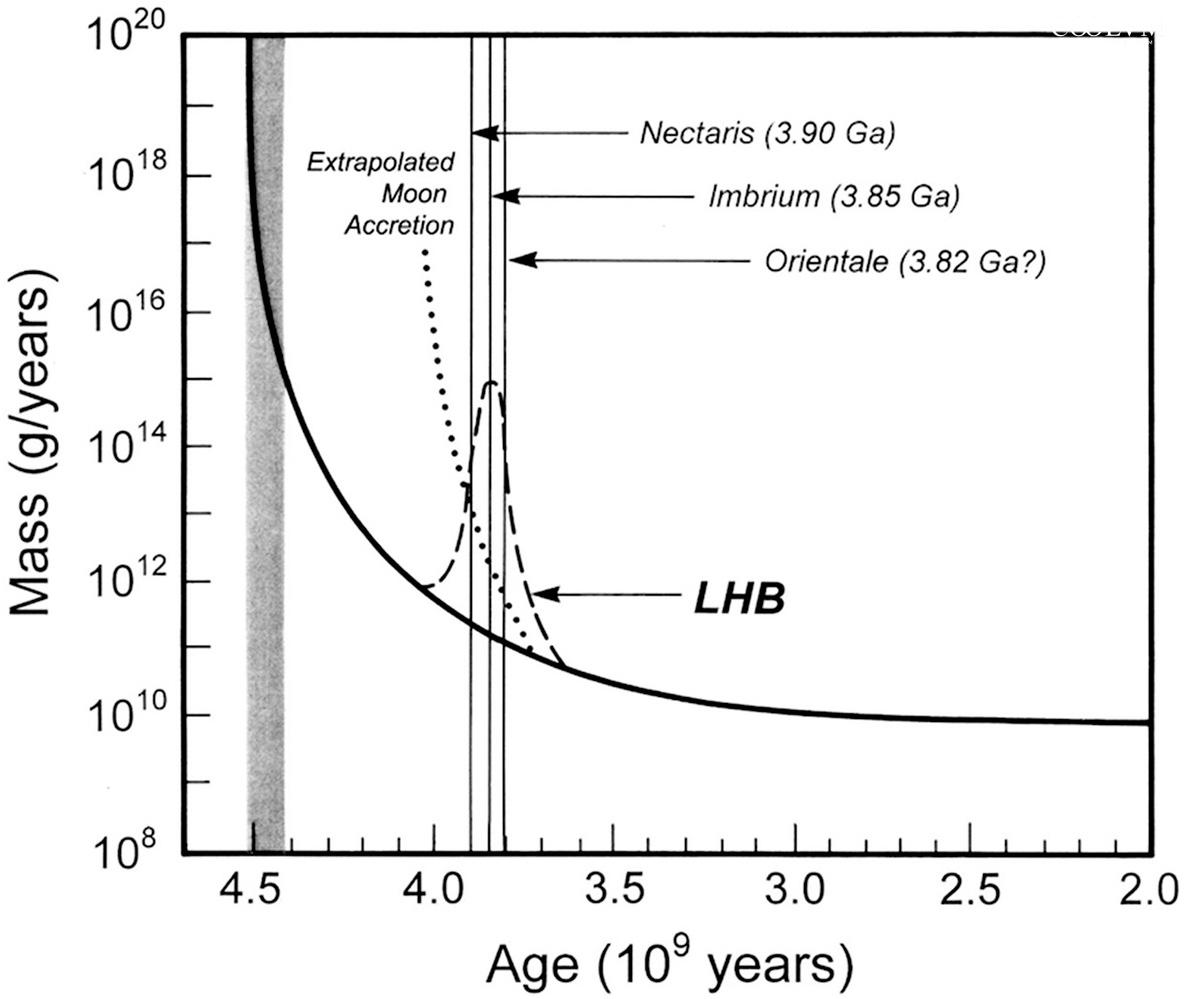
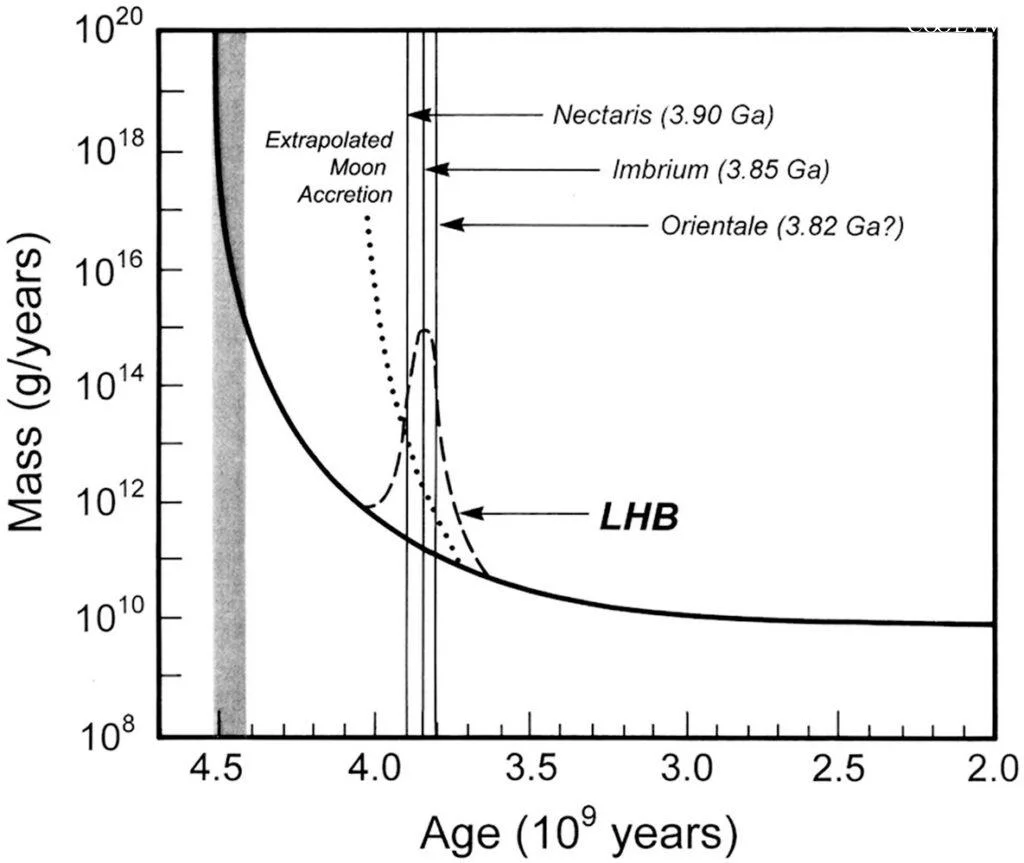
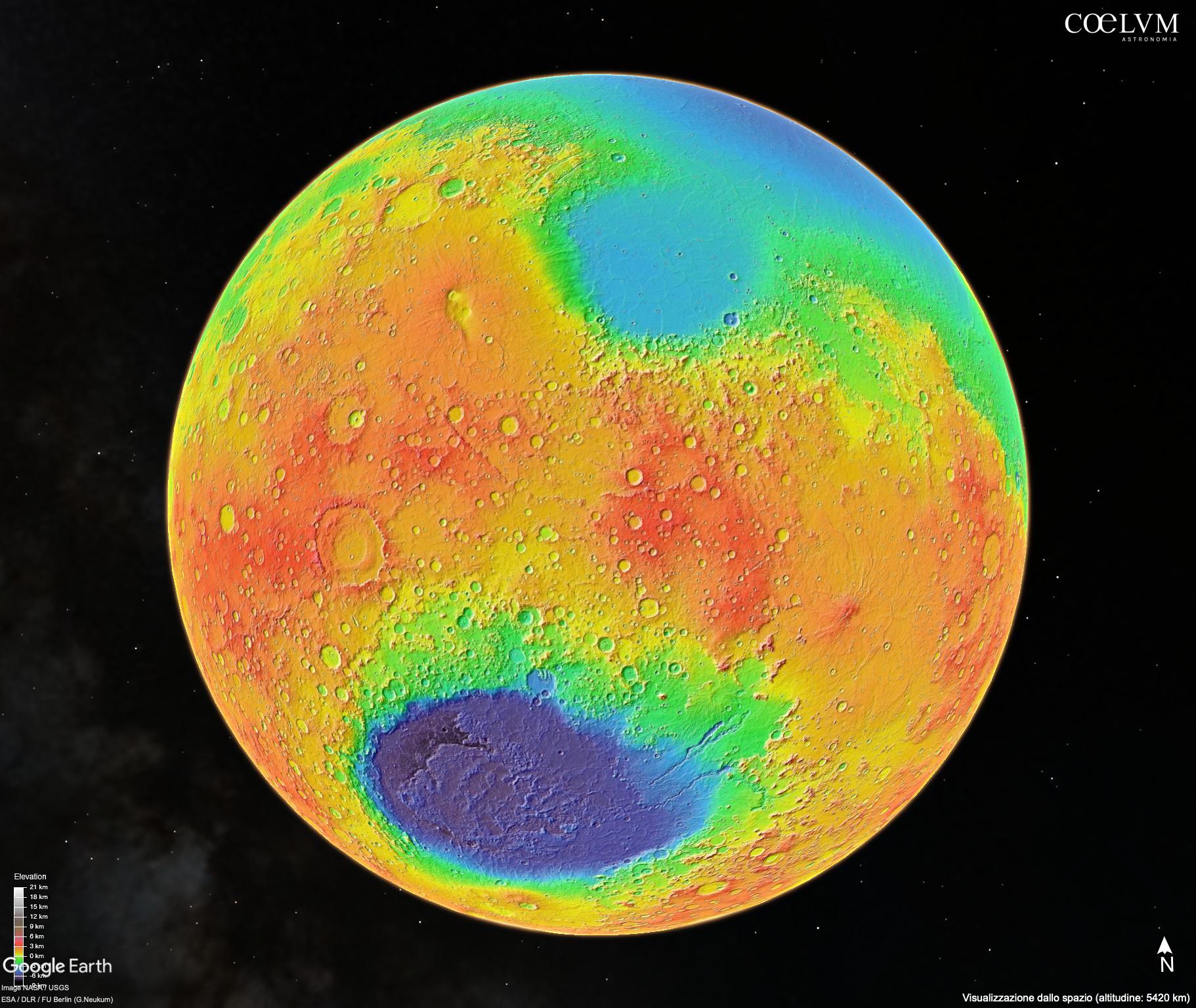
About 3.9 billion years ago, there was an intense bombardment by asteroids coming from outer regions towards the inner ones (where we find what we now know as the “rocky” planets). The sizes of these wandering giants were significant, capable of leaving devastating scars still visible today, such as the Hellas basin or the Isidis plain on Mars. Thus, the more a surface retains traces of meteorite impacts that are not only abundant but also of considerable size, the older it is.
Why a Relative Age?
The approach of planetary geology is to study and reconstruct the evolution of planets starting from images of their surfaces obtained from space missions orbiting the planet itself ("remote sensing" data), and there are still very few extraterrestrial rock samples that we have the opportunity to study in depth on Earth. Therefore, the so-called “ground truth” often lacks, preventing geologists from constructing an absolute timescale and accurately dating a particular rock formation or structure belonging to another planet.
Why is Dating Planetary Surfaces Important?
Knowing the sequence of events that shaped a planet's surface is of fundamental importance for reconstructing not only its geological history but also for understanding its past, present, and future evolution, adding another piece to the puzzle of knowledge regarding our Solar System.
.
Sources:
- A. Rossi, S. van Gasselt (eds.), Planetary Geology, Springer Praxis Books, DOI 10.1007/978-3-319-65179-8_7
- D. C. Catling, J. F. Kasting, Formation of Earth’s Atmosphere and oceans. In: Atmospheric Evolution of Inhabited and Lifeless Worlds. Cambridge University Press; 2017:171-197