
Friedrich Ani: A Testament to Integration
Friedrich Ani exemplifies successful refugee integration in post-war Germany. His journey from the son of a Syrian refugee to a celebrated author highlights the importance of embracing diversity.
- 28. Nov. 2015
- Reading time approximately 4 minutes
In the aftermath of World War II, Germany faced the monumental task of integrating twelve to thirteen million refugees, primarily from the lost eastern territories of Silesia and Sudetenland. Today, this nation stands as one of the wealthiest and most economically robust countries in the world, largely thanks to the tremendous efforts of these very refugees. So, what accounts for the ongoing lamentations regarding the supposed difficulty of integrating just one million refugees today? Chancellor Angela Merkel's statement, "We can do it," resonates deeply. Perhaps she did not fully consider its implications but was instead inspired by a spirit of spontaneous generosity. After all, who hasn’t reacted to that phrase, which essentially conveys: "Let’s tackle this and create something new by addressing this enormous challenge."
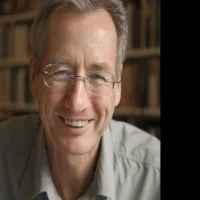
Friedrich Ani serves as a compelling example of how to navigate the refugee crisis successfully. Renowned for his crime novels featuring the fictional detective Tabor Süden, Ani has also penned screenplays for the popular Tatort series and has received numerous awards for his work, all of which can be found documented on his Wikipedia page.
My interest in Ani is recent, sparked by a chance encounter with his latest novel, Der namenlose Tag, in a bookstore. I have been aware of him as a voracious reader since my son, Maurus, adapted his youth novel Wie Licht schmeckt into a film. This story follows a twelve-year-old boy from a Munich suburb who yearns to celebrate his 14th birthday alone in the big city, where he unexpectedly meets a blind sixteen-year-old girl, igniting a budding romance.
Coincidence #2: Later that evening, while browsing television channels, I stumbled upon an interview with Friedrich Ani on alpha Forum. I could have listened to him for hours as he spoke about his writing and journey. However, I was particularly captivated by his remarks regarding the current refugee situation, where he noted, "My father was a Syrian refugee and my mother a refugee from Silesia." This interview, recorded a year earlier in 2014, was entirely unrelated to today's refugee discourse, making it a striking coincidence that the son of a Syrian refugee was sharing his story just as discussions on the topic intensified.
The Ubiquity of the Labyrinth Myth
In his latest novel, Der namenlose Tag, retired Chief Inspector Jakob Franck believes he can finally start a new life after two months of retirement. However, he is approached by a father who claims that his daughter, who allegedly died by suicide two decades ago, was actually murdered. Initially reluctant, Franck embarks on this seemingly impossible task, leading readers through a narrative that appears mundane on the surface but reveals deeper complexities.
Curious to see if there were labyrinthine elements in Ani’s latest work, I was not disappointed. On page 163, I encountered the phrase, “the chaos and the labyrinth of crime,” and shortly thereafter, on page 185, a “labyrinth of old shadows.”
My research indicates that labyrinthine motifs appear throughout Ani's other works, particularly fitting for his crime themes: ° In Verzeihen, there is a “labyrinth of faces” (p. 36); ° In Süden und der Trambahntrinker, a “labyrinth in the park” (p. 98) symbolizes the second main character, Jeremias Holzapfel, as he navigates the confusion of his existence; ° In Süden und der Mann im langen schwarzen Mantel, the line reads, “I stood motionless next to the BMW and fell silent. And I ran through a thousand thoughts like through a thorny labyrinth” (p. 102).
While I hesitate to elevate the labyrinth motif to a mere trademark of Friedrich Ani, it can indeed serve as a metaphor for crime literature as a whole, as exemplified by quotes in the works of authors like Hansruedi Gehring or even in Tony Hillerman’s title, Labyrinth of Ghosts.
Sources: Ani, Friedrich: Verzeihen. Munich 2001 (Droemer). ders.: Süden und der Trambahntrinker. (Munich 2002 (Droemer). ders.: Wie Licht schmeckt. Munich 2002 (Hanser). ders.: Süden und der Mann im langen schwarzen Mantel. Munich 2005 (Knaur TB) ders.: Im Gespräch mit Jochen Kölsch. Munich 2014 (Alpha Forum, rebroadcast on Thursday, Nov 26, 2015, 20:15-21:00). ders.: Der namenlose Tag. Berlin 2015 (Suhrkamp). Hillerman, Tony: Das Labyrinth der Geister. (Goldmann TB). Scheidt, Maurus vom (Director – based on Friedrich Ani's novel): Wie Licht schmeckt. – – – Post 292 / JvS #1046 / SciLogs #1262 / Updated: 28. Nov. 2015/11:042 / v 1.1
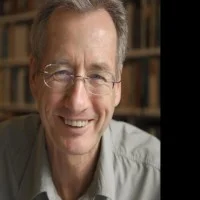
"Two souls dwell within my breast." Writing has captivated me since my youth and remains central to all my endeavors. The other “second soul” is practical psychological work combined with scientific exploration. Following my psychology studies in 1971, I established my own practice as a clinical psychologist. Initially, my research focused on drug addiction, culminating in my 1976 dissertation, "The Wrong Path to Self: Studies on Drug Careers." Since the 1990s, I have concentrated on the topic of giftedness. My third area of research involves labyrinths in all their forms. Through Theme-Centered Interaction (TCI) developed by Ruth C. Cohn, I found an effective tool for working with groups, merging writing and (creativity) psychology in an acceptable manner for me. Since 1978, I have conducted seminars on self-experience, personal development, and creative writing, alongside my wife Ruth Zenhäusern at our jointly founded "Institute for Applied Creativity Psychology" (IAK). If I were to name a “third soul,” it would be the theme of “deceleration,” which is a fundamental aspect of every writing endeavor and every journey through a labyrinth. Available publications include: "Creative Writing - HyperWriting," "Writing Short Stories," "The Drama of the Gifted," "Chronology of Psychology of Intelligence, Creativity, and Giftedness," "Blues for Bassoon and Sawn Virgin" (my own short stories), "Secrets of Dreams" (new edition in preparation). Dr. Jürgen vom Scheidt