Exploring Constellations Beyond Stars: The Role of Dark Clouds in Astronomy
This article delves into the significance of dark clouds in constellations, exploring cultural astronomy and the historical context of celestial patterns beyond stars.
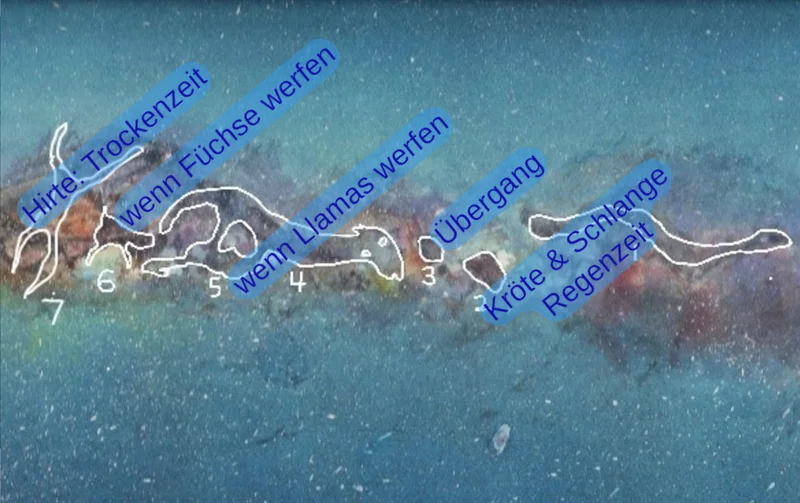
The term "constellation" often evokes images of star patterns against a dark sky, but its meaning transcends the mere arrangement of stars. Unlike the German word "Sternbild," which explicitly refers to stars, the English term encompasses a broader range of celestial objects. Many indigenous cultures perceive the night sky differently, recognizing not only the stars but also a multitude of "nebulous spots," which can include neighboring galaxies, open star clusters, globular clusters, and interstellar gas clouds within our Milky Way, often referred to as "Milky Way clouds."
These clouds are filaments of the Milky Way that appear dense with stars in the direction we observe, creating an effect akin to a glowing screen where each pixel shines brightly.
There are both bright and dark Milky Way clouds: the bright ones dissolve into countless stars, while the dark clouds consist of interstellar gas or dust that obscure the stars behind them, creating a stark contrast against neighboring star fields known as "star clouds."
Cultural Astronomy in Action
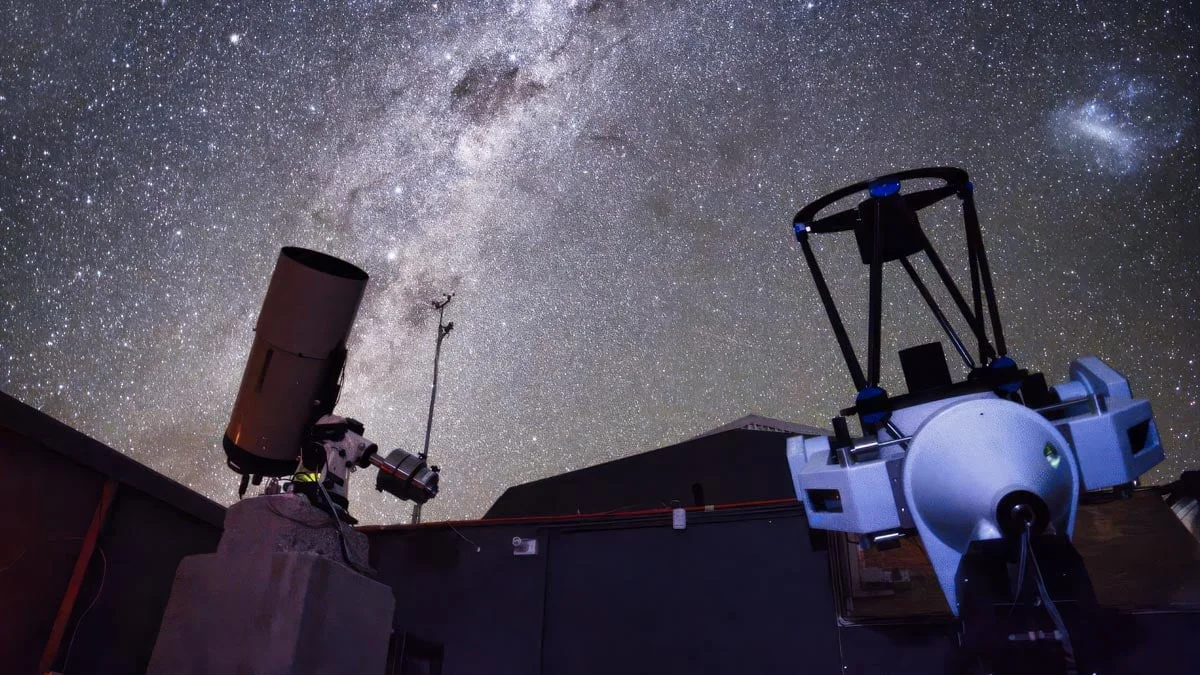
Recently, I had the opportunity to speak at the Kuffner Observatory in Vienna about cultural astronomy. My presentation focused on how constellations and star names can serve as a sidereal calendar, aiding in the prediction of seasonal weather patterns.
For instance, the Inca civilization visualized a procession of animals in the sky, not represented by bright points but rather by dark Milky Way clouds against a luminous backdrop.
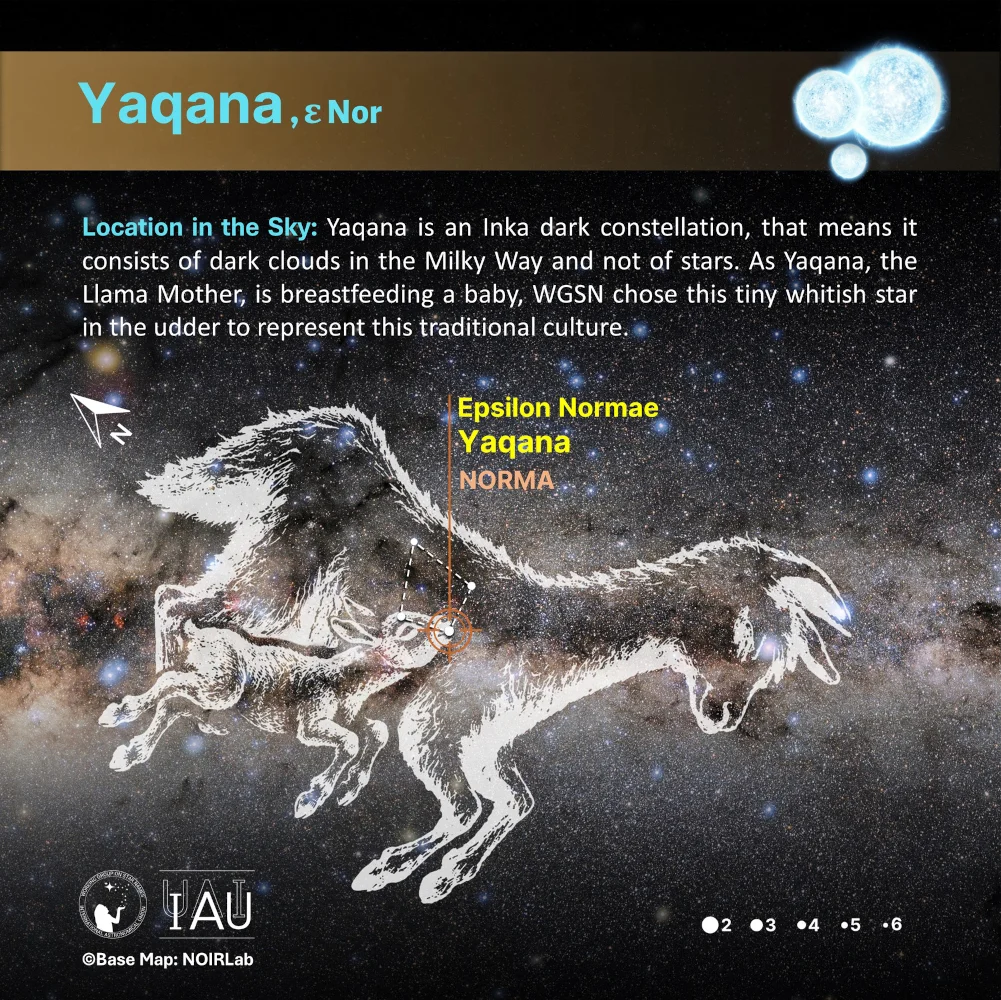
On that same weekend, the International Astronomical Union (IAU) announced the new star name "Yaqana" on their social media platforms. This name was assigned to the star Epsilon Normae, located at the edge of a dark cloud that forms part of the constellation depicting the llama mother; the edge of the mother llama corresponds to that of her nursing baby llama.

European Dark Cloud Constellations
Some astronomers may dismiss the relevance of dark cloud constellations in Europe, but this perspective overlooks at least one ancient constellation where these clouds play a significant role: Ara, or the Altar of Smoke. Historical texts, such as those referencing Arat, indicate that the smoke from this altar is visible within the dark clouds of the Milky Way.
Although this knowledge has been documented for over two millennia, I also referenced it in a scholarly publication that was written between 2022 and 2025 but only made public this year:
Hoffmann, S.M. (2022-2025). “The Rhetoric on Clouds in the Ancient Star Catalogue.” Rhetoric & Science Vol. II, Centre for the Study of the Ancient World (CSAW), Ionian University, pp. 78-98.
The Viennese Constellation
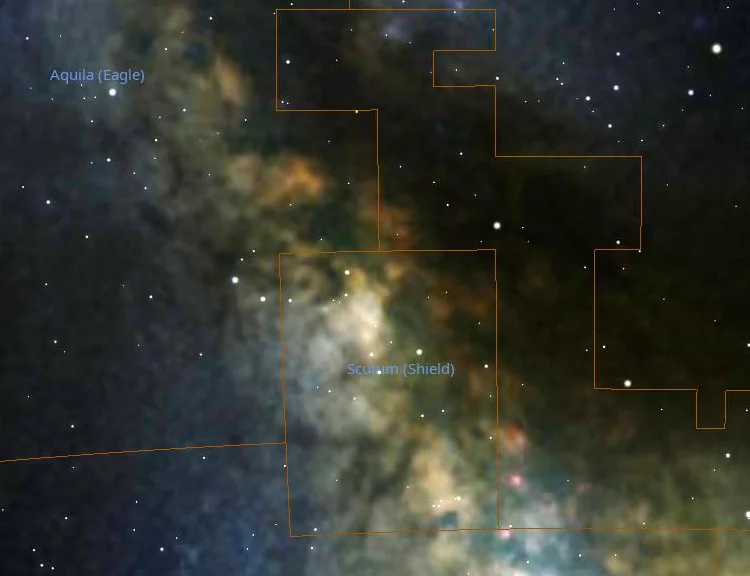
From the dome of the Kuffner Observatory, one might also think of another constellation that was conceived by Europeans in the 17th century: Scutum, the Shield. Polish astronomers Elisabeta and Jan Hevelius created this constellation in their atlas as a tribute to their king, motivated not by economic factors but by military significance.
Scutum symbolizes the victory of the Catholic League over the Ottoman forces in Vienna in 1683, directly linking it to the city’s history (see the Battle of Kahlenberg on Wikipedia).
The shield cloud, a section of the Milky Way within the Scutum constellation, is particularly striking, exhibiting a silvery glow reminiscent of metal—similar to the sword belt of Orion or the saber of Perseus, which are visually defined by silvery Milky Way clouds.
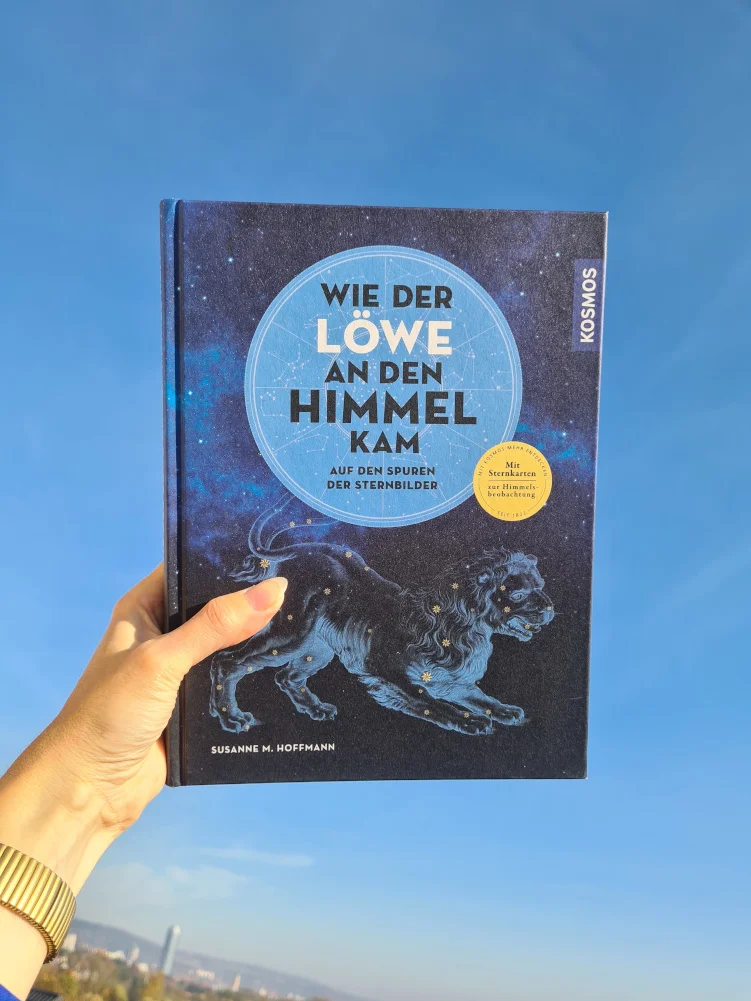
For those interested in learning more about constellations, further insights can be found in my book.
Foundations of Astrology?
There is a recurring belief among some that constellations are merely astrological constructs or figments of imagination. This viewpoint misses several critical foundations, such as the aforementioned procession with Yaqana. I consider astrology a belief system, akin to religion, which consists of two levels: one of knowledge, often based on phenomenological natural science, and the other of a derived code of conduct.
In various religions, recommendations are made based on environmental conditions, such as advising individuals in hot, dry regions to cover themselves to protect their airways. Similarly, there are rules related to the counting of days that lead to calendars and regular rituals.
Historically, science began with purely phenomenological observations. It remains true that data collection precedes the search for relationships. As we delve into ancient records, we find that early researchers lacked an understanding of causation; the earliest calendars were observational, without a grasp of cause and effect.
Without the principle of causality, it is easy to assume that a rising star causes the flood, when in fact, both phenomena are coincidental, influenced by the Earth’s orbit around the Sun and its axial tilt. This misunderstanding is the root of both religious (including astrological) beliefs and scientific inquiry.
Thus, while divine forces can explain events, they can also be examined through the lens of modern science. Today, we understand many cause-and-effect pairs and can explain phenomena that were once merely observed without comprehension. However, there remain areas where our understanding is still incomplete, or relationships may be non-linear and difficult to predict, such as weather forecasting.
As we explore the foundations of astronomy, we inevitably encounter ancient datasets that predate our current understanding of causality. These datasets also form the basis for both religious frameworks and esoteric interpretations. Just as I, as a scientist, cannot be held responsible for how others interpret my publications, ancient astronomers are not accountable for how their work is understood or misinterpreted today. They were scientists, just as modern historians are, and they have left traces that allow us to explore the evolution of our knowledge.