Discovery of Beta Pictoris d: A Hidden Planet Revealed by the VLT
The discovery of Beta Pictoris d, a hidden planet, was made using the VLT and archival images, revealing new insights into the Beta Pictoris system.
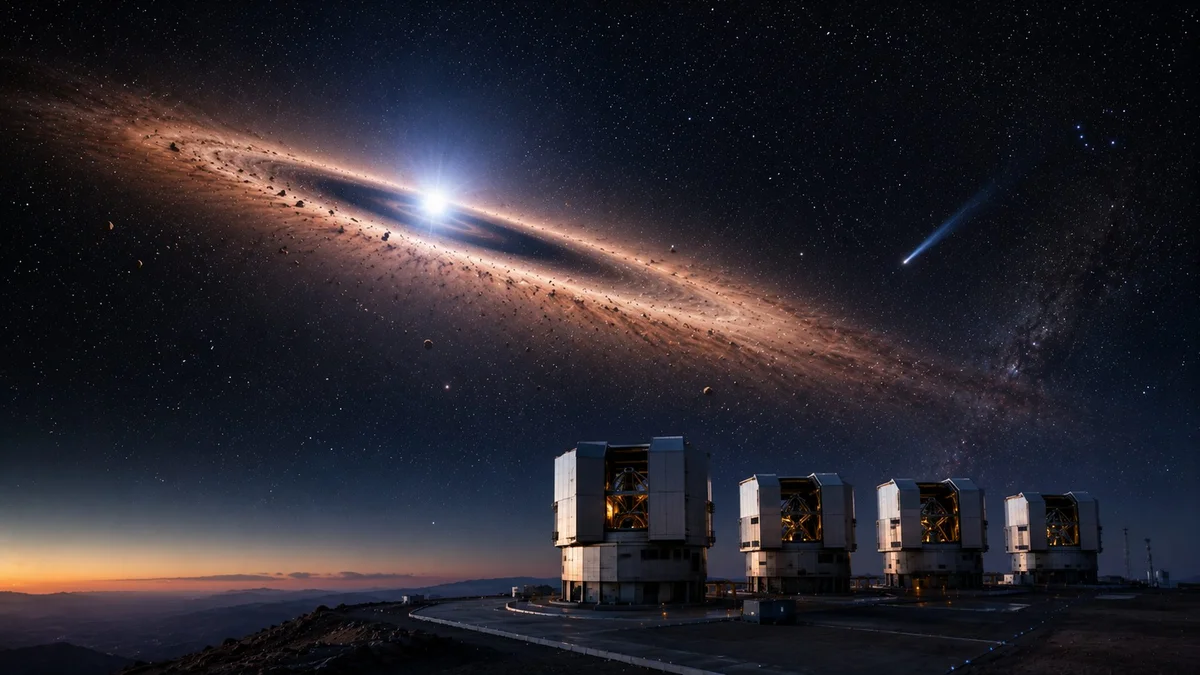
A Third Presence in the System
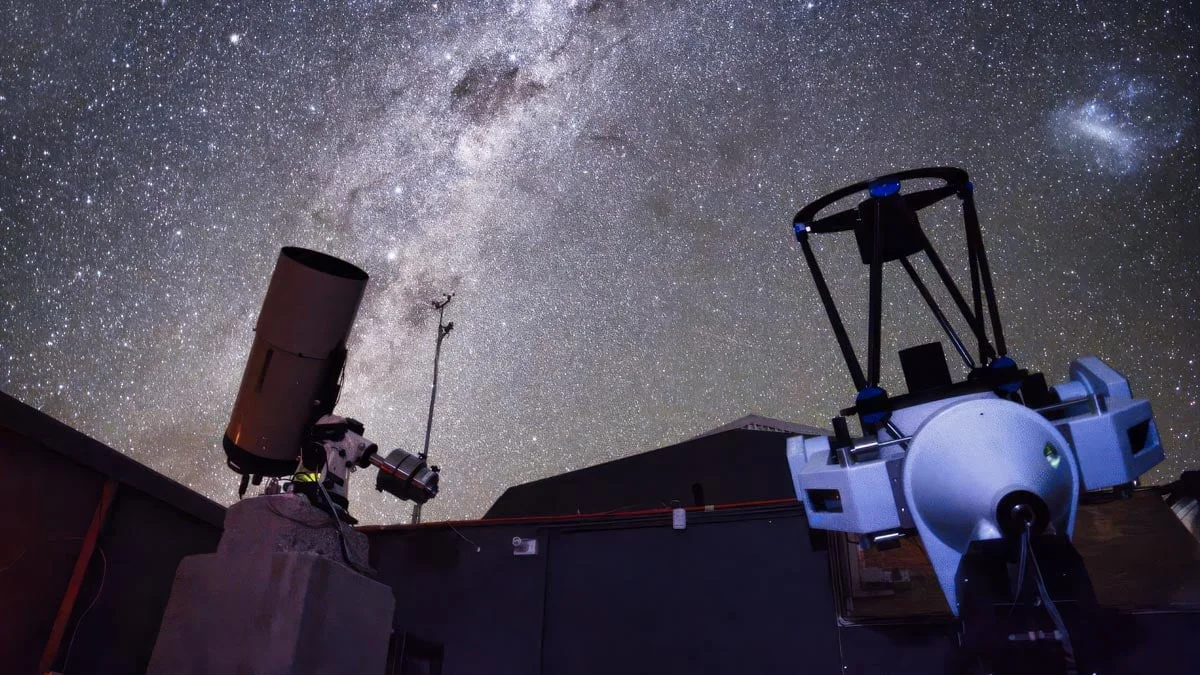
Recent observations have unveiled a new addition to the Beta Pictoris system: Beta Pictoris d. This planet was detected using the ERIS instrument on the Very Large Telescope (VLT) operated by the European Southern Observatory (ESO). Archived images from VLT/SPHERE and JWST/NIRCam, collected over an eleven-year period, confirmed its existence. The observed motion across different epochs corroborates its status as a gravitationally bound companion to the star.
The Importance of Direct Imaging
Capturing the light from a planet requires isolating its faint glow amidst the brilliance of its host star. The imaging process does not photograph a planet's surface; instead, it focuses on the weak light emitted or reflected by the planet, which is overshadowed by a much brighter star. In this case, Beta Pictoris d is approximately one hundred times fainter than its companion, Beta Pictoris b, which explains why its signal was present in the data but not immediately recognized.
The planet is classified as relatively cold, with models estimating its mass to be around 2.4 ± 0.6 times that of Jupiter and a temperature of about 600 Kelvin. This makes it one of the lowest-mass exoplanets ever observed directly from Earth.
A Constraint for the Debris Disk
The orbit of Beta Pictoris d provides valuable insights into the system's structure. The planet follows an orbit with a semi-major axis of approximately 26 astronomical units, which is wider than those of Beta Pictoris b and c, and has an inclination close to 89 degrees. Surrounding the young A6 V star is a debris disk. The position and mass of Beta Pictoris d are consistent with the gravitational influence needed to shape the inner edge of this disk. This finding serves as an important constraint, rather than isolated evidence, of the mechanisms at play in the system.
Sources
The information was sourced from ESO's news release and the related scientific study.