Discovery of a Unique Black Hole Star by JWST: MoM-BH*-1
The James Webb Space Telescope has identified MoM-BH*-1, a unique black hole star that existed 660 million years after the Big Bang, challenging traditional astrophysical concepts.
The James Webb Space Telescope (JWST) has made a groundbreaking discovery in the realm of astrophysics, identifying an object named MoM-BH*-1 that existed a mere 660 million years after the Big Bang. This intriguing find, which appears as a small red dot in the night sky, challenges conventional understandings of stellar and galactic formations.
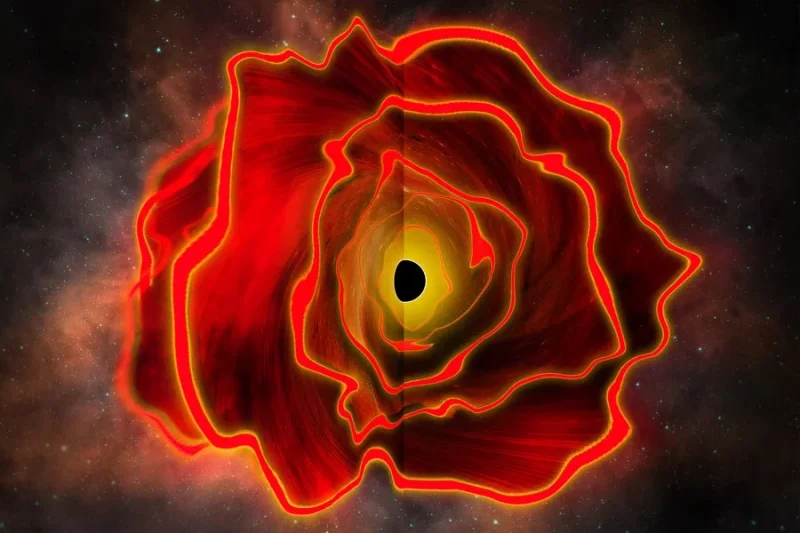
An illustration of a Black Hole Star, a new type of astrophysical object. Jose-Luis Olivares, MIT.
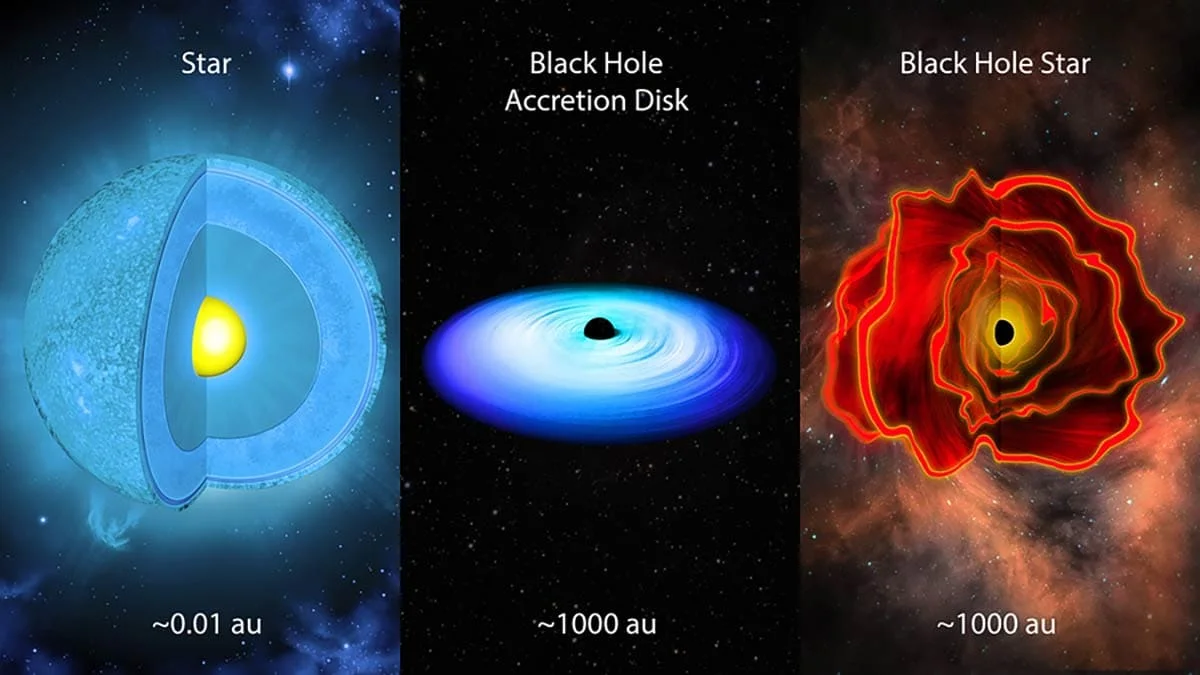
MoM-BH*-1 is not simply a star with a black hole at its core; it represents a novel concept termed a black hole star. This theoretical construct suggests that an actively accreting black hole is enveloped by a massive, dense gas cloud. The black hole generates energy, which the surrounding gas absorbs and re-emits, creating a stellar-like atmosphere.
Key Facts About MoM-BH*-1
- Object: MoM-BH*-1
- Observed with: James Webb Space Telescope
- Cosmic age: Approximately 660 million years post-Big Bang
- Redshift: 7.7569
- Power output: Around 100 billion times that of the Sun
- Leading interpretation: An accreting massive black hole within a dense hydrogen envelope
MoM-BH*-1 was uncovered during the Mirage or Miracle survey, which aimed to locate some of the earliest galaxies. Initially appearing as a bright red point in JWST images, the true nature of the object was revealed through spectroscopy, which disaggregated its light into distinct wavelengths.
The spectral analysis showed a significant Balmer break, indicating a sharp decline in light detection at specific wavelengths associated with hydrogen. While ordinary stars can produce such features, the intensity of the break observed in MoM-BH*-1 surpassed what would be expected from typical stellar populations.
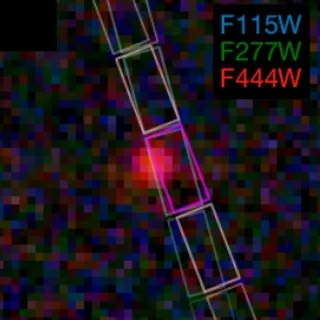
_Image of MoM-BH-1 taken by the James Webb Space Telescope. Rohan P. Naidu et al (Wikipedia)_*
Understanding the Black Hole Star
Unlike conventional stars that derive energy from nuclear fusion, a black hole star's energy comes from the accretion of gas onto the black hole. This process releases vast amounts of energy as gas spirals toward the black hole, which is then absorbed and reprocessed by the surrounding dense gas envelope, effectively acting as a large pseudo-photosphere.
The models suggest that this gas envelope could extend between 10 to 100 astronomical units, a scale comparable to our solar system. However, the JWST does not directly resolve this structure, and the object remains a point of light. Estimates of the black hole's mass are also uncertain, with figures ranging from approximately 100,000 solar masses to between one million and ten million solar masses, as standard methods may not apply in such extreme conditions.
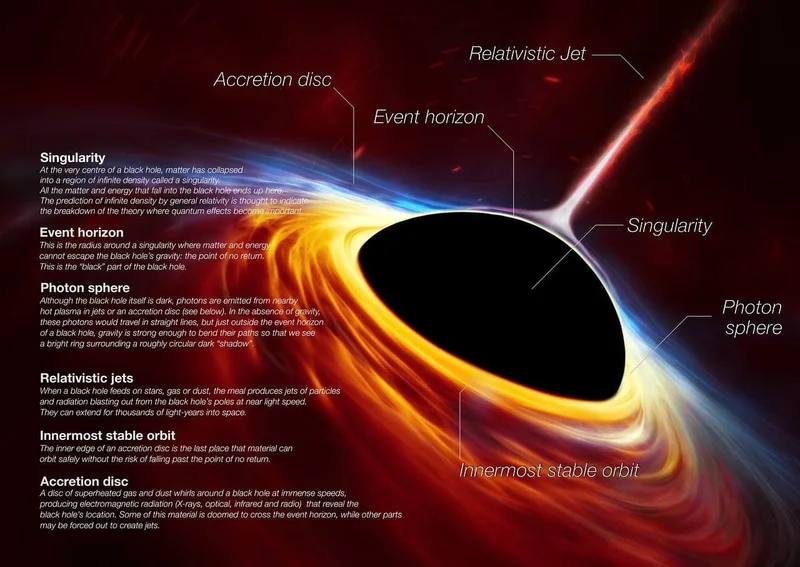
Anatomy of a Black Hole. ESO, ESA/Hubble, M. Kornmesser/N. Bartmann.
Significance of the Discovery
The discovery of MoM-BH*-1 is crucial as it sheds light on the formation of compact objects in the early universe, commonly referred to as little red dots. These objects, while bright and prevalent in ancient cosmic observations, have often eluded classification as either galaxies or active black holes. MoM-BH*-1 stands out as it appears to dominate its host galaxy's brightness, providing astronomers with a clearer view of this extraordinary entity.
Moreover, this discovery may contribute to understanding how supermassive black holes could have formed rapidly after the Big Bang. The dense gas surrounding an early black hole might facilitate a high feeding rate while also managing the radiation that would typically drive material away.
The black hole star model is currently the leading explanation for MoM-BH*-1, yet it is not a definitive image of the object's interior. Further studies involving deeper spectra and longer-wavelength observations will be necessary to validate this hypothesis.
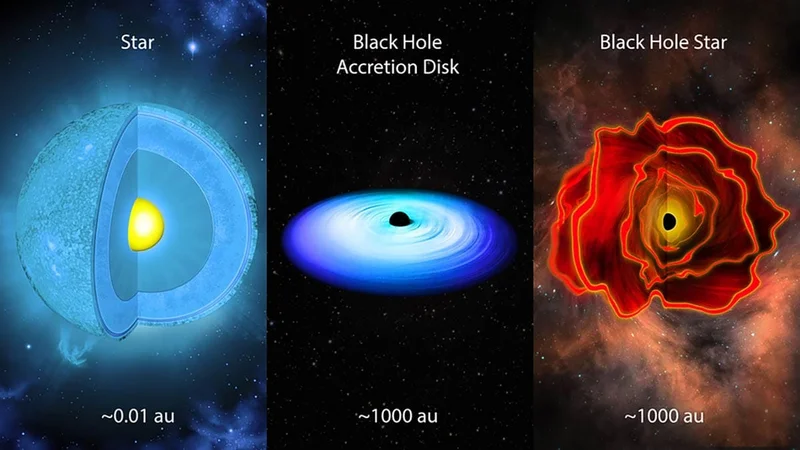
Stars (left) can be thought of as a dense ball of gas powered by nuclear fusion at their centers. Black holes (center) typically grow by consuming matter via a pancake-like accretion disk. Black hole stars (right) represent a new kind of object — nascent black holes enshrouded in dense gas such that they effectively radiate in a star-like manner. The accreting black hole, as the power source, plays the role of nuclear fusion, and the dense surrounding gas acts similarly to a pseudo-photosphere.
The Nature of MoM-BH*-1's Appearance
The red hue of MoM-BH*-1 differs significantly from the red light captured by amateur astrophotographers from emission nebulae. The object was primarily detected in the JWST's longer-wavelength infrared bands, and its spectrum exhibited a pronounced Balmer break. The prevailing model suggests that the dense hydrogen envelope absorbs and reprocesses the radiation emitted by the accreting black hole, contributing to its red appearance.
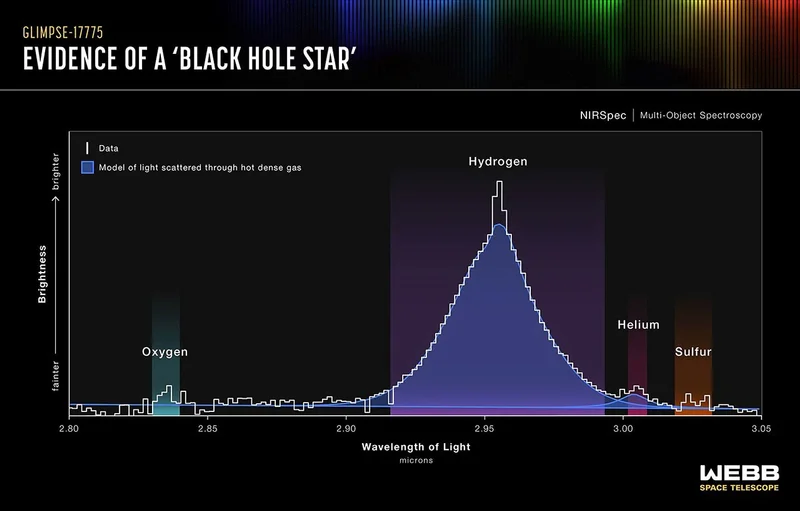
NASA’s James Webb Space Telescope’s spectroscopic data on little red dot GLIMPSE-17775 contains more than 40 spectral lines. The spectrum contains multiple independent indicators that support the theory this little red dot is a black hole star: a rapidly accreting, or growing, black hole enveloped in a hot, dense gas cocoon. This layered, shell-like environment is reprocessing the light emitted from near the black hole and producing the features seen in the spectrum. NASA/JWST.
Questions Surrounding Black Hole Stars
Is a black hole star actually a star? No, a black hole star is not powered by nuclear fusion like a conventional star. Instead, it is a theoretical system where an accreting black hole provides the energy while a vast envelope of dense gas generates a star-like outer atmosphere.
What is MoM-BH-1?* MoM-BH*-1 is a distant object observed by JWST during the Mirage or Miracle survey, characterized by an unusual spectrum that suggests a massive black hole surrounded by dense, nearly dust-free hydrogen gas.
When did MoM-BH-1 exist?* JWST observes MoM-BH*-1 as it appeared approximately 660 million years after the Big Bang, with a measured redshift of 7.7569.
Can an amateur telescope photograph MoM-BH-1?* No, due to its extraordinary distance, faintness, and unresolved nature, detecting its infrared light and analyzing its spectrum necessitated the capabilities of the James Webb Space Telescope.
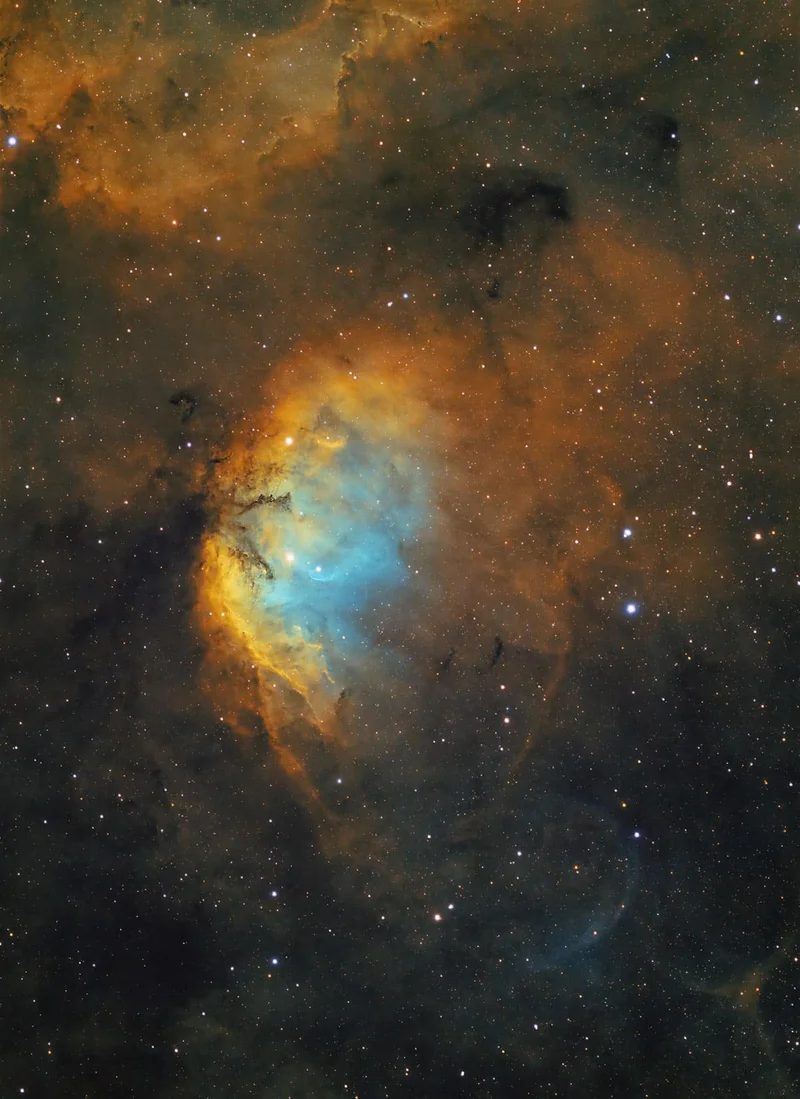
The Tulip Nebula (Sharpless 2-101) sits right next to Cygnus X-1, one of the first confirmed stellar-mass black holes ever discovered. From our view on Earth, this powerful black hole appears directly within the same cosmic neighborhood as the glowing gas cloud.
Reflections from an Amateur Astrophotographer
The simplicity of MoM-BH*-1's appearance in the original image is striking; it manifests as a mere tiny red dot, a feature that could easily be overlooked in a crowded deep-sky photograph. As an amateur astrophotographer, the process of capturing photons to reveal hidden structures in nebulae and galaxies resonates deeply with me. JWST is executing a similar endeavor on an unprecedented scale, gathering ancient light and employing spectroscopy to unveil the underlying physics.
In this instance, a seemingly inconspicuous red speck may be providing insights into how some of the universe’s earliest massive black holes developed. This encapsulates a remarkable amount of information concealed within a single point of light.