Discovery of a Potential First Exomoon
Astronomers may have discovered their first exomoon in the CD-35 2722 system, led by Kevin Hoy from Universidad Diego Portales, marking a significant milestone in space exploration.
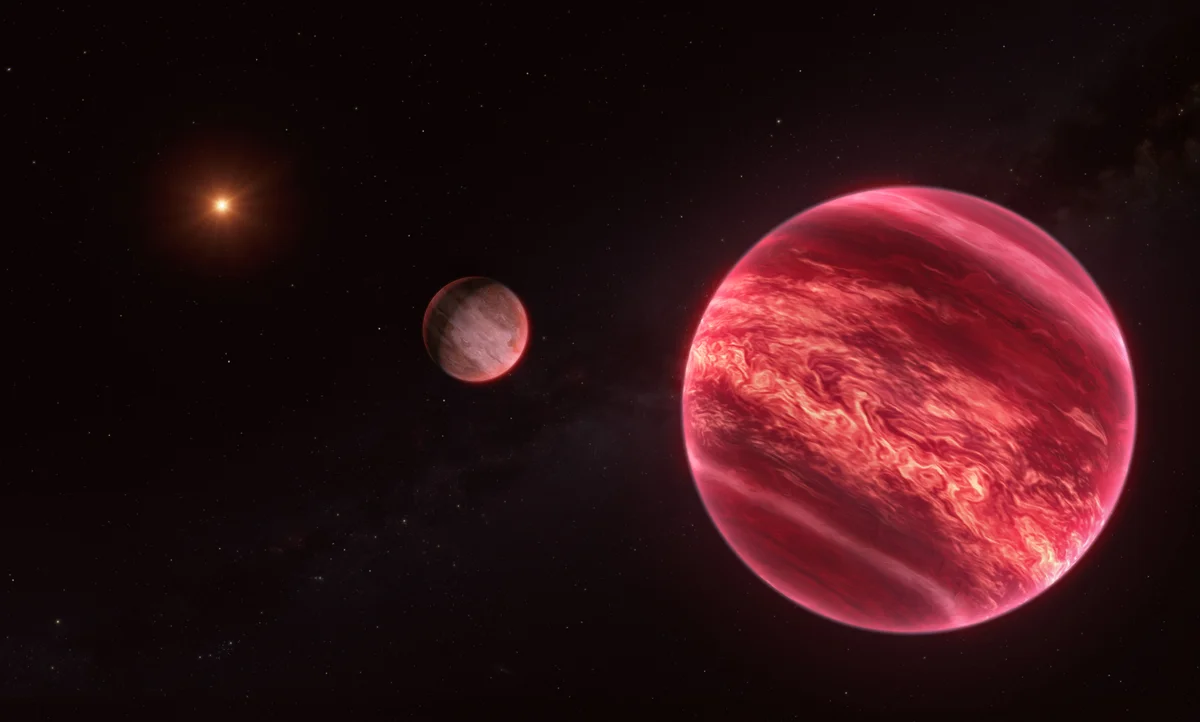
Astronomers, after cataloging over 6,000 exoplanets, may have finally identified their first exomoon. A team led by Kevin Hoy from Universidad Diego Portales in Chile has reported the discovery of an exosatellite within the stellar system of CD-35 2722, a red dwarf star located 73 light-years away from Earth.
A Likely Gaseous Body
The newly identified exomoon is believed to be a gaseous entity, possibly similar to Neptune in our own solar system. This finding could provide crucial insights into the formation and evolution of moons around distant planets, which remains a largely unexplored area in astronomy.
The research team utilized the transit method to detect the exomoon, which involves observing the dimming of a star's light as a planet or moon passes in front of it. This technique has proven effective in identifying exoplanets, and its application to exomoons marks a significant advancement in the field.
Implications for Future Research
If confirmed, this discovery could pave the way for future studies focused on the characteristics and atmospheres of exomoons. Understanding these celestial bodies is vital for comprehending the potential for life beyond our solar system. The existence of an exomoon could also imply the presence of complex systems around exoplanets, further enriching our knowledge of the universe.
The study has garnered attention for its potential implications in the ongoing search for extraterrestrial life and the understanding of planetary systems beyond our own.
As astronomers continue to refine their methods and technologies, the prospect of discovering more exomoons in the future becomes increasingly feasible. This discovery is a testament to the advancements in observational techniques and the relentless pursuit of knowledge in the field of astronomy.