Asteroid 6384 Kervin: Astrometric Measurements and Stellar Occultation
This article details an ongoing astrometric measurement program for asteroid 6384 Kervin, focusing on its orbital characteristics and a notable stellar occultation event observed in December 2023.
Since March 2023, I have embarked on a program focused on astrometric measurements of asteroids, with plans to develop a complementary photometric survey. The role of an astrometrist primarily involves accurately measuring the position of solar system objects, typically asteroids or comets, to determine their orbits around the Sun. However, this task does not end there; once the fundamental elements defining a celestial body's orbit are identified, these elements require periodic verification and monitoring. The orbits of minor solar system bodies, such as asteroids and comets, are often influenced by perturbations from other objects, particularly planets like Jupiter.
Historically, astrometry, which involves measuring the positions of celestial bodies, was the first domain of study for astronomers and remained largely unchanged even after the invention of the telescope. Physical investigations began with the initial measurements of light from stars (photometry) and, more recently, with the advent of spectroscopic analyses stemming from studies conducted at the end of the 17th century.
The serious mathematical study of the motion of celestial bodies in our solar system can be traced back to Johannes Kepler in the early 17th century. However, significant groundwork was laid by ancient Babylonian astronomers, followed by Greek and Arab astronomers, culminating with Tycho Brahe. Kepler's formulation of his three laws of planetary motion paved the way for the analysis and understanding of celestial orbits around the Sun, effectively discarding Aristotelian theories. Subsequently, contributions from numerous astronomers and mathematical geniuses like Carl Friedrich Gauss made it possible to derive the orbits of solar system bodies by accurately measuring their positions in the sky, marking the maturation of astrometry.
While the discoveries of Neptune and Pluto are notable achievements in astrometric studies, the extensive data gathered on minor solar system bodies constitutes the most significant aspect of this research field. This methodical and patient pursuit may not yield stunning visuals or immediate, dramatic results that astronomers or enthusiasts can proudly showcase. It is a rigorous endeavor undertaken by dedicated, persistent, and passionate individuals.
With this passionate spirit and my characteristic stubbornness, I have delved into this fascinating branch of astronomy, eager to make my modest contribution. Initially, my focus was more on the photometric analysis of asteroids and comets, but the positional aspect quickly gained importance in my perspective, fully engaging my interest.
After a period of learning, during which I made several errors, the Minor Planet Center (MPC) issued my observatory code, which serves as a certification that my astrometric observations meet the quality standards necessary for calculating the orbital elements of asteroids and comets.
What is the Minor Planet Center (MPC)? As stated on their homepage, it is the global center dedicated to receiving and distributing positional measurements of all celestial bodies within our solar system. It is also responsible for identifying, designating, and calculating the orbits of these objects. The MPC operates at the Smithsonian Astrophysical Observatory at Harvard University (United States) under the supervision of the International Astronomical Union (IAU) Division F.
My observatory code is M52, and since late April 2023, I have been providing astrometric observations of various asteroids and comets.
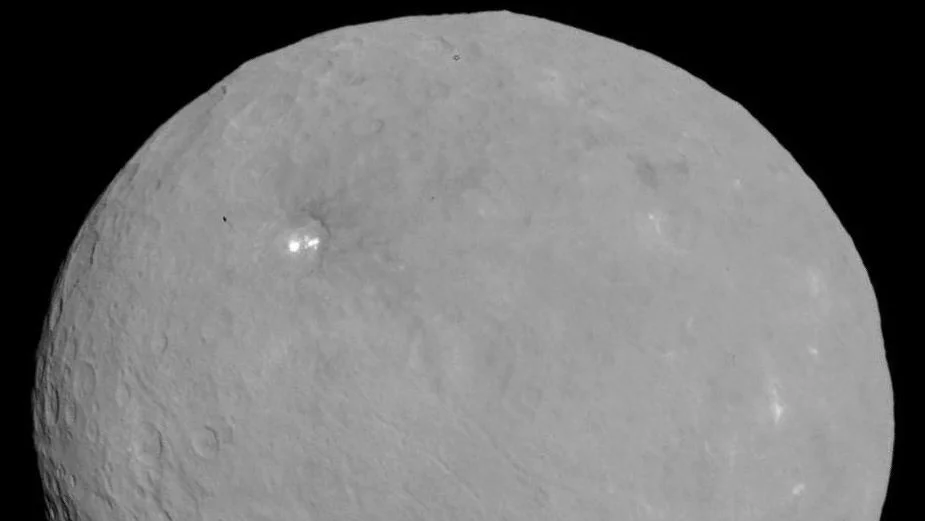
Among the numerous objects I have observed, asteroid 6384, part of the so-called 'main belt' located between the orbits of Mars and Jupiter, stands out. Discovered on January 3, 1989, by Eleanor Francis Helin, it was named “Kervin.” Its orbit is nearly circular, with an average distance from the Sun of just over 289 million kilometers and an orbital period of approximately 2.69 Earth years (983 days).
With a confirmed diameter of 3,739 meters (with an uncertainty of 189 meters), it is slightly larger than a mountain floating in the vastness of interplanetary space, likely possessing an irregular shape, although this remains unconfirmed. Its albedo, which measures its ability to reflect sunlight, is relatively high at about 0.5, and its chemical-physical classification places it in the “S” class, indicating it is a rocky object primarily composed of silicates of iron, nickel, and magnesium. This category includes at least 17% of all known asteroids. Some measurements have indicated a rotation period around its axis of 3.6203 hours.
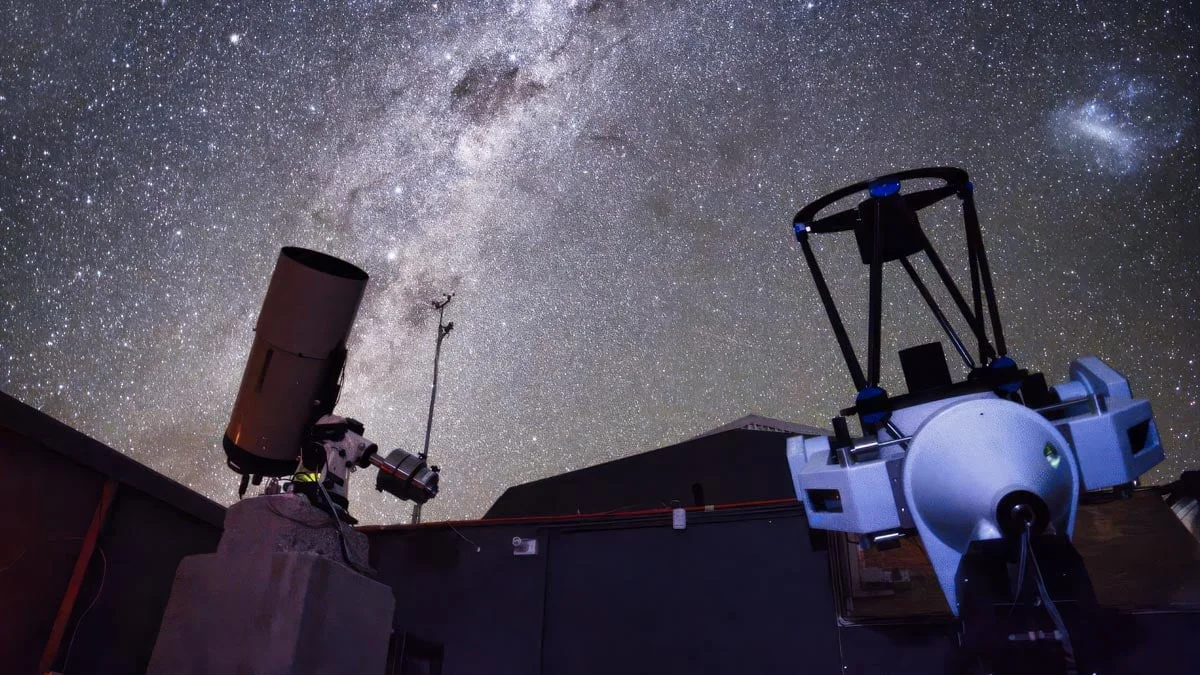
On the evening of December 10, 2023, I conducted a series of observations involving several asteroids, including 6384 Kervin. For astrometric purposes, observations must be spaced at least 20 to 30 minutes apart and repeated as much as possible throughout the session. The exposures should be kept short to prevent trailing due to the asteroid's motion and to avoid overexposure and saturation in the images, which could complicate subsequent measurements. For this session, I opted for single exposures of two minutes each, organized in groups of three, with at least a 20-minute interval between each group. The camera used was a non-cooled monochrome Neptune-M from Player One, mounted with a photometric filter in Band V on a 250mm f/4.8 Newtonian Skywatcher telescope, all supported by an EQ6-R Pro mount from Skywatcher, with a Vixen 60/700 refractor and ZWO ASI 120 MC camera for guiding.
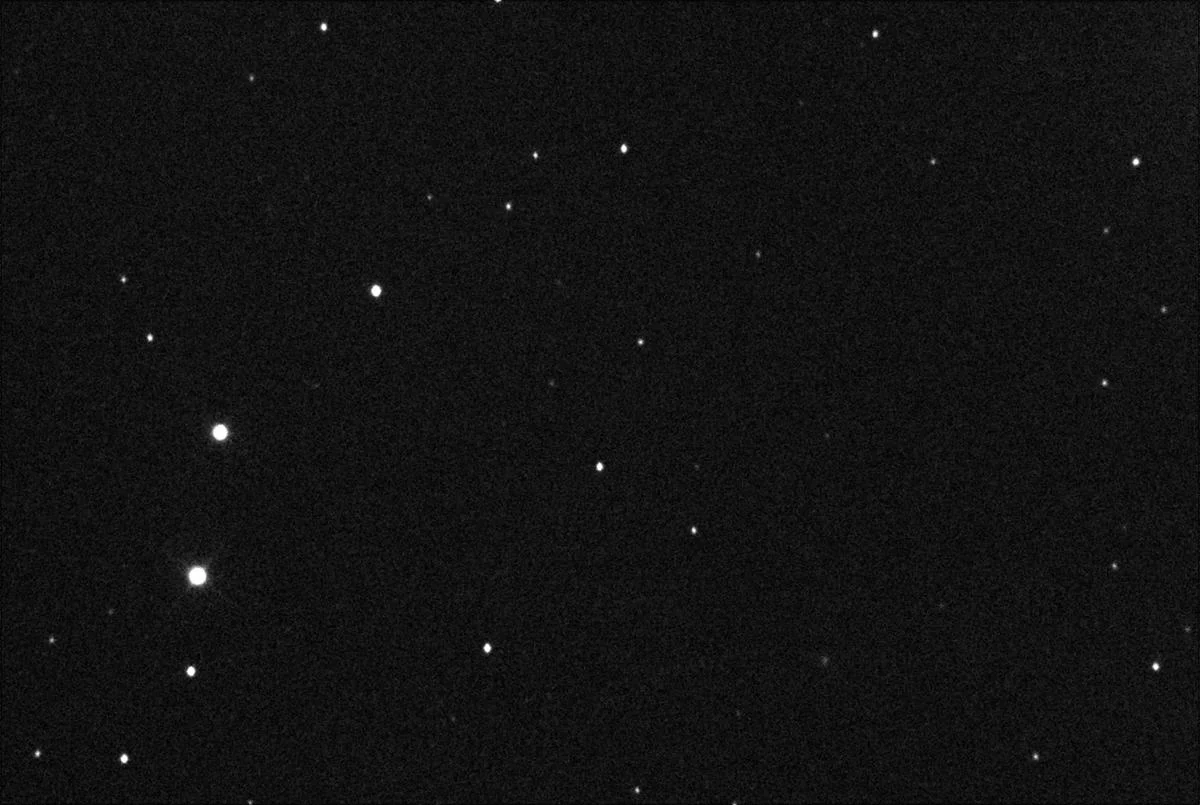
I began the first set of three images of 6384 Kervin at 20:14 UT and completed it six minutes later (20:20 UT). The asteroid was clearly visible in the images and exhibited distinct movement, showing a shift between each frame.
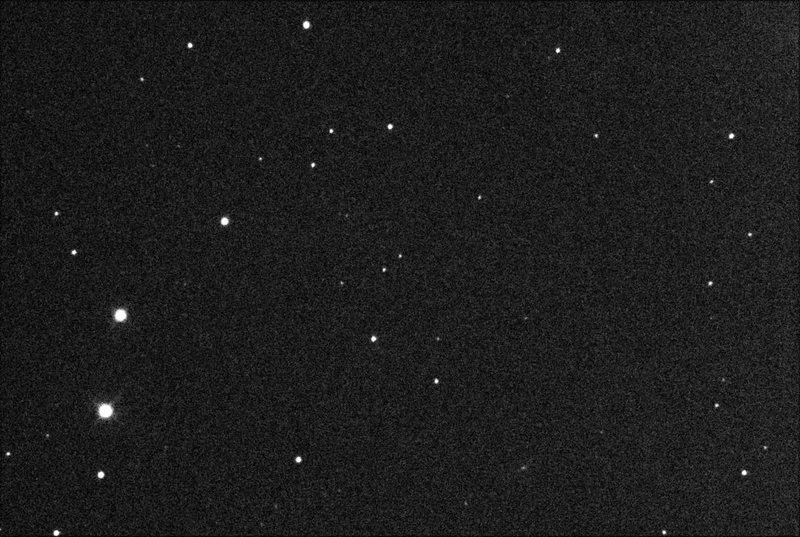
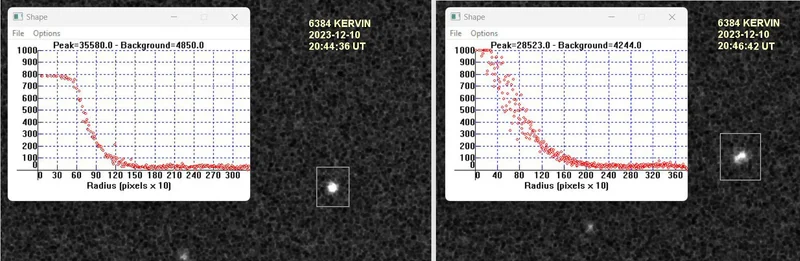
After completing the first sequence, I moved on to the next target. After thirty minutes of observations on other objects, I returned to 6384 Kervin and was surprised to discover that the asteroid was occulting a star in the field of view, specifically the one cataloged as UCAC4-497-005126 (UCAC4), with a magnitude of 16.082, which was comparable to that of the asteroid, appearing around the sixteenth magnitude that evening.
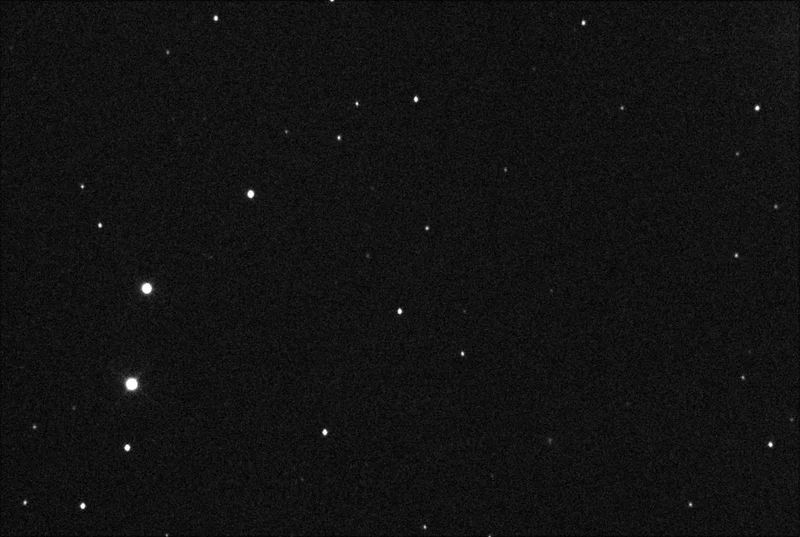
A preliminary analysis I conducted with IRIS suggested that the eclipse caused by the asteroid on the star was nearly total, at least within the spatial and temporal resolution I could achieve; unfortunately, I lack images from the moments immediately preceding the event.