A Look into a Possible Early Solar System - Spreewald-Spechtler
Astronomers have observed how two planets are forming in the disk around a young star named WISPIT 2 in the constellation Aquila. The team confirmed the existence of another planet, suggesting that the WISPIT-2 system could resemble a young solar system.
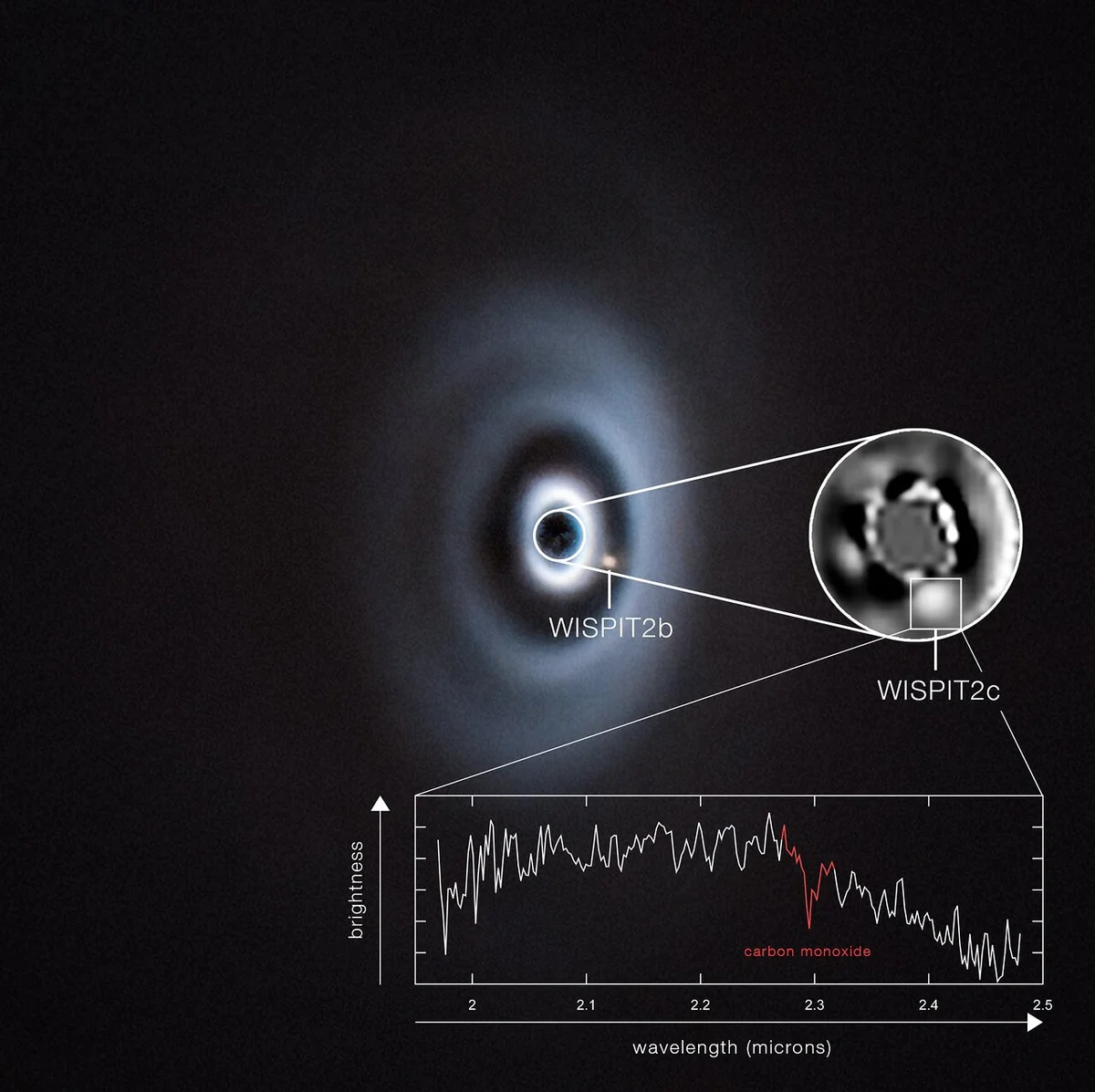
Astronomers have observed how two planets are forming in the disk around a young star named WISPIT 2 in the constellation Aquila. After the team had previously discovered one planet, they now used telescopes from the European Southern Observatory (ESO) to confirm the existence of another planet. These observations, along with the unique structure of the disk around the star, suggest that the WISPIT-2 system could resemble a young solar system.
"WISPIT 2 offers us the best insight into our own past so far", explains Chloe Lawlor, a PhD student at the University of Galway, Ireland, and the lead author of the study published today in The Astrophysical Journal Letters.
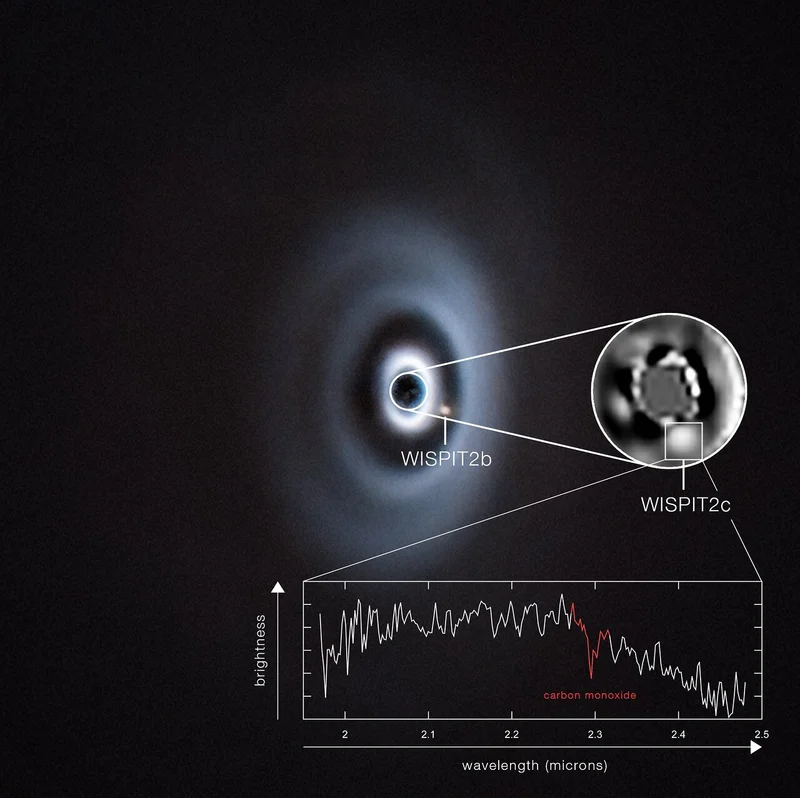
The system is only the second known example after PDS 70 where two planets have been directly observed during their formation phase around their central star. In contrast to PDS 70, however, WISPIT 2 has a very extended protoplanetary disk with significant gaps and rings. "These structures indicate that additional planets are currently forming there, which we will detect in the future", says Lawlor.
"WISPIT 2 serves as a crucial laboratory to study not only the formation of a single object but an entire planetary system", says Christian Ginski, co-author of the study and researcher at the University of Galway. With such observations, astronomers aim to better understand how young systems evolve into mature formations like our own solar system.
The first planet confirmed in this system – WISPIT 2b – was already discovered last year. It has nearly five times the mass of Jupiter and orbits the star at about 60 times the distance between the Earth and the Sun. "This detection of a world in the stage of formation has demonstrated the enormous potential of our current instrumentation", says Richelle van Capelleveen, a PhD student at the Leiden Observatory in the Netherlands and leader of the previous study.
After another object near the star was identified [1], measurements with the Very Large Telescope (VLT) of the ESO and the VLT Interferometer (VLTI) confirmed it as a planet. The new planet – WISPIT 2c – is located four times closer to the central star and is twice as massive as WISPIT 2b. Both objects are gas giants, comparable to the outer planets of our solar system.
To verify the existence of WISPIT 2c, the team used the SPHERE instrument at the VLT of the ESO, which captured an image of the object. Subsequently, the group utilized the GRAVITY+ instrument at the VLTI to determine the characteristics that clearly identify the object as a planet. "Our study benefited significantly from the recent modernization of GRAVITY+. Without this upgrade, we would not have been able to capture the planet so precisely at such a close distance to its star", says Guillaume Bourdarot, co-author of the study and researcher at the Max Planck Institute for Extraterrestrial Physics in Garching near Munich.
Both planets in WISPIT 2 are located in significant gaps within the dust and gas disk surrounding the young star. These voids result from the growth of the planets: particles in the disk accumulate and clump together, with their gravity increasingly attracting material until a planetary embryo forms. The remaining material forms characteristic dust rings around each gap.
In addition to the areas where the two planets were found, there exists at least one more smaller gap in the outer part of the WISPIT-2 disk. "We suspect that a third planet is clearing this gap", says Lawlor. "Due to the smaller width and depth of the gap, it could potentially be an object with Saturn mass." The team is already planning follow-up observations. Ginski notes: "With the future Extremely Large Telescope (ELT) of the ESO, we will be able to directly image such a planet."
MN
Endnotes
[1] Initial hints of the existence of a second planet were provided by observations with the MagAO-X instrument from the University of Arizona at the 6.5-meter Magellan telescopes in Chile, as well as with the LMIRcam from the University of Virginia at the Large Binocular Telescope Interferometer in the USA.
Background Information
These research findings were presented as part of a study published in the journal The Astrophysical Journal Letters (https://doi.org/10.3847/2041-8213/ae4b3b).
Links
- Research article
- Photos from the VLT/I
- Learn more about the Extremely Large Telescope of the ESO on our dedicated website and in our press kit
Link to the ESO press release