Total Solar Eclipse 2026: The Tools of the Time Baseline Team for Event Preparation
As the total solar eclipse of August 12, 2026, approaches, the Time Baseline Team shares essential tools and resources for astronomy enthusiasts preparing for this significant event.
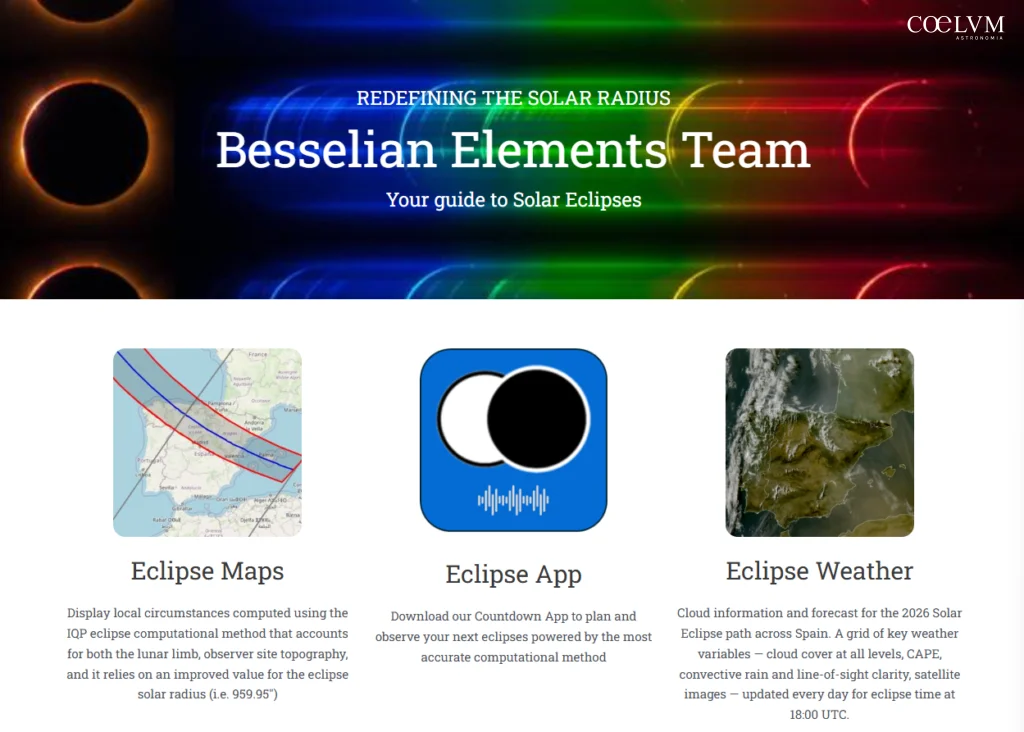
As the highly anticipated astronomical event approaches, astronomy enthusiasts from across Europe and beyond are gearing up for the total solar eclipse on August 12, 2026. Many are traveling to regions in Spain that will experience the shadow of the Moon. Among them are familiar faces from previous eclipses: the members of the Time Baseline Team.
Alessandro Pessi, the spokesperson for the group, has confirmed that the team will continue its ambitious mission on the day of the eclipse: to determine the Sun's radius with the utmost precision. This project has progressively refined methods and procedures, reducing estimation errors through meticulous observation.
Following the eclipse, the team will share their observations and findings in the next issue of Coelum. Meanwhile, they are committed to enhancing every aspect of preparation and measurement, making a significant portion of their calculations, results, and optimized tools available to the community.
Free Maps, Forecasts, and Tools on the Website
The Besselian Elements website offers a free interactive map of the August 12, 2026 eclipse, equipped with various features designed to assist observers in selecting the best locations and preparing for the experience.
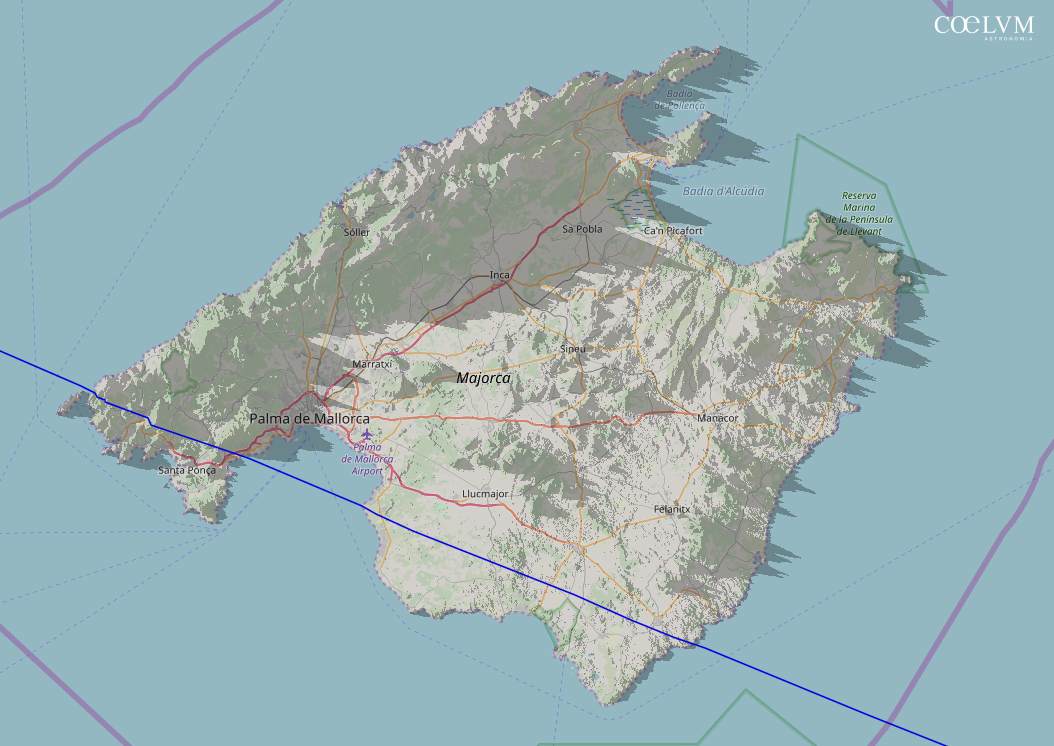
By selecting a point on the map, users can access local circumstances of the event. The calculations take into account not only the observer's position but also the complex topography of the lunar limb, the orography of the Earth's surface, and an updated value for the solar radius. A diagram of the Moon's profile indicating contact points is also provided.
The representation of the totality path is particularly noteworthy. Unlike many eclipse maps that depict regular, idealized lines, this map illustrates a more complex and realistic outline influenced by the combined effects of terrestrial relief and lunar limb irregularities.
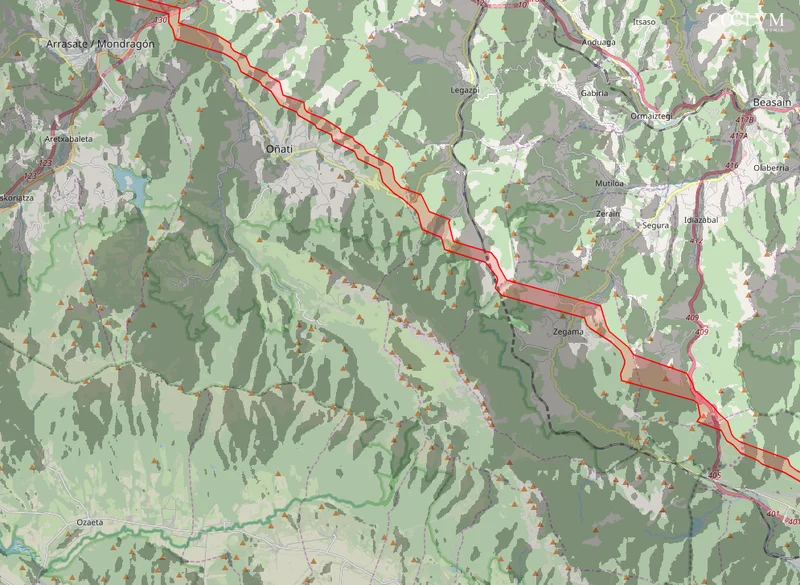
The map includes multiple layers of information that can be activated based on user needs. One of the most useful features highlights the shadows cast by mountains and hills during totality. Given that the Sun will be low on the horizon in much of Spain, nearby elevations could obstruct the view of the eclipse. This tool enables users to identify locations where the horizon towards the Sun is likely to be clear.
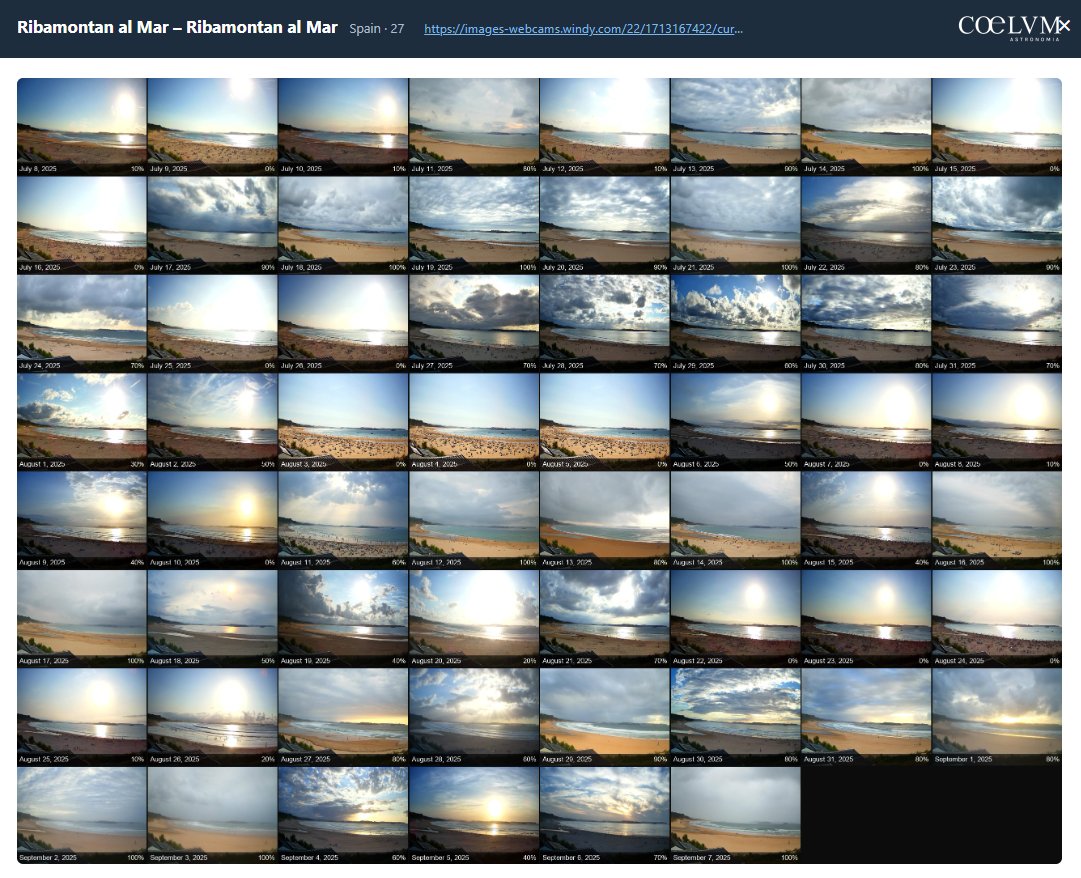
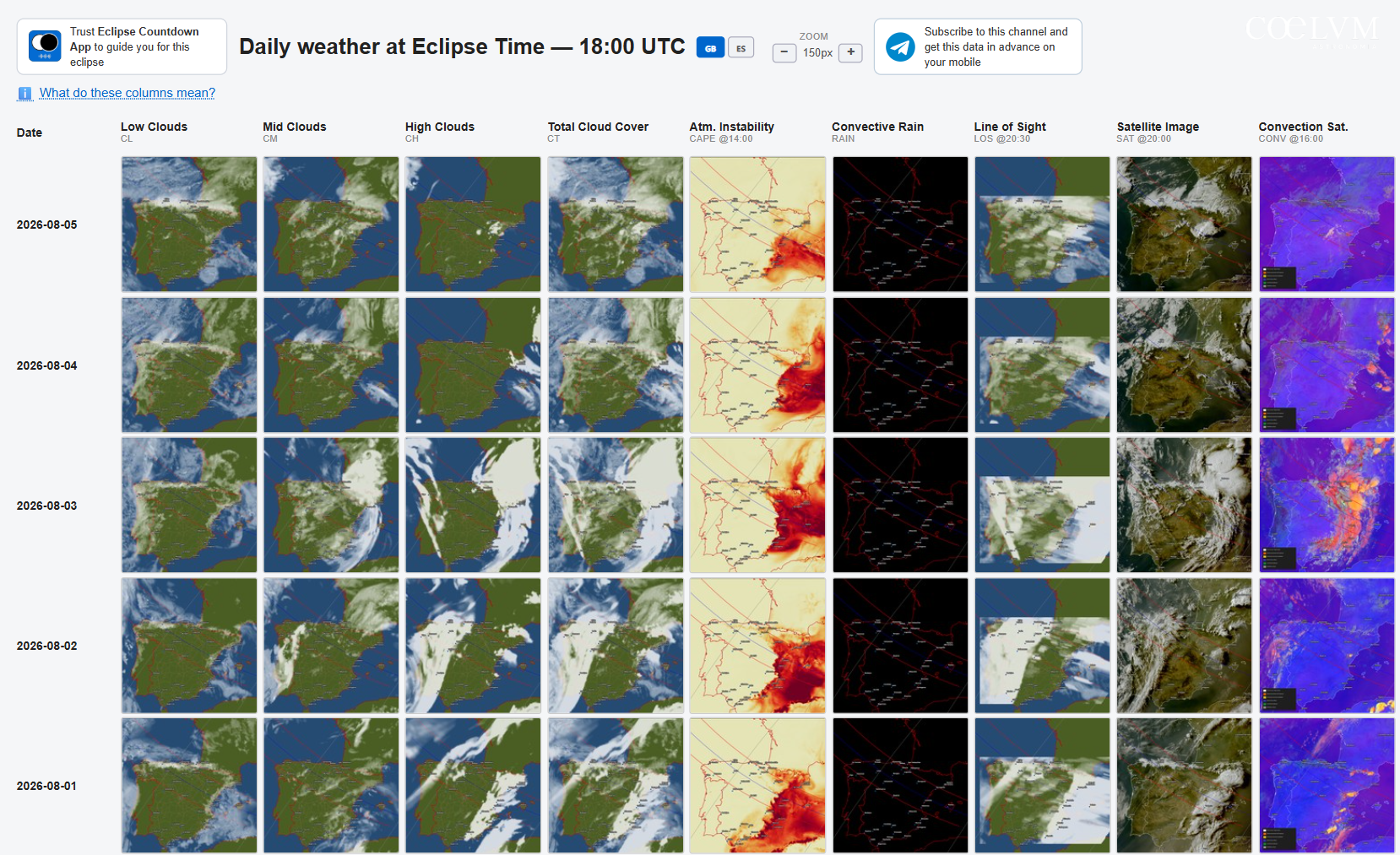
Another layer focuses on weather conditions. Throughout the previous summer, the team collected data on cloud cover, integrating it with daily samples from north-west facing webcams. The analysis also considers the line of sight towards the Sun, as clouds obstructing visibility may not be directly overhead but could be situated tens or even over a hundred kilometers away.
Since the beginning of summer, the Time Baseline Team has been gathering meteorological model data from ICON every evening at 8:00 PM, publishing it alongside satellite images and simulations of the line of sight and shadows cast by clouds. This monitoring has allowed the group to study summer trends in the Iberian Peninsula and refine their interpretation of forecasts.
According to studies referenced by the team, meteorological indications should reach a significant level of reliability about five days before the event. In the days leading up to the eclipse, new layers will be added with forecasts for the time of the event, including cloud cover, precipitation, CAPE index, and other atmospheric parameters. An analysis of the convergence of subsequent forecasts will also be provided to assess the stability and reliability of the predictions.
“Eclipse Countdown,” the Observer’s Companion App
Complementing the online platform is Eclipse Countdown, a mobile application developed by the team. By utilizing GPS coordinates from the user's phone, the app calculates the local circumstances of the eclipse for the observer's location.
The calculations include the topography of the lunar limb and adopt a solar radius value based on the latest research. According to the group, this approach yields particularly accurate timing indications compared to many other eclipse-related applications.
One of the most beneficial features allows users to create a customized sequence of events linked to different phases of the phenomenon. Specific phrases or actions can be associated with each moment, and during the eclipse, the app plays real-time voice messages reminding observers of what to do.
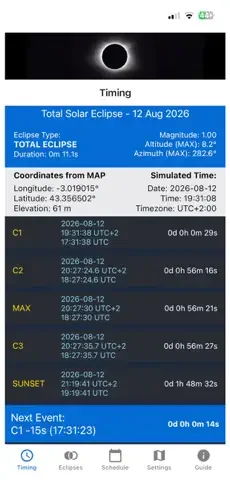
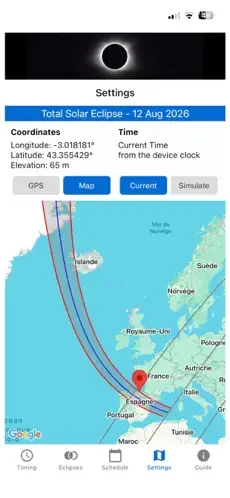
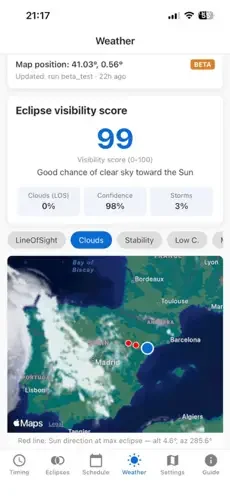
This functionality enables users to pre-schedule photographic operations, filter changes, equipment checks, or simply moments to pause and directly observe the spectacle. The audio reminders help users follow the schedule without constantly checking their watch or screen.
For observers in Spain, the app will also provide weather forecasts for the evening of the eclipse. This information will assist in identifying locations with the highest likelihood of clear skies, particularly focusing on horizon visibility, which is crucial due to the Sun's low position.
Further details about the app and its features can be found on the Eclipse Countdown dedicated page.
Through these resources, the Time Baseline Team not only prepares for a new scientific measurement campaign but also shares tools, data, and expertise with the entire community. This valuable contribution enhances the experience of the first total solar eclipse visible from European territory in over twenty-five years, ensuring that observers can make informed decisions about where to witness the arrival of the lunar shadow.