Tonight's Celestial Dance: The Moon and Mars Conjunction
Tonight, the Moon will shine near Mars, creating a spectacular conjunction. Find out how to witness this celestial event with the naked eye.
Tonight's Celestial Dance: The Moon and Mars Conjunction
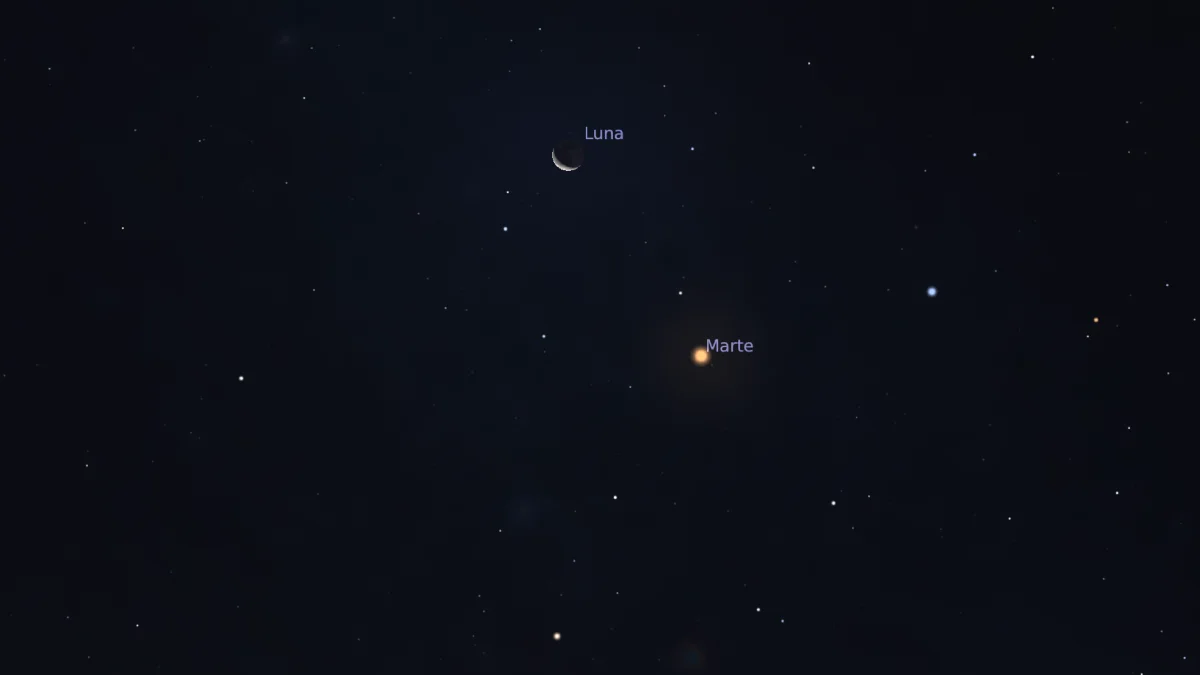
This evening, the Moon will shine brightly near Mars, the red planet, creating a stunning celestial conjunction. Occurring on the night of August 8 to 9, 2026, the two celestial bodies will appear to embrace in the western sky shortly after sunset. Despite their close visual proximity, they are actually separated by an impressive average distance of 225 million kilometers, with Mars showcasing its distinctive red hue.
When to Observe the Event
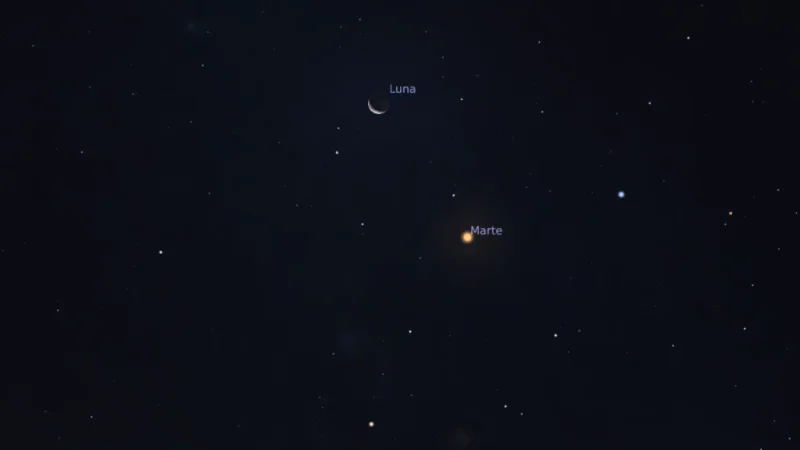
The conjunction will be observable in the west starting at approximately 2:30 AM (local time may vary based on natural or artificial obstructions and sunset timing). Both the Moon and Mars will be visible to the naked eye, making this event accessible to all. For enhanced viewing, consider using an application like Stellarium. Below is a simulation of the sky for this evening:
How to Observe the Moon and Mars
Using a good pair of binoculars can provide more detailed views of the Moon. To observe Mars more closely, a telescope is recommended to discern surface details. We suggest the Celestron Astromaster 130EQ-MD, which is also excellent for lunar observations. For those interested in exploring the night sky further, the book Primo incontro con il cielo stellato by Daniele Gasparri is a great resource.
The Moon
With a radius of 1,737 kilometers, the Moon is less than one-third the width of Earth and orbits at an average distance of 384,400 kilometers from our planet. This distance means that up to 30 Earth-sized planets could fit between the two celestial bodies. The Moon rotates on its axis at the same rate it orbits Earth (synchronous rotation), which is why we always see the same side.
Lunar Phases
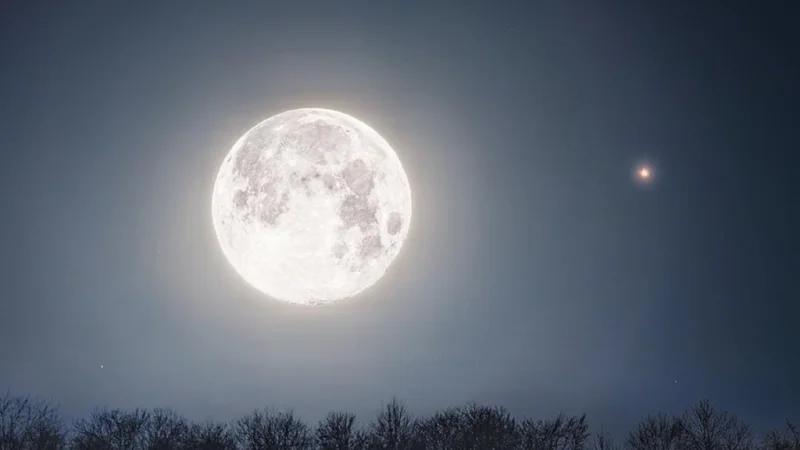
The Moon's changing illumination causes it to exhibit different phases from our perspective. During a “full moon,” the lunar hemisphere visible from Earth is completely illuminated by the Sun. Conversely, a “new moon” occurs when the visible hemisphere is entirely in shadow. The Moon completes its orbit around Earth in 27 Earth days. Simultaneously, as Earth rotates on its axis while orbiting the Sun, the Moon appears to orbit us every 29 days.
Mythological History
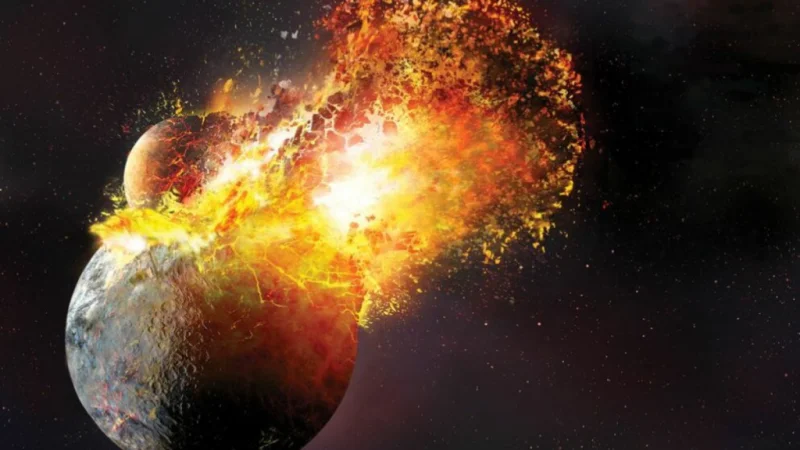
In Greek mythology, Selene was the goddess of the Moon, daughter of Hyperion and Theia, and sister to Helios (the Sun) and Eos (the Dawn). Selene was often depicted as a beautiful woman with a pale face, dressed in silver, and was represented with a crescent Moon on her head and a torch in her hand.
To learn more:
- Visit the NASA page dedicated to the Moon.