The Mystery of Gamma Cassiopeiae Finally Unraveled
High-resolution observations from the XRISM space telescope have resolved the mystery surrounding the unusual X-ray emissions of Gamma Cassiopeiae, linking them to its binary companion.

Recent high-resolution observations conducted using the Resolve spectrometer aboard the XRISM space telescope have shed light on the enigmatic X-ray emissions from Gamma Cassiopeiae (γ Cas), a puzzle that has persisted for nearly fifty years. The findings, published in Astronomy & Astrophysics, represent the first direct evidence linking the hard X-rays from γ Cas to the orbital motion of its companion star.
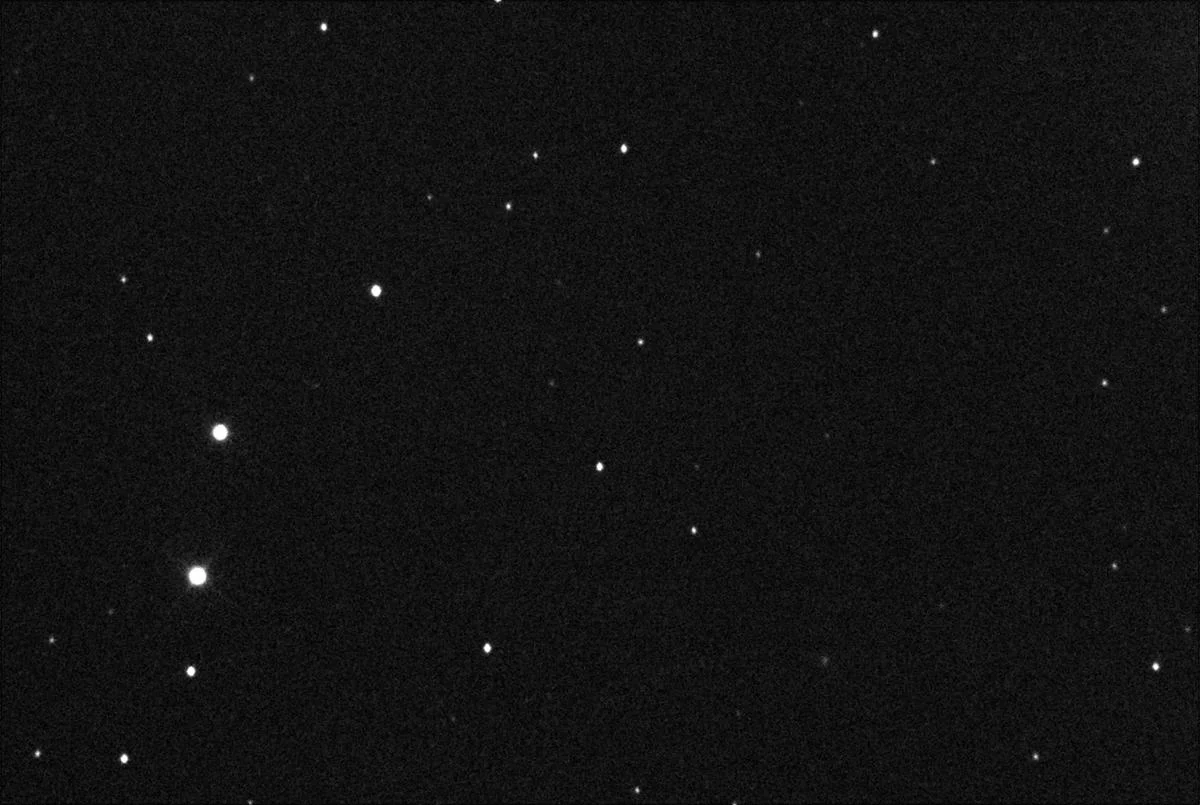
Visible to the naked eye throughout the year, γ Cas is the central star in the W formation of the Cassiopeia constellation. The anomaly in its light signature was first noted in 1866 by Italian astronomer Angelo Secchi, who observed an unusually bright hydrogen emission line. Unlike the typical dark line seen in stars like the Sun, this peculiar feature led to the classification of a new category of stars known as Be stars, combining the designation of massive hot blue-white stars with the emission characteristics indicative of a circumstellar disk fueled by rapid stellar rotation.
Over time, γ Cas has become the archetype for Be stars. Advances in spectroscopic and astrometric measurements confirmed that γ Cas is part of a nearly circular binary system, where the mass of its companion is estimated at about 0.8 solar masses, consistent with an undetected hot white dwarf in the optical or UV spectrum.
Since the work of Mason et al. in 1975, γ Cas has been recognized as a source of X-rays with a nearly pure thermal spectrum, characterized by a hot plasma component reaching temperatures of approximately 12–15 keV (around 150 million Kelvin). The presence of prominent lines from Fe XXV (6.7 keV) and Fe XXVI (6.97 keV), alongside a fluorescence component from Fe Kα at 6.4 keV, indicates the existence of cold matter in close proximity to the emission region. The X-ray emissions exhibit significant variability, with stochastic modulations occurring on timescales of less than 10 seconds, suggesting a compact accretion process rather than a standard radiative shock mechanism typical of OB stars.
These characteristics define a subclass of objects known as “γ Cas analogs,” identified among approximately twenty Be stars. Various mechanisms have been proposed to explain their X-ray emissions:
-
Magnetic reconnection between the toroidal field of the disk and small-scale stellar magnetic structures — a scenario that aligns with the possible presence of sub-photospheric fields but is contradicted by the lack of measurable global magnetic fields.
-
Interaction with a stripped companion, a hot star whose wind could theoretically produce X-ray shocks, although this model is inconsistent with the observed properties of stripped systems.
-
Accretion onto a neutron star in a quasi-accretion phase, theoretically plausible but inconsistent with the rarity and brevity of such phases and with the spectral morphology of γ Cas.
The only remaining viable model was that of an accreting white dwarf, although the analogy with cataclysmic variables or symbiotic systems is only partial. The X-ray signatures of γ Cas closely resemble certain generic models of accretion onto a white dwarf, yet the origin of the material (from a Be disk rather than from a wind or Roche lobe overflow) remained a significant difference.
The new observations by Yael Nazé from the University of Liège and her team using XRISM provide decisive validation for this last scenario. The researchers recorded Doppler shifts in the lines from the hot plasma and the fluorescence line that are strictly compatible with the orbital motion of the low-mass companion star, rather than that of the Be star. This correlation confirms that the source of the hard X-rays is linked to the companion. Furthermore, the measured broadening of the Fe Kα line indicates that the emission region is situated very close to the surface of the white dwarf, ruling out an internal mechanism within the Be accretion disk.
Nazé and her collaborators identified γ Cas as a Be + white dwarf system fueled by material flowing from the decretion disk, thanks to the combination of several key elements: the kinematic localization of the X-ray region at the companion star, the presence of a plasma at thermal energy exceeding 10 keV, the existence of narrow Fe Kα fluorescence lines, rapid variability (less than 10 seconds), and the absence of wind shock signatures.
According to the researchers, the dominant mechanism is likely low-rate accretion, where material from the Be star's disk interacts with the gravitational potential of the white dwarf via a nearly ballistic flow process. The temperature of the X-ray plasma corresponds well to the shock temperature above the surface of a white dwarf in a regime of moderate magnetized accretion (with a magnetic field between 1 and 10 MG).
As a result, γ Cas and its analogs can now be formally classified as Be + white dwarf binaries undergoing accretion, a population that had been predicted but never observationally confirmed. This identification resolves decades of debate and will have direct implications for modeling the evolution of massive binaries. It notably suggests that these systems, long assumed to be common among low-mass binaries, are instead linked to the most massive Be stars, challenging traditional formation scenarios.
The precise characterization of the iron lines through XRISM now paves the way for detailed modeling of the physical parameters of the plasma and accretion mechanisms, as well as a reevaluation of the role of white dwarfs in the evolution of Be systems.