Mars Returns to Opposition: A Celestial Event for Observers
Il pianeta Marte torna a mostrarsi in opposizione a distanza di due anni: una occasione per dare uno sguardo al vicino di casa Il cielo notturno di gennaio 25 offre una occasione che, co...
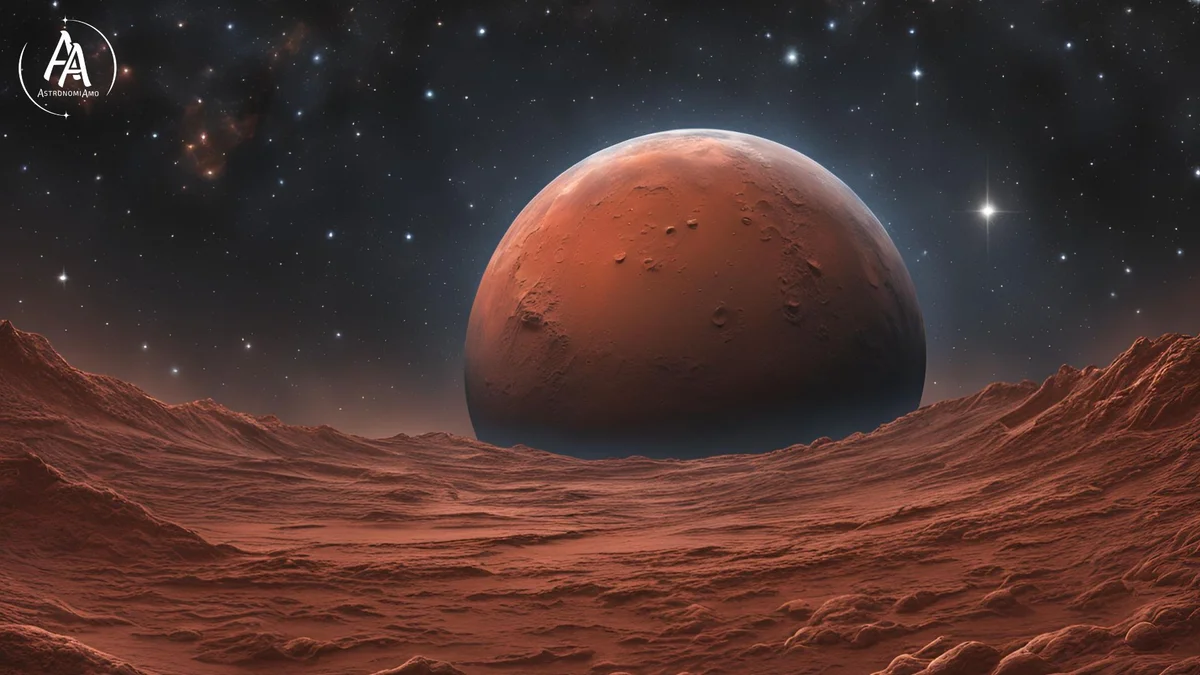
On January 25, 2025, the planet Mars will once again be visible in opposition, presenting a fantastic opportunity to observe our neighboring planet.
The night sky on January 25 offers an event that, despite its excitement, is not as frequent as one might expect. Mars, renowned for its visibility, presents itself to observers every two years, but not always under optimal conditions.
This January, Mars will reach its heliacal opposition on January 16, 2025, providing a reasonable, though not exceptional, chance to observe the red planet.
What is Opposition?
A superior planet (a planet whose orbit lies outside that of Earth, such as Mars, Jupiter, Saturn, Uranus, and Neptune) is said to be in opposition when Earth is positioned directly between the Sun and that planet.
In simpler terms, the Sun, Earth, and the planet are aligned, with Earth at the center. For observers on Earth, the planet in opposition appears directly opposite the Sun in the sky: as the Sun sets in the west, the planet rises in the east, and vice versa. This alignment means that the planet is visible throughout the night and reaches its highest point in the sky.
Opposition of Mars occurs approximately every 26 months (around 780 days), corresponding to Mars' synodic period. Due to the elliptical orbits of both Mars and Earth, the distance between the two planets during oppositions can vary significantly. The closest oppositions of Mars are termed “great oppositions,” occurring roughly every 15-17 years.
The 2025 Opposition
The January 2025 opposition will not be classified as a