Hubble Uncovers Evidence of Early Galaxy Mergers
Recent findings from the Hubble Space Telescope provide evidence that the Milky Way merged with smaller galaxies in its early development, extending its history back 1.8 billion years.
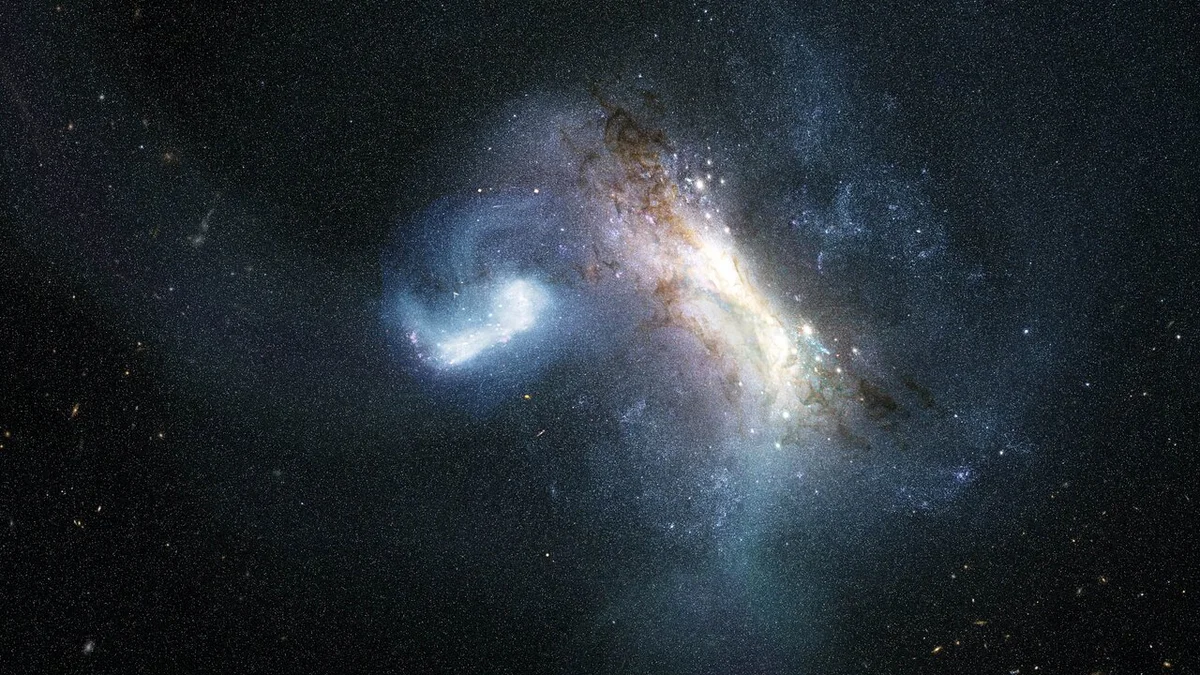
Recent findings from the Hubble Space Telescope have provided compelling evidence that our home galaxy, the Milky Way, underwent significant growth through the merger with smaller galaxies during its early development. This new data extends our understanding of the Milky Way's history back an astonishing 1.8 billion years earlier than previously known.
The Milky Way, now a massive spiral galaxy containing hundreds of billions of stars, was not always so expansive. Its growth has been attributed to the formation of new stars from gas clouds and the assimilation of stars, gas, and dark matter from other galaxies through mergers.
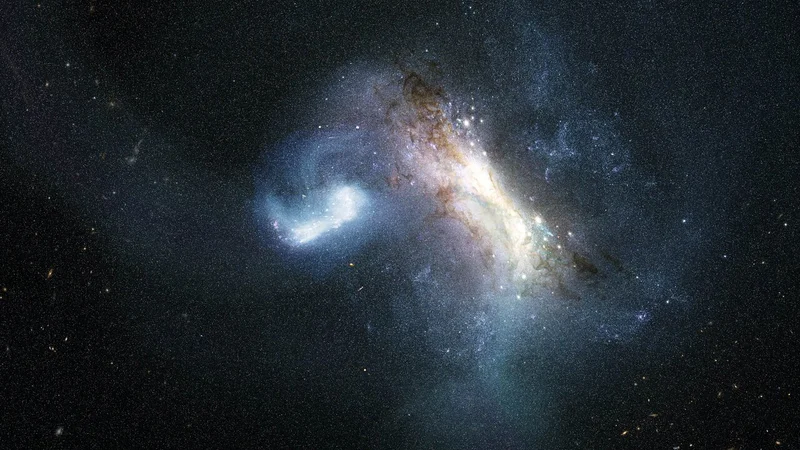
The most notable merger in the Milky Way's history occurred over six billion years ago with the dwarf galaxy Sagittarius, a process that is still ongoing. Additionally, researchers have identified that the Milky Way consumed another dwarf galaxy, known as Gaia-Sausage-Enceladus, approximately ten billion years ago. This ancient merger significantly influenced the structure of the galaxy's stellar disk, with further smaller mergers occurring between these two galaxies.
However, the story of the Milky Way does not end there. Observations and simulations suggest that these two mergers were preceded by another major merger, the details of which have long been debated. Hubble has now provided clear evidence of an earlier merger that took place around 11.8 billion years ago, just two billion years after the Big Bang.
"Our home is the Milky Way, but we do not know how our house was built," said Davide Massari, the lead author of the study from the Observatory for Astrophysics and Space Sciences in Bologna, Italy. "In this work, we discover where the first significant batch of building blocks came from: a dwarf galaxy we call LKH."
Cosmic Excavation Sites
Extensive astronomical surveys and precise data from space missions like ESA's Gaia have been crucial for reconstructing the history of our galaxy. As scientists look further back in time, reconstructing events becomes increasingly challenging. In its early stages, the Milky Way was smaller and bore a closer resemblance to the galaxies it collided with, existing in a more chaotic state. It is possible that the traces of these mergers have been erased over billions of years.
Hubble's observations focused on some of the Milky Way's globular clusters, which are vast, nearly spherical collections of tens of thousands to millions of stars. These clusters contain some of the oldest stars in our galaxy and can serve as cosmic excavation sites that preserve stars from other galaxies that the Milky Way has absorbed.
"Thanks to the high resolution and depth of Hubble's images, we were able to measure the age and metallicity of these globular clusters with unprecedented precision," said Chiara Zerbinati, co-author of the study from the University of Bologna in Italy. "Combined with measurements from Gaia, we were able to distinguish a population of globular clusters that is different from others. These are the clusters that formed in LKH, and they reveal to us when this galaxy was consumed by ours and how massive it was."
The research team analyzed Hubble observations of 39 globular clusters within the inner 20,000 light-years of our galaxy, where traces of the oldest mergers are likely to remain. They anticipated that this sample would include clusters formed within the young Milky Way as well as those that were absorbed from the dwarf galaxy Gaia-Sausage-Enceladus about ten billion years ago.
Through sensitive Hubble observations that determined the exact age and associated metallicity of each cluster, they discovered a third population of globular clusters in the inner regions of our galaxy. This group was found to be older than those captured in the Gaia-Sausage-Enceladus merger but younger than those that formed in the Milky Way itself, regardless of their metallicity. These star clusters originated from a separate and even earlier merger, in which the Milky Way consumed a dwarf galaxy with a stellar mass roughly 500 million times that of the Sun, which represented a significant portion of the Milky Way's mass at the time. This dwarf galaxy was named "Low-energy-Kraken-Hercules" (LKH) in honor of three previous studies that had suggested the idea of a merger in the early history of our galaxy.
Such a massive merger occurring so early in the formation phase of the Milky Way has profound implications for the development of our galaxy.
"Some earlier studies argued that the earliest phases of our galaxy's development were defined solely by stars that formed in our galaxy," noted Massari. "We have shown here that stars formed in other galaxies must also be taken into account."
The team plans to continue its work deciphering the history of the Milky Way by examining its globular clusters, aiming to characterize all massive mergers that our galaxy has undergone throughout cosmic history.
"Hubble is observing globular clusters that have never been studied before, and this will help us characterize the merger events that occurred far back in the history of the Milky Way," said Fernando Aguado-Agelet, a co-author from the University of Vigo and the University of La Laguna in Spain.
The results were published today in the journal Nature Astronomy.
Background Information
The Hubble Space Telescope is a project of international collaboration between ESA and NASA.
Bildnachweis: NASA, ESA, J. Olmsted (STScI)