El Niño: A Record-Breaking Event Looms by Year-End
The NOAA's latest bulletin reveals that El Niño is intensifying and could reach unprecedented levels by year-end, with a high probability of becoming one of the strongest events recorded.
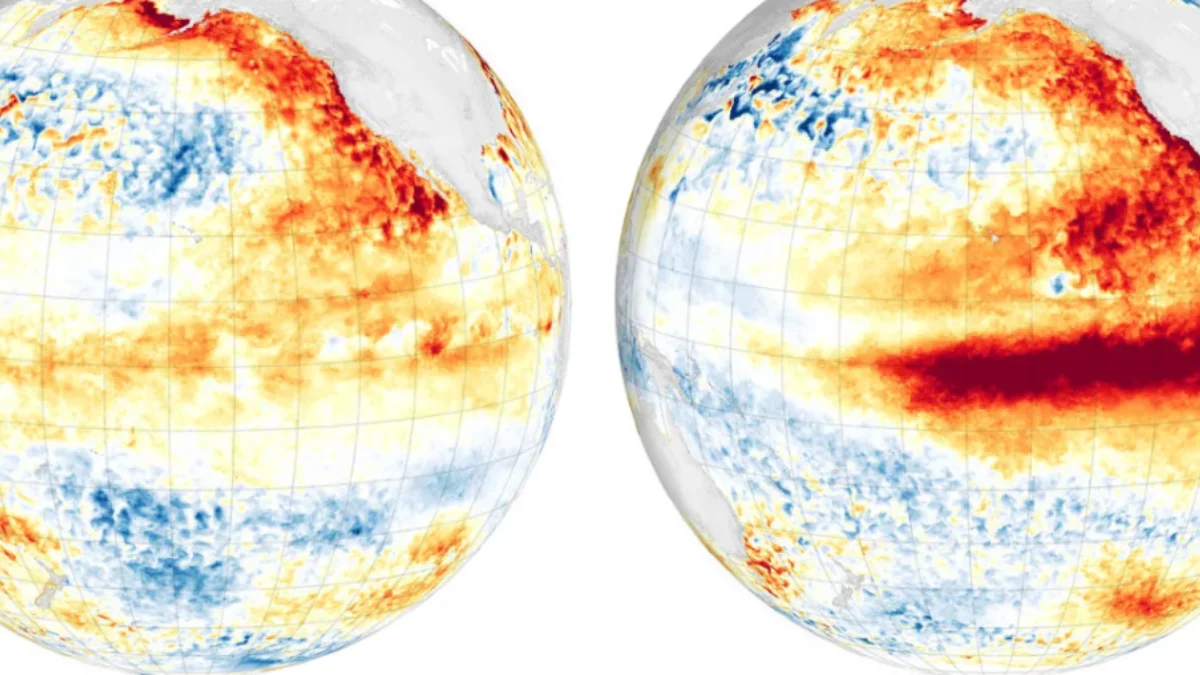
The latest report from the NOAA, dated July 9, 2026, highlights an intensifying El Niño phenomenon that is expected to reach exceptional levels between October and December. The probability of this event ranking among the strongest ever recorded stands at 81%.
In examining the Niño-3.4 region, which climatologists regard as the primary gauge for these phenomena, temperatures have already shown an anomaly of +1.2°C. However, the most alarming data comes from the Niño-1+2 region, located closest to the South American coast, where surface temperatures have surged to +2.7°C. This represents a significant accumulation of heat at the surface, comparable to the peak intensity of some of the most destructive historical events. The Japan Meteorological Agency, in its bulletin from July 10, projects an average anomaly of around +4.0°C for October, with a lower threshold of +3.0°C. For context, the super El Niño of 1997-98, the strongest ever recorded, peaked at +3.6°C. Projections suggest that 2026 will surpass this record.
Probability Assessments
Currently, the NOAA assigns a 97% probability that the El Niño phenomenon will persist through spring 2027. Additionally, there is an 81% probability that it will reach a “very strong” intensity during the months of October to December. The Japanese agency is even more confident, asserting a 100% certainty that El Niño will continue throughout the fall. The event is now deemed inevitable; discussions now center on the extent of its potential devastation.
A Record Already in Sight
June 2026 has already been recorded as the hottest June on record globally for sea temperatures. The ocean, already warmed, will only exacerbate the situation as the impending El Niño adds further heat. Recent NOAA models indicate a peak Niño-3.4 index around +4.0°C, an unprecedented value in modern history. To provide perspective, the previous record set in 2015 was +2.75°C. The anomaly of +2.7°C in the extreme Pacific, along with the JMA's +4°C projection and the fact that June 2026 was the hottest ever for the oceans, all paint a clear and increasingly alarming picture of the situation.