A Rescue in Space: Challenging Gravity to Save Swift
On June 17, NASA held a teleconference to discuss an ambitious project to raise the orbit of the Neil Gehrels Swift space observatory. This meeting involved NASA, Katalyst Space, and Northrop Grumman, aiming to counter the satellite's orbital decay.
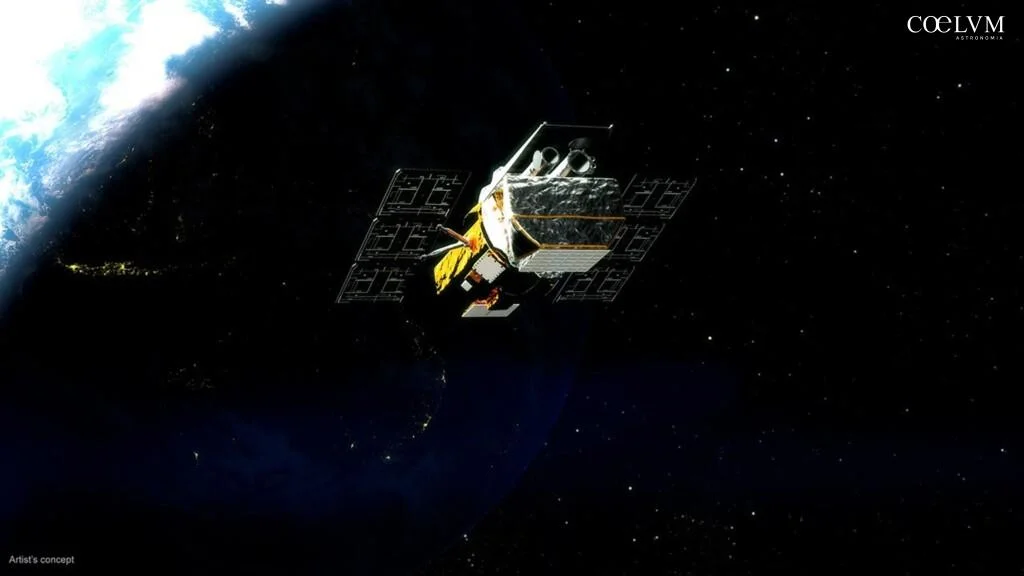
On June 17, at 11:00 AM EDT, NASA held a teleconference to discuss a decidedly ambitious project: raising the orbit of the Neil Gehrels Swift space observatory. Three key organizations participated in the meeting: NASA itself, Katalyst Space, and Northrop Grumman, united by the common goal of countering the orbital decay of the satellite.
What Happened?
At the beginning of last year, NASA began receiving strong indicators that the Swift telescope would exit its nominal orbit and start the deorbiting process much earlier than expected. This unexpected phenomenon was caused by intense solar activity that increased the aerodynamic drag on the satellite. Along with other factors, this led to the degradation of Swift's orbit and a decrease in altitude.
Why is Swift So Important That It Needs to Be Saved?
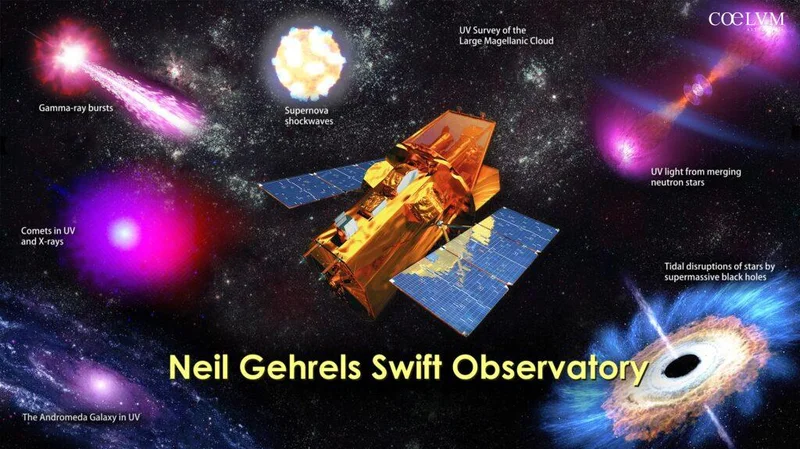
Launched in 2004, Swift is one of the most important satellites equipped with space telescopes for the astrophysics community. It was designed to study Gamma Ray Bursts, flashes of light that can release a tremendous amount of energy in just seconds, more than the Sun will emit over its entire lifetime.
However, Swift does not solely study this type of event; in fact, during its lifetime, it has been repurposed multiple times to investigate various physical phenomena, including stellar explosions, thanks to its telescopes that observe in X-ray and UV bands, reaching the boundaries of the visible universe.
The uniqueness of Swift also lies in its very rapid repositioning capability to observe impulsive events in a timely manner. For comparison, Hubble takes, at best, one or two days to reposition to target an object of interest, while the same operation takes Swift only a few minutes. For this and many other reasons, Swift is the structure that receives the most observation requests right after the James Webb Space Telescope.
Normally, if any spacecraft were to deorbit ahead of schedule, NASA and other space agencies would simply allow the phenomenon to occur naturally, ensuring there are no risks to people on the ground; however, in this case, given the importance of the mission, it was deemed appropriate to attempt a rescue operation.
But How Do We Save a Space Telescope?
After receiving signals of premature orbital decay of the satellite, NASA, in collaboration with Katalyst Space and Northrop Grumman, immediately set to work to make a project they considered almost impossible a reality: to establish a rescue mission with significant technological innovations on board in just nine months. In such an extraordinarily short time for industry standards, this collaboration has turned a completely new project into an integrated spacecraft on a rocket, ready for launch.
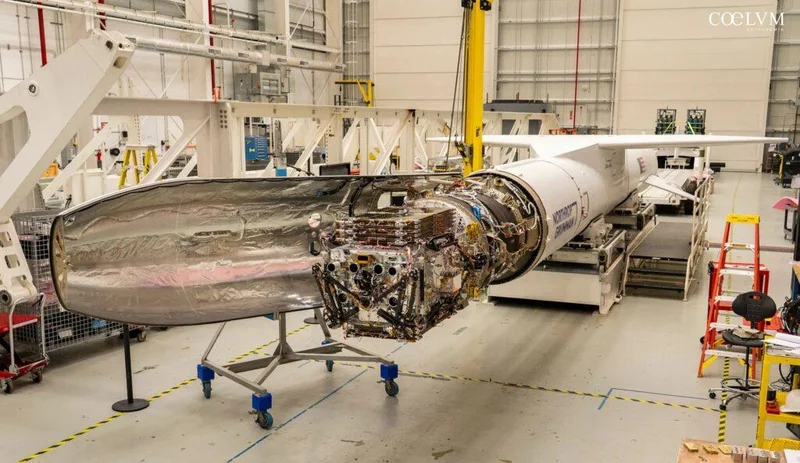
The robotic spacecraft from Katalyst Space, called LINK, will attempt to approach Swift using eight rendezvous sensors, a series of complex algorithms, and three robotic arms to capture it and bring it back near its original orbit. This complex operation will require a commissioning period of several weeks; the approach phase to Swift, which will be at the right altitude for the rendezvous, will begin in the coming months. Once captured, it will take two to three months to safely return it to the established orbit.
LINK will travel aboard Northrop Grumman's Pegasus XL rocket. This vehicle is unique because it is extremely flexible; instead of needing a fixed platform for launch, it is carried beneath the L-1011 Stargazer aircraft and released at an altitude of about 40,000 feet. This strategy allows the vehicle to be positioned wherever necessary, enabling it to reach challenging orbits and areas.
.
Sources:
- NASA to Preview Katalyst Mission to Boost Swift Spacecraft’s Orbit |NASA
- NASA-Katalyst Swift Orbit Boost Teleconference|NASA
- Swift Boost Mission | NASA