A Halo Surrounding the Andromeda Galaxy M31
Recent findings reveal details about the halo surrounding the Andromeda Galaxy, enhancing our understanding of both Andromeda and our own Milky Way.
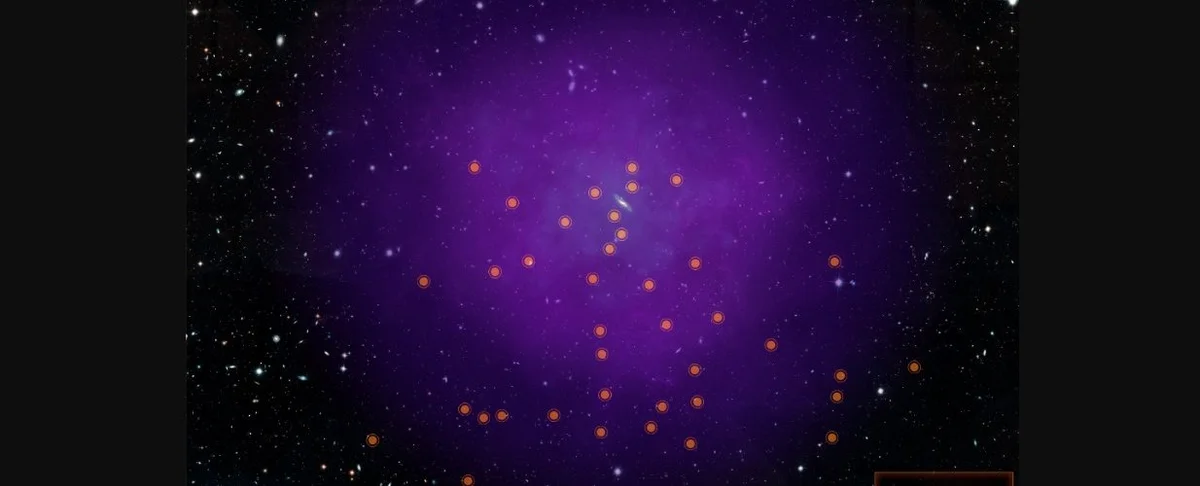
A Halo Surrounding the Andromeda Galaxy M31
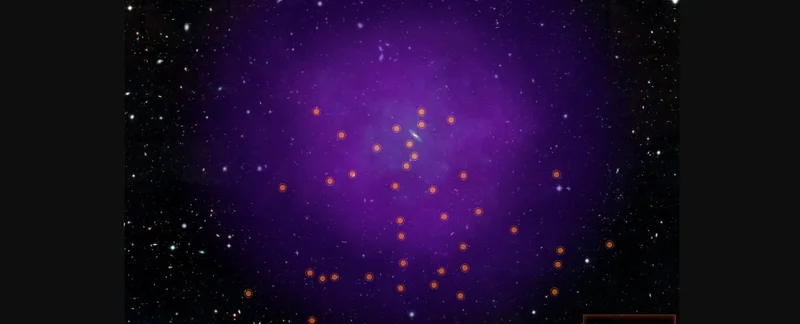
Recent observations from a collaborative team of NASA and ESA scientists have unveiled intriguing details about the halo surrounding the Andromeda Galaxy, also known as M31. This research not only enhances our understanding of Andromeda but also provides insights into the evolution of our own Milky Way galaxy.
Characteristics of the Halo
The halo around Andromeda is composed of two distinct layers: an inner halo and an outer halo. The elements found within this halo include carbon, oxygen, and silicon, which are heavy elements formed in the cores of stars and planets.
Layer Composition
- Inner Layer: This layer is complex and dynamic, likely influenced by the galaxy's activity, including supernova explosions.
- Outer Layer: In contrast, the outer halo is more homogeneous and warmer.
The diameter of this halo extends to approximately 2 million light-years. Given that our Milky Way also possesses a comparable halo, it suggests that the two galaxies may be interacting with one another.
Observation Method
Observing this tenuous halo poses significant challenges. The data was gathered by analyzing the light emitted from quasars located behind Andromeda. Researchers utilized the unique capabilities of the Cosmic Origins Spectrograph (COS) aboard the Hubble Space Telescope to study the ultraviolet light from these quasars as it passes through the halo. This method allowed for the detection of ionized gases of carbon, silicon, and oxygen. Ionization occurs when radiation strips an atom of one or more electrons.
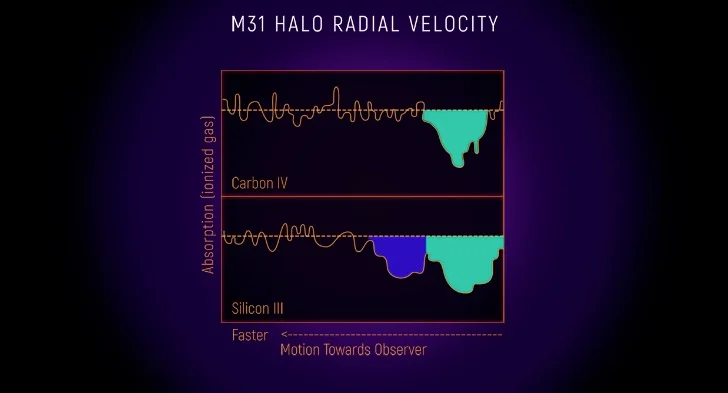
Due to the absorption of ultraviolet light by the Earth's atmosphere, ground-based telescopes are unable to observe these wavelengths, making space-based observations essential.