A Day for Asteroids
On June 30 each year, we celebrate World Asteroid Day, a global day dedicated to asteroids featuring numerous activities proposed by research centers and space agencies to raise public awareness about the importance of planetary defense.
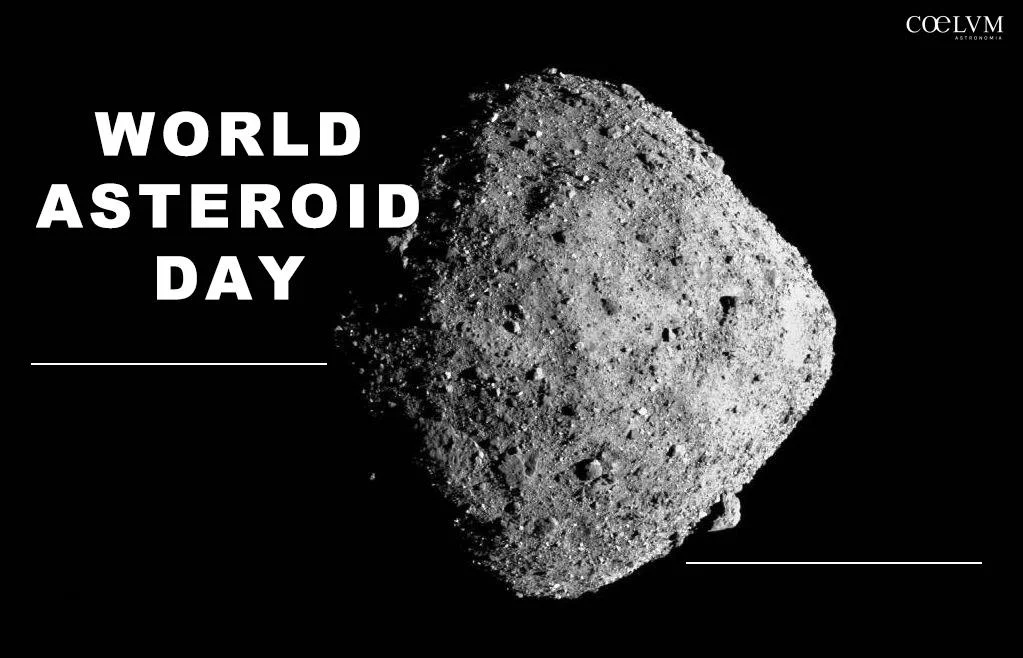
On June 30 each year, we celebrate “World Asteroid Day”, a global day dedicated to asteroids featuring numerous activities proposed by research centers and space agencies to raise public awareness about the importance of planetary defense. These “wandering rocks” may seem extremely marginal to those living on Earth, but in reality, they are more important than we might think.
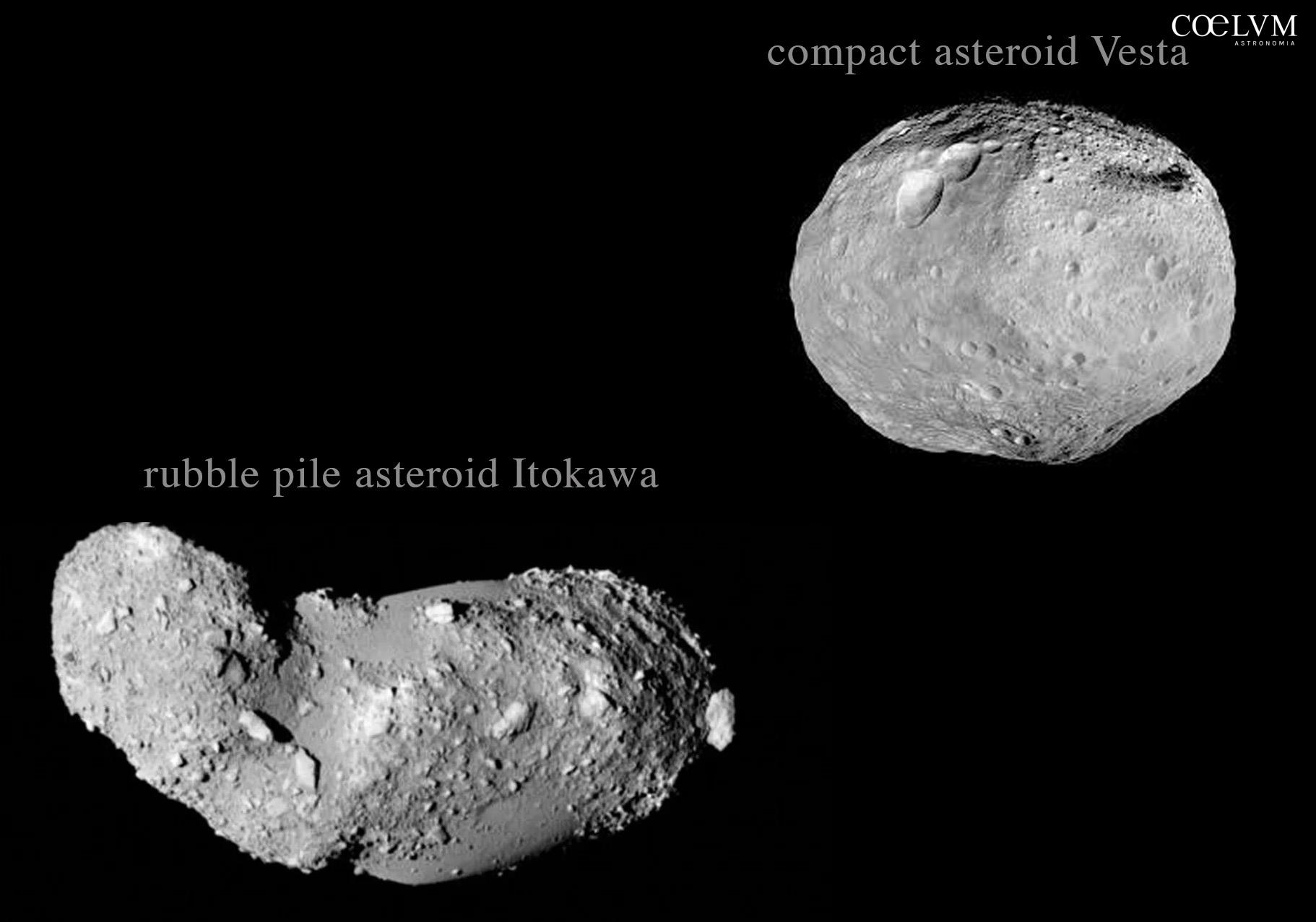
The asteroids orbiting our Sun are primarily concentrated within the main asteroid belt (between the orbits of Mars and Jupiter) and in the broader and more distant region of the Kuiper belt (beyond Neptune's orbit). We can consider asteroids as genuine “space fossils,” fragments of planets that never formed or that failed to do so, precious and pristine time capsules from the early moments of the solar system's life. Currently, more than 100,000 are being monitored, and although they may seem like simple objects, no two are alike. Each has its own story to tell, which began about 4 billion years ago, and there are various ways to decipher it: by utilizing their light-reflecting ability (albedo), their chemical composition (which classifies them as carbonaceous, silicate, or metallic), and their internal structure (either solid rock or “rubble pile,” meaning an aggregate of debris). All the information we possess seems to point in the same direction: asteroids are pieces of a cosmic puzzle, crucial not only for understanding various episodes of our planetary past but also for safeguarding our future, given their dual nature as both a resource and a threat.
Some Reflections
- Seventy-five percent of the asteroids that dominate the solar system's population are type-C (“C” for “carbonaceous”), containing organic matter and water ice, the basic ingredients for the “recipe of life.” Reflecting on the fact that these compounds have been present since the dawn of planetary formation, an important underlying message seems to emerge clearly: the “building blocks” necessary for the development of life (as we know it today) are not that rare (and they may have even arrived on our planet via an asteroid, as suggested by the theory of “panspermia”). Perhaps the rarity lies in finding the surrounding conditions that allow them to ignite and thrive (as happened on planet Earth). .
- Staying on the theme of “life,” let us not forget that the evolution of life on Earth is partly the result of a devastating impact from an asteroid about 10 km in diameter, traveling at an estimated speed of 25 km/s, which produced a crater approximately 200 km in diameter (discovered on the coasts of the village of Chicxulub, in the Gulf of Mexico)! This event corresponds to one of the largest mass extinctions on our planet, occurring about 66 million years ago at the end of the Cretaceous; the explosive power of the impact was about 108 Megatons, nearly 7 billion times the power of the Hiroshima bomb, and the effects were felt on a global scale.
99942 Apophis: From Threat to Resource
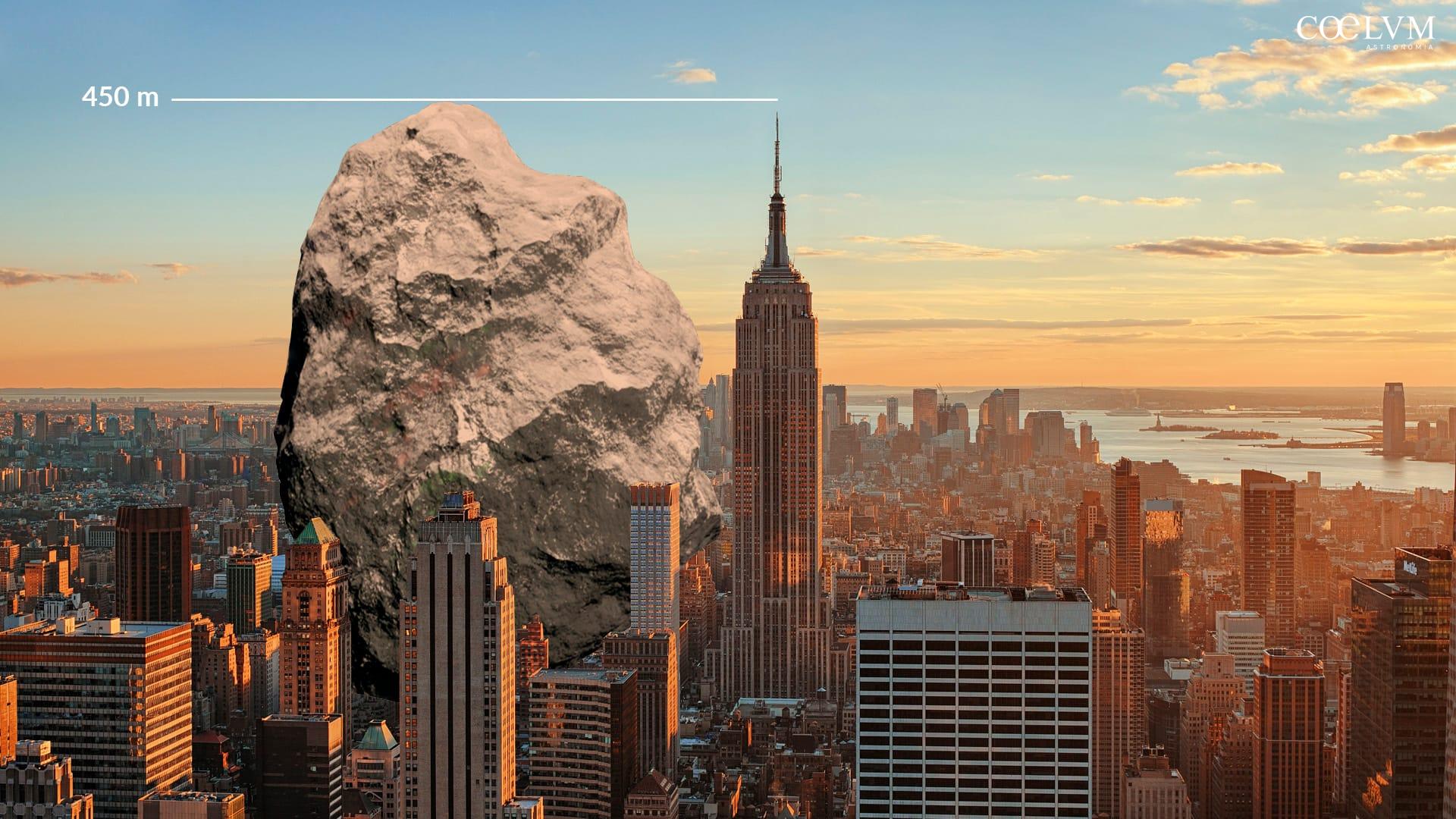
In 2029, the asteroid 99942 Apophis (approximately 350 m in diameter) will pay us a very close visit, passing approximately 30,000 km from Earth. It will be close enough to be visible to the naked eye, but fear not: the chances of an impact are now estimated by experts to be nearly zero. The space mission Ramses (Rapid Apophis Mission for SpacE Safety) is already preparing to launch to intercept it and accompany it for a stretch, thus gathering valuable data on its possible changes in shape and speed due to its proximity to Earth. Therefore, this is an opportunity not to be missed, which hopefully will provide fundamental information for the field of “Planetary Defense”: it deals with monitoring and studying asteroids to prevent and avert threats from space.
The Takeaway Message
In conclusion, my invitation to readers is not to settle for a superficial consideration of the study of space, planets, and other celestial bodies. This may seem like an abstract field (a belief unfortunately still widespread in public opinion), but it is actually part of the cosmic balance that allows us to be here; understanding it deeply is undoubtedly one of our most effective survival strategies, as well as a very useful exercise for broadening the horizons of human understanding.
Sources:
- A. Rossi, S. van Gasselt (eds.), Planetary Geology, Springer Praxis Books (2018), DOI 10.1007/978-3-319-65179-8_7
- D. Shonting, C. Ezrailson, Chicxulub, The Impact and Tsunami – The Story of the Largest Known Asteroid to Hit the Earth, Springer Praxis Books (2017), DOI 10.1007/978-3-319-39487-9
- #03 Types of Asteroids – Asteroid Day Series | AstroNEOS – Youtube Channel
- Incontro ad Apophis con Ramses, figlio di Hera | MEDIA INAF TV – Youtube Channel