Stardust: The Mission That Brought Back the Dust of Origins to Earth
Twenty years after the return of its capsule to Earth in January 2006, NASA's Stardust mission still represents one of those moments when space exploration became something much more concrete.
Twenty years after the return of its capsule to Earth in January 2006, NASA's Stardust mission still represents one of those moments when space exploration ceased to seem like a distant, almost abstract gesture, solely consisting of probes observing bright dots from millions of kilometers away, and instead became something much more concrete, almost physical. For the first time, it was possible not only to approach a comet by 'brushing against' it in the cold darkness of deep space but also to collect a part of its material and bring it back to Earth, transforming a journey of billions of kilometers into the return home of tiny ancient fragments, as old as the Solar System itself.
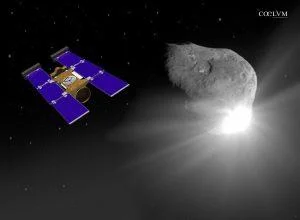
Launched on February 7, 1999, Stardust was born with a goal that, in a few words, might seem almost simple, but which actually required a formidable combination of orbital precision, materials engineering, thermal design, flight dynamics, and an almost stubborn confidence in the possibility of capturing something incredibly fragile while everything travels at terrifying speeds. The mission aimed to reach comet Wild 2, traverse its environment of dust and gas, collect samples of cometary material along with interstellar dust particles, preserve them without contaminating or destroying them, and finally bring them back to Earth inside a capsule capable of surviving one of the most extreme atmospheric reentries ever faced.
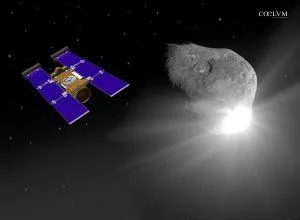
To truly understand the importance of Stardust, one must reflect for a moment on a fundamental point: why go to collect dust from a comet when telescopes and space instruments could already observe it from afar? The answer is that remote observation, no matter how sophisticated, tells a lot but not everything, while having physical samples in the laboratory means being able to analyze them with infinitely more complex, sensitive, and diverse instruments than those that can be mounted on a probe, and above all, it means being able to study them for years, even decades, as scientific technology evolves.
Comets have always been considered a sort of archive of cosmic history, bodies that have remained relatively primitive compared to planets, preserved for a very long time in the coldest regions of the Solar System, and for this reason believed to be custodians of ancient materials capable of telling how the environment in which the Sun, the planets, and the entire structure of our cosmic neighborhood formed was like. Recovering cometary samples thus meant getting hands-on, in a nearly literal sense, with material that could hold information about the birth of the Solar System, the processes of material mixing, and perhaps even the distribution of essential chemical compounds in the early stages of planetary history.
But here comes the most fascinating aspect of the mission, and also the most technologically complex: collecting cometary dust did not mean simply approaching slowly with a 'beach shovel' and orderly and calmly taking a bit of material. Stardust moved through space at incredibly high speeds, and when it approached Wild 2 in January 2004, it had to face an environment where every tiny particle could become a microscopic but dangerous projectile, capable of damaging the probe or altering the samples. This is precisely why one of the most innovative choices of the entire mission was made for the collection system: the use of aerogel.
This material represented the most characteristic idea of the Stardust mission: it is a very low-density substance, often described as a 'smoke solid' due to its almost unreal appearance, light enough to gradually slow down dust grains without destroying them instantly. Instead of having the particles collide against a rigid surface, with the risk of vaporizing or shattering them completely, the aerogel allowed them to penetrate inside, carving tiny tunnels, like imprints within a transparent material. It was this solution that enabled the probe to capture intact (or at least analyzable) samples.
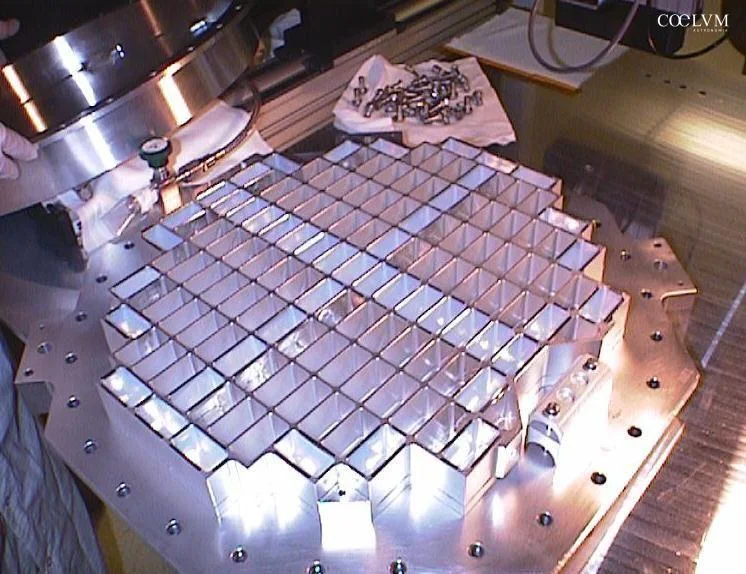
The sample collector, which resembled a tennis racket, was exposed during the close pass next to the comet, and that moment, from a scientific point of view, was when a conceptually bold mission became a successful mission. Stardust passed about 241 kilometers from the nucleus of Wild 2, a distance that in the language of space navigation is considered close but, when viewed with human eyes, is actually impressive, because it means being in an active environment surrounding a comet, where sublimated ice drags along dust grains that tell a story frozen for billions of years.
Of course, it was not enough to capture the samples: they also had to be protected. This meant controlling terrestrial contamination, maintaining the integrity of the collected material, and designing a reentry system that, after years in space, could perform the final maneuver correctly. Stardust's return capsule, weighing 46 kilograms, separated from the mother probe in January 2006 and headed toward the Earth's atmosphere at about 43,000 kilometers per hour, an extreme speed that made reentry a top-level thermal and dynamic problem, because under those conditions, the heat generated by air compression becomes a threat to any object not designed impeccably.
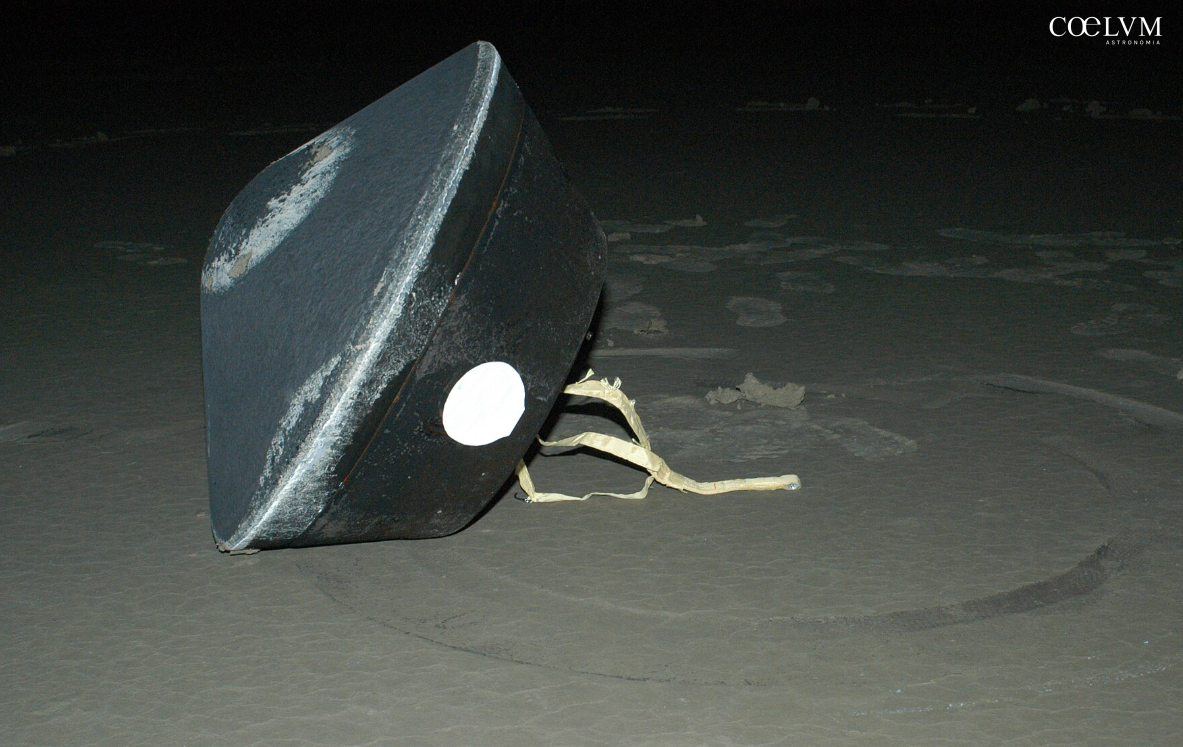
And this is where the mission shows another of its greatest merits, having maintained a balance between the scientific rigor required and the brutality of the environment in which it operated: on one side were tiny and precious samples, on the other a capsule forced to plunge into the atmosphere like a cosmic bullet, facing temperatures and stresses that could annihilate the entire result of a mission lasting years in just a few moments. Yet, everything worked, and on January 15, 2006, the capsule landed in the Utah Test and Training Range, in the middle of the desert, concluding a journey of about 4.5 billion kilometers and bringing back to Earth a payload whose scientific weight was immensely greater than its actual mass.
The recovery of the samples represented a scene almost cinematic: in the darkness of the American desert, after years of travel in interplanetary void, a small capsule fell from the sky containing fragments of a comet, as if a part of the history of the Solar System had decided to deliver itself directly into the hands of scientists.
From a scientific perspective, however, the real twist came later, when the samples were analyzed. For a long time, comets had been imagined as relatively simple objects, composed mainly of ice and primitive dust that had remained far from the Sun and thus somehow preserved almost intact, like frozen time capsules; but the results of Stardust made this picture much more interesting and, if we may say, much less comfortable.
The analysis indeed showed that the samples contained materials that had formed in very different thermal environments, some compatible with cold and remote regions, others with much warmer inner zones of the Solar System, close enough to the Sun to be subjected to extremely high temperatures. In short, the mission suggested that the young Solar System was not an orderly place, with every substance in its place from the beginning as theorized until that moment, but rather a dynamic, turbulent environment, crossed by transports of material over large distances, where elements born near the Sun could end up incorporated in bodies formed much farther away.
For this reason, Stardust is often remembered not only as a successful mission but as a 'transformative mission'. It showed that the sample return method, that is, the return of samples to Earth, is not a spectacular luxury or a demonstration of technological prowess for its own sake, but a powerful scientific tool: it brings celestial objects into the richest analytical environment we possess, namely Earth laboratories, where questions can multiply, techniques can improve, and answers can refine over time. Stardust demonstrated that sample return is not only possible but can change the very way we do planetary science, shifting the investigation from 'looking from afar' to touching, measuring, comparing, and verifying.
In the end, the greatness of Stardust does not lie in the size of the probe nor in the beautiful images it provided us, but in the fact that it succeeded in bringing back to Earth a material proof of the most remote past of our Solar System, demonstrating that even a handful of dust, if it comes from far enough away, can contain a story broader than any cosmic landscape we can observe from Earth.