
Microsoft Build 2026: AI Models MAI, Project Solara, and Quantum Processor
At the Microsoft Build 2026 conference, the company showcased a range of new products including local deployment of AI models, Project Solara, and advancements in quantum computing.
At the Microsoft Build 2026 conference, the company showcased a range of new products. Among them were the local deployment of large language models, agent-based AI, a new line of AI devices, proprietary Microsoft AI models, and advancements in quantum computing.
AIN gathered six of the most interesting announcements from the conference.
Personal AI Supercomputer Surface RTX Spark Dev Box
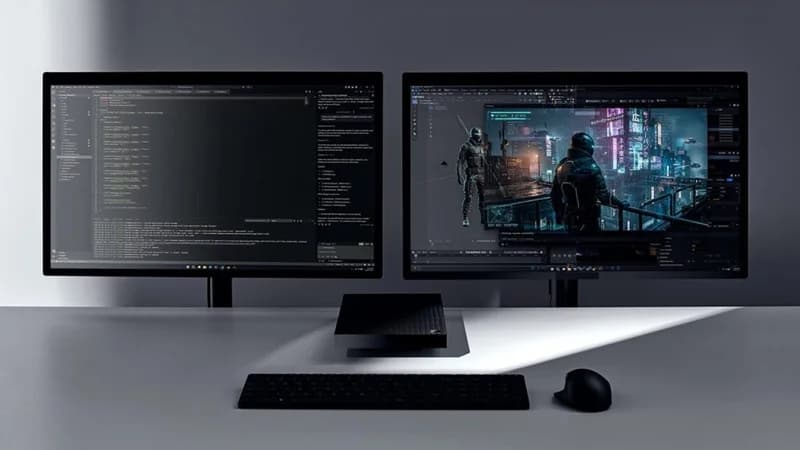
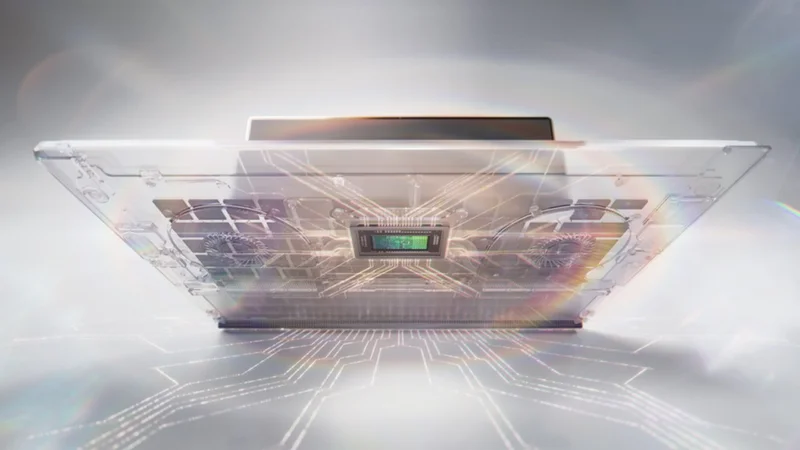
Microsoft announced the release of the Surface RTX Spark Dev Box — a compact computer for developers designed for local design and training of AI models.
The device runs on the NVIDIA RTX Spark superchip, which combines the NVIDIA Grace processor and the NVIDIA Blackwell RTX graphics processor.
The computer has 128 GB of unified memory and delivers up to 1 petaflop of AI computations directly on the desktop. This is sufficient for the local deployment of models with over 120 billion parameters and a context window of 1 million tokens.
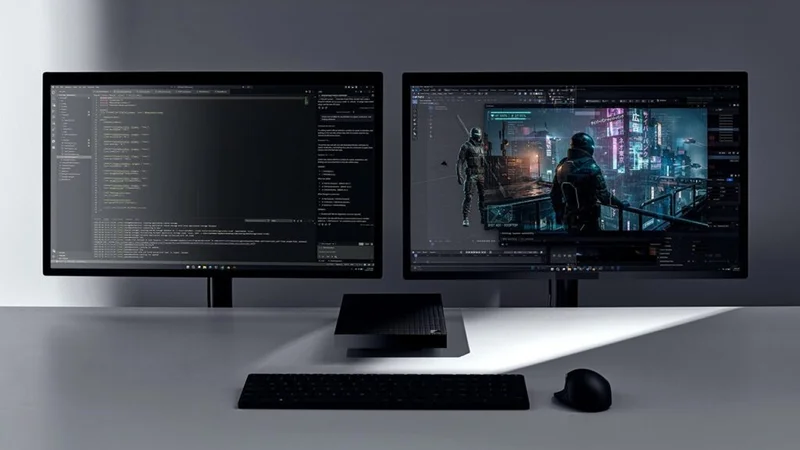
The gadget comes with Windows 11 Pro, optimized for developers at the image level. Out of the box, it integrates WSL 2 with CUDA support, VS Code, GitHub Copilot, Git, Python, and Node.js.
The device will be available for sale in the USA at the end of this year.
Windows Receives New Tools for AI Development
Microsoft introduced a series of updates for Windows 11 aimed at developers and agent-based systems.
Key new features include:
- Coreutils for Windows — a set of Linux-like console utilities;
- WSL Containers for working with Linux containers;
- Intelligent Terminal with support for AI agents;
- Windows Developer Configurations for automatic setup of the development environment;
- Microsoft Execution Containers (MXC) — a new level of isolation for agents and AI applications.
The company also announced local models from the Aion family, which will operate without cloud connectivity.
Microsoft Unveils Project Solara — A Platform for Agent Devices
Microsoft introduced a new software-hardware platform called Project Solara, aimed at creating specialized gadgets that operate not on applications but on AI agents managed by the MDEP operating system.
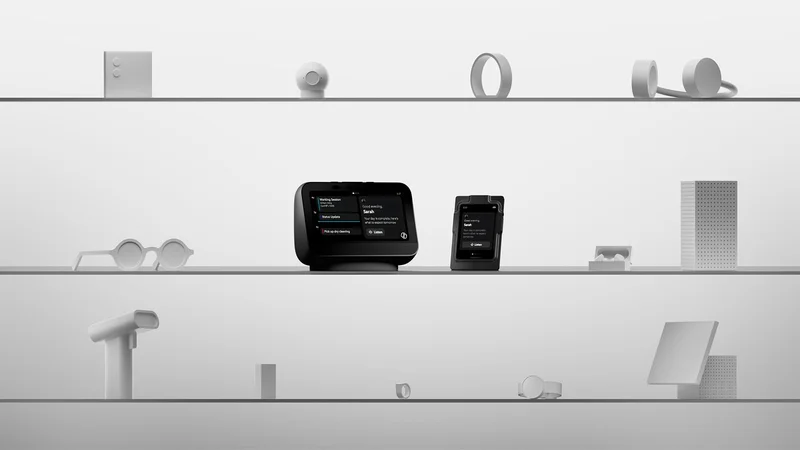
Within the platform, a Just-in-time UI technology has been developed — the ability for AI to autonomously generate and adapt the interface for any screen size without developer involvement. The company demonstrated two conceptual devices.
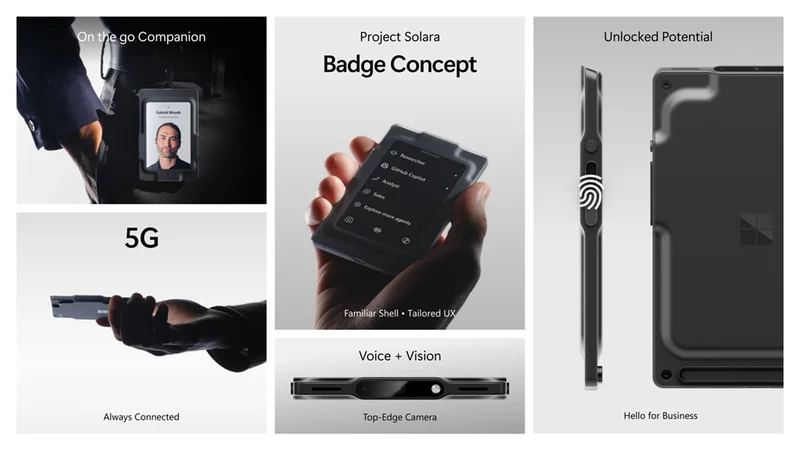
Badge. A lightweight device in the form of a badge for mobile workers (medical personnel, retail workers). Equipped with a touchscreen, fingerprint scanner, camera, 5G modem, and a microphone array for constant interaction with a voice assistant;
Desk. A desktop companion with a touchscreen, facial recognition capability, and UWB presence sensor based on a MediaTek IoT processor. It can operate autonomously, as an addition to a PC, or as a thin client for cloud-based Windows 365.
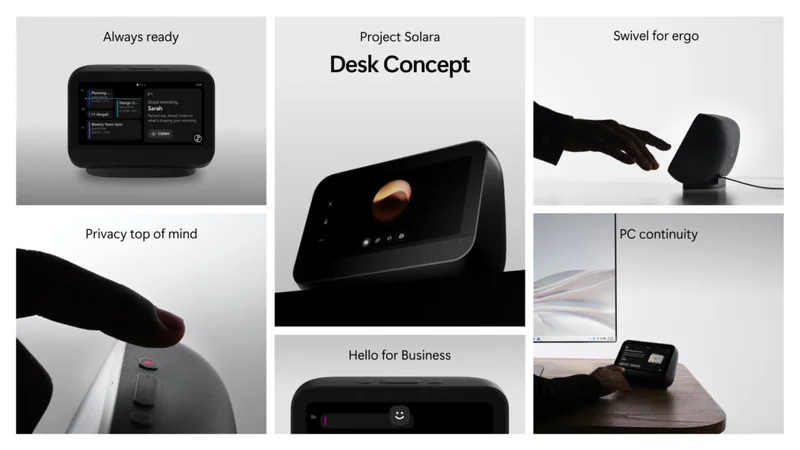
In the coming months, Project Solara will begin piloting in industries alongside companies like CVS Health, Best Buy, Target, and others.
OpenAI, NVIDIA, and Manus Integrate Their Agent Systems into Windows
Microsoft announced collaborations with OpenAI, NVIDIA, Manus, Hermes, and OpenClaw.
All of them will utilize the new Microsoft Execution Containers (MXC) technology for the secure execution of autonomous agents in Windows.
Specifically:
- OpenAI plans to use MXC for the secure execution of code by agents;
- NVIDIA integrates the OpenShell platform;
- OpenClaw received support for Windows;
- Manus is working on integrating agents for corporate use.
Seven New AI Models from Microsoft AI
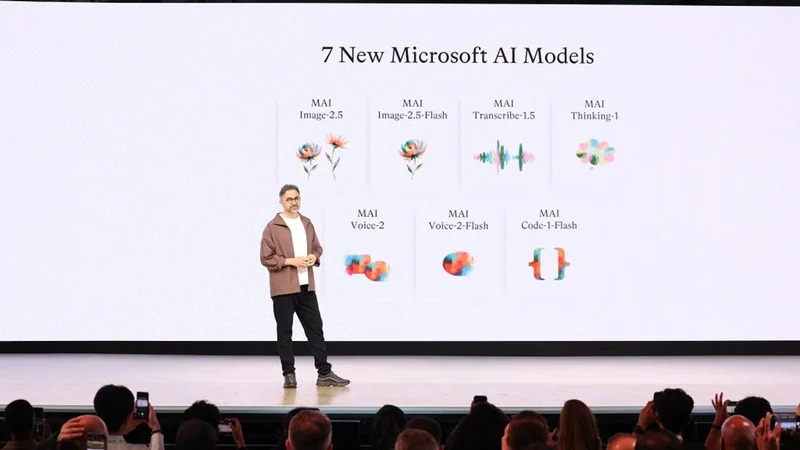
The Microsoft AI division, led by Mustafa Suleyman, announced a new family of MAI models.
This includes:
- MAI-Thinking-1 — a model for complex logical reasoning;
- MAI-Code-1-Flash — a model for programming and GitHub Copilot;
- MAI-Image-2.5 — image generation and editing;
- MAI-Transcribe-1.5 — a speech recognition model;
- MAI-Voice-2 — natural-sounding voice generation in 15 languages.
Microsoft also introduced the Frontier Tuning concept — an approach allowing companies to fine-tune models directly on their workflows and data.
Quantum Processor Majorana 2
The new Majorana 2 processor uses topological qubits based on a new material stack utilizing lead instead of aluminum.
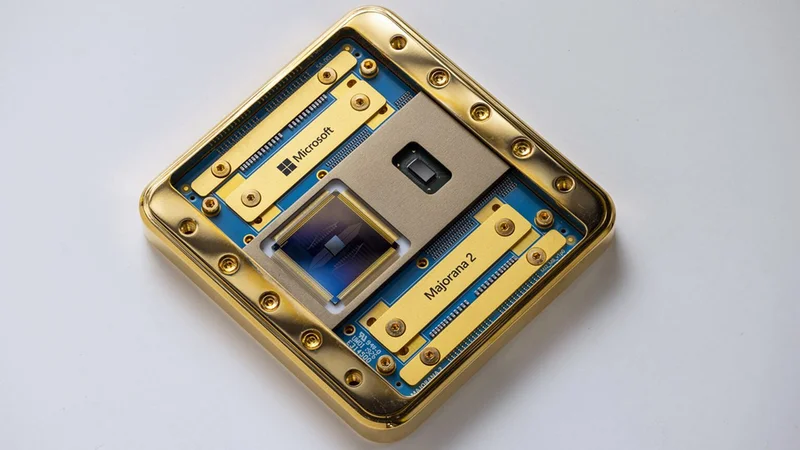
The company claims that:
- the stability of the qubits has increased by more than 1,000 times;
- the lifetime of the qubits has increased from milliseconds to over 20 seconds;
- individual qubits operated for more than a minute.
With this, Microsoft aims to create a scalable fault-tolerant quantum computer by 2029, which is twice as fast as previous predictions.
Read also: Ferrari unveiled Luce — its first fully electric supercar designed by Jony Ive. Review