Data Processing in Radio Astronomy: Choosing the Right Tools
This article delves into the critical aspect of data processing in radio astronomy, exploring programming languages, technologies, and methods for effective data analysis.
In the realm of radio astronomy, the processing of data stands out as a critical component. This intricate task necessitates a blend of programming skills and knowledge of various technologies. Fortunately, there are numerous resources available online to aid in the development of software and applications tailored for this field.
Selecting the Right Technologies
With a plethora of programming languages and libraries at one's disposal, it can be overwhelming for newcomers to determine the most suitable options. Each programming language has its specific applications; for instance, PHP, while versatile, is primarily designed for web development and is not ideal for radio telescope software. Similarly, Visual Basic is not compatible with Linux-based Raspberry Pi systems. Therefore, the choice of programming language often hinges on individual skill sets and project requirements. Personally, I prefer using C for its optimization capabilities. Now, let’s explore the appropriate technologies based on different scenarios.
Overview of Programming Languages
C and C++
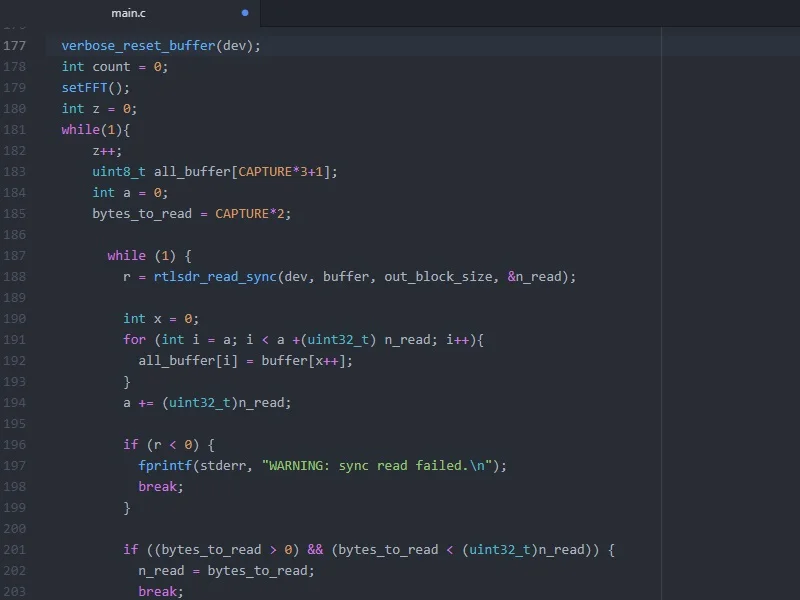
For those well-versed in programming, C or C++ is highly recommended, especially if object-oriented programming (OOP) is familiar and relevant. While OOP may not be essential for a radio telescope focused solely on data processing, C/C++ stands out for its performance, speed, and resource efficiency. However, mastering these languages can be challenging, as they require the programmer to manage memory, which can lead to bugs if mishandled. Additionally, since C is a compiled language, transforming code into executable files necessitates a level of expertise that cannot be acquired in a short time. Thus, while I strongly advocate for C/C++, beginners might consider simpler alternatives.
Python
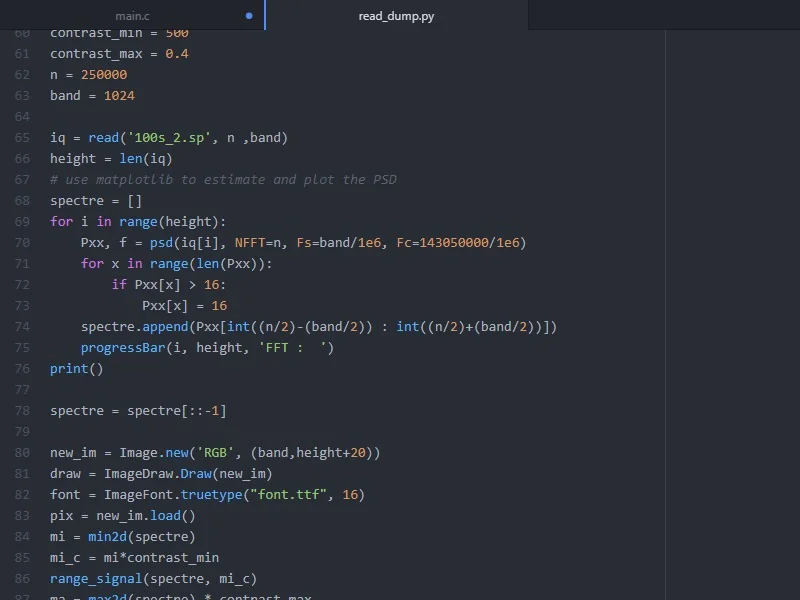
For those starting in programming, Python is an excellent choice due to its simplicity. The installation of libraries can be done effortlessly with a simple command in the console, such as pip install numpy. NumPy significantly simplifies mathematical operations in Python, allowing complex tasks to be executed with minimal code. Adding SciPy to your Python script provides all necessary functions for signal processing, including Fast Fourier Transforms (FFT). It’s important to note that Python is not a compiled language; running a script requires just a command in the console, making it more accessible for beginners. While Python’s performance is adequate on a decent computer, it may require careful resource management on devices like the Raspberry Pi, which has limited RAM.
Other Options
What about other programming languages?
- Java is primarily suited for enterprises looking to maintain long-term code, but it lacks optimization for this purpose.
- Perl is less favorable compared to Python, which is simpler and more efficient.
- Visual Basic is not suitable, as it requires a Linux environment.
- C# has no clear advantages over Python, leading to its exclusion from consideration.
It becomes clear why one would choose a complex language when Python is straightforward and effective — Python clearly comes out on top.
Now that we’ve selected a programming language, let’s examine the operating system.
Linux is the ideal choice for our needs: it's efficient, flexible, and user-friendly once familiar. While it may seem daunting to novices, it is significantly easier to navigate than other operating systems, like Windows. My preference leans towards Debian or Ubuntu, with a slight inclination towards Debian.
How to Process Raw Data
Data is received from the Analog-to-Digital Converter (ADC), which transforms radio signals into digital data. There are two primary scenarios:
- Complex data with two ADCs, one receiving a signal phase-shifted by 90° (refer to signal processing articles).
- Standard data with a single ADC.
This distinction influences the processing required before calculating the spectrum. If two ADCs are used, as in RTLSDR keys, each block of two numbers must be converted into a complex number. A signal represented as a complex number is referred to as IQ data or quadratic signal.
What Calculations to Perform in Software for a Radio Telescope?
The goal is to derive the spectrum of the signal, for which FFT (Fast Fourier Transform) is utilized. Libraries are available depending on the chosen programming language:
- In Python, use NumPy and SciPy.
- In C, utilize FFTW.
For Python, calling the function is straightforward, while C requires multiple functions depending on the type of raw data (complex or real). By placing all this in a loop, one can simply wait for the results. I favor autonomous systems, but each setup reacts differently based on specific needs. I plan to write a detailed article on my approach and share insights.
What to Do with the Results?
Once the program has isolated the relevant data, the next step is determining how to store and analyze it. This is fundamentally the purpose of our radio telescope. There are several options, but the best solution is one that conserves space and minimizes resource usage.
The ideal approach is to create a file format that is easy to process and lightweight. For instance, consider storing the number 144:
- In a text file, it occupies 3 bytes as ‘00110001 00110100 00110100’ or in hexadecimal ‘31 34 34’, corresponding to three characters.
- A custom format could store it in binary as ‘10010000’ or in hexadecimal as ‘90’, making it more efficient, though limited to numbers below 255 without requiring two bytes.
The simplest method is to store data in a CSV format. This file type employs a similar method to text files but includes additional functionalities, making it easy to import into spreadsheets for graphical representation. Moreover, all programming languages have built-in functions to read or create CSV files.
Another intriguing method involves creating visual representations of data, which I enjoy. My radio telescope focuses on meteor tracking, recording data in image format.
Bonus Section
A variety of code snippets are available to assist you in your programming endeavors.